
A businesswoman who supplied information to federal investigators pursuing Par Funding has herself been indicted in an alleged COVID-relief fraud scheme, renewing questions about her role in the investigation and longstanding challenges to her credibility.
Kara DiPietro, 49, of Towson, Maryland, allegedly submitted more than 20 fraudulent Paycheck Protection Program (PPP) applications seeking over $7.5 million and obtained more than $2.5 million through eight funded applications, according to the U.S. Department of Justice.
The indictment, announced October 20, 2026, charges six counts of bank fraud, each carrying a maximum sentence of 30 years.
DiPietro and her attorney, Shane Heskin, supplied information to the Securities and Exchange Commission (SEC) and FBI before and after the SEC’s July 2020 enforcement action against Complete Business Solutions Group (CBSG), the Philadelphia-based merchant cash advance company that operated as Par Funding. The company was placed into receivership, and its executives subsequently faced criminal prosecution.
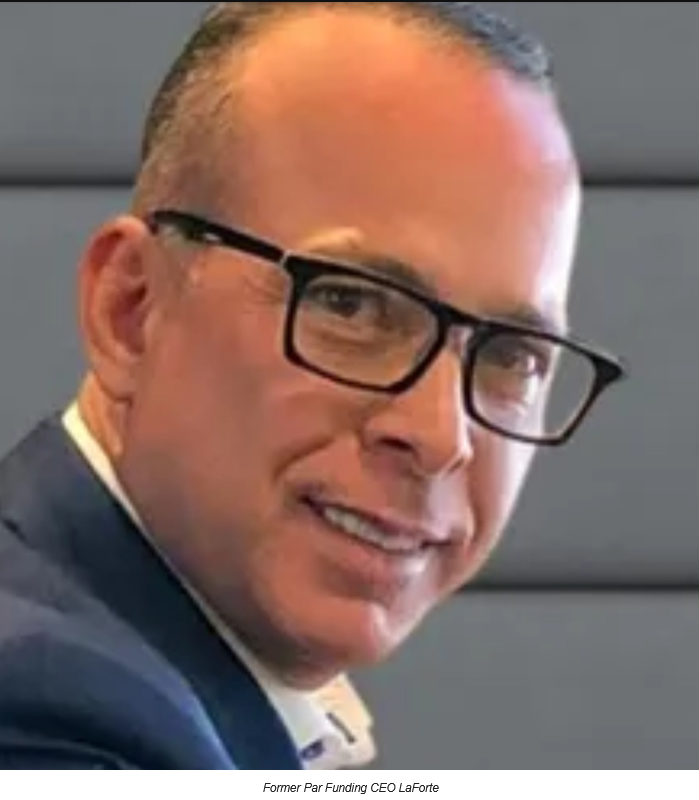
Lawyers for former CEO Joseph LaForte and other company principals have long alleged that DiPietro and Heskin provided false information after unsuccessful efforts to persuade courts to invalidate merchant cash advance agreements. They accused DiPietro of seeking government intervention to escape more than $11 million in obligations.
The alleged PPP crimes overlapped with the period when DiPietro was feeding information to the SEC and investigators about Par Funding. Indeed, LaForte and his lawyers said in the first article published by Black Star News in this series that the entire investigation was triggered by DiPietro and Heskin approaching the SEC after they failed to have the courts invalidate DiPietro’s debts to Par Funding, and that of other Heskin clients.
According to prosecutors in the PPP case, DiPietro submitted the applications between April 2020 and May 2021 through multiple businesses and similarly named entities. The applications allegedly used false employer identification numbers, omitted previous applications, and falsely certified that businesses had not already received particular PPP loans. Some proceeds allegedly financed renovations to her personal residence.
DiPietro did not respond to messages seeking comment, sent to her previously listed business email addresses. Black Star News also sent a message to her current employer, asking that it be forwarded to her.
In an email message to Black Star News, a spokesperson for the US Attorney’s Office for the Eastern District of Pennsylvania declined to comment.
A spokesperson for the US Attorney’s Office for the District of Maryland declined to comment, in an email message to Black Star News.
The SEC did not respond to an email message seeking comment.
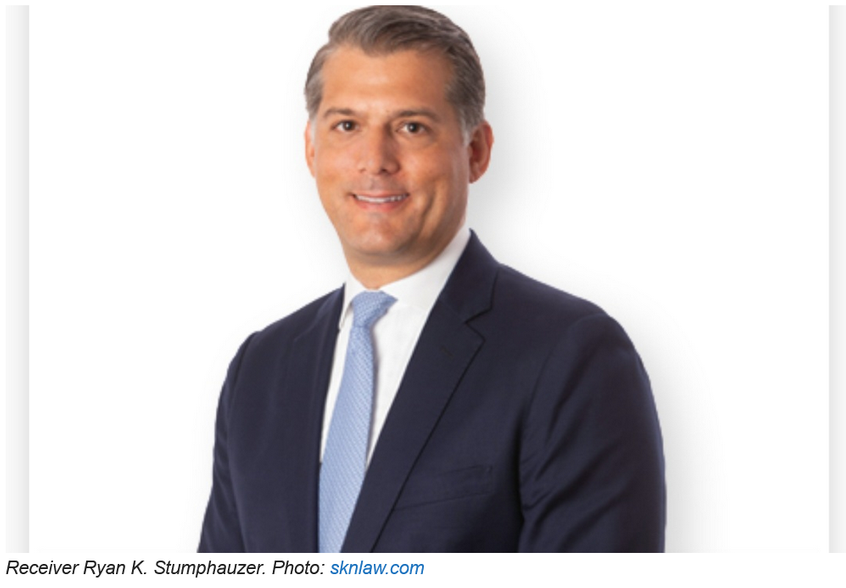
Ryan K. Stumphauzer, the court-appointed receiver in the Par Funding case, also did not respond to an email message.
DiPietro’s business dealings with Par Funding began years before the federal intervention and eventually deteriorated into litigation.
In a July 28, 2021 motion, docketed as Document 663 on the court-appointed receivership website, lawyers for LaForte, and other senior managers—Lisa McElhone, who is LaForte’s wife and Joseph Cole Barleta—asserted that Par Funding had advanced about $26 million to DiPietro’s company. They said about $11 million remained owed in spring 2019, including about $3 million in principal.
The motion sought dismissal of the SEC action for alleged agency misconduct claiming the allegations made by DiPietro and Heskin were never corroborated independently. Judge Rodolfo A. Ruiz II, who is presiding over the case in the Southern District of Florida, denied the motion.
The defense alleged that the SEC relied on financially interested merchants represented by Heskin without adequately investigating their accounts. “Rather than conduct its own investigation, the SEC delegated its own investigative powers to a biased private attorney with a clear financial interest in the outcome of this case,” the motion stated.
It accused the agency of accepting Heskin’s legal theories, factual assertions, default-rate analysis, and client declarations “without any critical scrutiny or corroboration.”
According to the motion, Heskin had pursued litigation in the Philadelphia courts challenging merchant cash advance agreements through racketeering claims, proposed class actions, and arguments that the advances were usurious loans. “Heskin has never prevailed on the merits in any MCA case and certainly never prevailed against Par,” the motion asserted.
The lawyers also cited a ruling issued four days before the SEC filed its July 26, 2020 complaint. According to their account, the Eastern District of Pennsylvania held that a state-court confession of judgment that had not been stricken or reopened remained a final judgment for purposes of the Rooker-Feldman doctrine, limiting efforts to challenge it in federal district court.
Rooker–Feldman precludes lower federal courts from reviewing or overturning state court judgments; only the US Supreme Court can do so.
“After failing in his private crusade against Par and other MCAs, Shane Heskin and Kara DiPietro shop this case to multiple law enforcement agencies, all of whom reject it, but the SEC accepts it without doing due diligence,” the motion alleged.
The filing described Par Funding’s initial advance to DiPietro’s kitchen remodeling business, Holdings Management Company, Inc., (HMC) as $868,942, provided after underwriting. Subsequent advances brought the total to approximately $26 million, the lawyers said.
“DiPietro used the cash Par advanced to expand her business and engage in [a] large number of interior design projects on which she made significant profits,” the motion stated.
When payments stopped in spring 2019 and negotiations failed, Par Funding directed its outside law firm, Fox Rothschild, to enforce the agreement by filing a confession of judgment on May 14, 2019, according to the motion.
The filing said DiPietro also complained to Philadelphia police about LaForte but was told the dispute was a civil matter. She retained Heskin by May 2019, and HMC subsequently sued Par Funding.
The defense alleged that DiPietro then pursued SEC intervention through senior counsel Linda Schmidt, presenting herself as a victim, while seeking relief from her contractual obligations. “Their correspondence includes hundreds of emails and an untold number of phone calls,” the motion stated. “Heskin is copied on and a participant in many of DiPietro’s voluminous email communications with the SEC.”
The lawyers alleged that the SEC neither contacted Par Funding or its counsel before filing suit nor adequately examined DiPietro’s financial interests and Heskin’s litigation history.
They also argued that merchant cash advances structured as purchases of future receivables were lawful transactions rather than loans subject to usury limits. They pointed to court-appointed receiver Stumphauzer’s continued collection of merchant payments after the receivership began as support for their position.
DiPietro offered investigators a sharply different account of her dealings with LaForte and Par Funding.
In a September 19, 2019 email to FBI official John F. Murray, copied to Heskin and Josh Persing, she alleged that Par Funding had taken approximately $1.5 million in unauthorized debits and failed to credit more than $900,000 in payments.
She disputed a restated purchase agreement totaling $11,940,053.45, asserting that many underlying agreements had already been paid. She also said she had offered collateral and proposed restructuring arrangements that Par Funding rejected.

Documents reviewed by Black Star News show that DiPietro was communicating with Schmidt by August 2019, nearly a year before the SEC enforcement action. “I have thousands of documents. What type of documents would be useful for you?” DiPietro wrote on August 15, 2019.
Schmidt requested records concerning CBSG and related companies and offered an upload link.
That September, DiPietro alerted Schmidt to an approaching Philadelphia hearing concerning what she described as a fraudulent confession of judgment and CBSG’s claim that she owed more than $11 million.
Heskin also communicated directly with SEC attorneys.
On June 24, 2020, he emailed Schmidt and Amie Riggle Berlin, who became the lead attorney prosecuting the SEC action, directing their attention to a recorded call involving Par Funding.
On July 22, Berlin asked Heskin how cases filed by NY Unity Factor were connected to CBSG. Heskin directed her to affidavits supporting the confessions of judgment, explaining that they identified CBSG’s relationship to the agreements.
The exchanges document an information channel between the SEC and a lawyer representing merchants in disputes with the company. They do not, by themselves, establish whether the agency corroborated the information.
In an email message dated April 2, 2020 to DiPietro, under the subject “Damage Report of HMC” Heskin wrote,
“Remember, we get three times damages if we succeed in RICO.”
After the receivership began, DiPietro continued seeking assistance concerning the judgment against her business.
In a September 8, 2020 email to Schmidt, she complained that records still showed a judgment of approximately $12 million and described losses she attributed to CBSG, including $250,000 in legal expenses. She also expressed hope that her participation would help recover money for investors.
Her correspondence shows that she had financial interests in the dispute while assisting investigators. Whether those interests affected the accuracy of her information was central to the defense’s allegations in its July 2021 motion.
Heskin previously rejected claims that his clients used government intervention simply to escape their obligations.
“My clients were victims and had cases in civil court,” he told Black Star News in the first article published in this series. At the time, he declined to confirm or deny specific dealings with the FBI beyond publicly disclosed information.
The criminal proceedings against Par Funding’s executives produced guilty pleas.
LaForte pleaded guilty in September 2024 to racketeering conspiracy, securities fraud, tax crimes, and other offenses. He was sentenced in March 2025 to 186 months—15½ years—in federal prison.
His wife, Lisa McElhone, had pleaded guilty in April 2024 in connection with a scheme involving false claims of Florida residency.
LaForte has maintained that pressure involving a threat by the government to prosecute his wife influenced his decision to plead guilty.
The company itself, under the receiver Stumphauzer, subsequently pleaded guilty. On March 9, 2026, the receiver appeared on CBSG’s behalf to enter a guilty plea to conspiracy to commit wire fraud and securities fraud, according to the Justice Department.
These developments come amid continuing questions about the receivership’s expenses and competing assessments of Par Funding’s finances. Black Star News has reported about $30 million in professional fees and another $30 million in operating expenses. LaForte’s supporters, lawyers, and former employees contend that those costs are excessive.
The publication has also reported billing entries by the receivership for reading investigative articles published in Black Star News, reviewing questions seeking comment, discussing possible responses to the publication, and forwarding the coverage to the FBI and unspecified government officials.
One April 25, 2026 entry billed $39.50 for correspondence to the receiver, co-counsel, and FBI concerning Black Star News coverage. The entries do not explain why the articles were forwarded or whether investigators requested them. The lawyers, Stumphauzer, and the SEC did not respond to email questions seeking comment at the time.
LaForte’s lawyers have also argued that the Glick report, prepared by Berkowitz Pollack Brant, demonstrated profitability under Generally Accepted Accounting Principles. They dispute the methodology and conclusions of the Sharp report prepared by the receiver’s consultant, DSI.
The SEC, meanwhile, has distanced itself from the characterization of Par Funding as a Ponzi scheme. The agency told Black Star News that its complaint did not allege a Ponzi scheme and that it would “take issue” with reporting that the SEC considered Par Funding one.
DiPietro’s indictment now adds another question: how thoroughly did investigators examine the credibility and financial interests of an informant whose assistance overlapped with the period of her own alleged PPP fraud?
