
By Sabrina Bell:
There is a particular kind of fatigue that settles into Black British bones when the word “Reparations” trends on social media — not because the conversation is unwelcome, but because it has been happening for decades with so little to show for it. This week, as Prime Minister Andy Burnham attended the Commonwealth Heads of Government Meeting in Antigua and Barbuda, open to issuing a formal apology for Britain’s role in the transatlantic slave trade yet firmly ruling out financial Reparations, that fatigue found fresh company: frustration.

Burnham’s offer of £40 million to Caribbean development projects, alongside a broader “debt reset” programme led by former Prime Minister Gordon Brown, was presented as a meaningful step forward. But from where many Black British people are standing — navigating a wealth gap that has widened, not narrowed, over the past decade — the question is pointed and personal: who, exactly, is this for?
The Arithmetic of Apology
Let us begin with what Britain has actually put on the table.
Burnham’s £40 million in Caribbean project funding and his proposed debt restructuring programme — helping the poorest Commonwealth nations repay their debts over longer periods at lower interest rates — is not nothing. It is, by any diplomatic measure, the furthest any British Prime Minister has gone on this issue. His words were carefully chosen: “I want to express my sorrow and regret for the pain and suffering of so many millions of people, and to recognise the way it still shapes our world today.”
But set that figure against its historical mirror and the scale of the disparity becomes almost absurd. When Britain abolished slavery in 1833, Parliament allocated £20 million — approximately 40% of the entire Treasury’s annual budget, equivalent to roughly £16.5 billion today — in compensation. Not to the enslaved. To the slave owners. British taxpayers only finished paying off that debt in 2015. Let that settle: the generation that saw the London Olympics, the rise of grime music, and the first Black British woman to win an Olympic boxing gold medal was still, through their taxes, compensating the descendants of those who had owned human beings.
| “An apology is an essential first step, but an apology without repair is incomplete.” — CARICOM, in response to the British Prime Minister’s offer, November 2026 |
So when CARICOM — the Caribbean Community trade bloc — responded to Burnham’s offer with those words, they were not being ungracious. They were doing arithmetic.
The Debt Trap: How the Economic System Works Against the Caribbean
To understand why debt forgiveness matters — and why it is simultaneously insufficient — one must understand the economic architecture that has kept Caribbean nations in a state of managed dependency since the colonial era ended on paper.
Six Caribbean Small Island Developing States (SIDS) currently rank among the world’s ten most heavily indebted SIDS globally. Public debt exceeds 100% of GDP in Barbados and Dominica. In several Eastern Caribbean states, debt surpasses 80% of GDP, with debt servicing consuming between 20% and 30% of total government revenue. Grenada, a nation whose very flag bears the nutmeg that once made European merchants wealthy, spends roughly a quarter of its entire national revenue simply servicing debt.
These are not numbers born of reckless governance. They are the downstream consequences of economies that were designed — deliberately, architecturally — to extract wealth and export it elsewhere.
Consider the mechanics: Caribbean economies were built on plantation monoculture. Sugar, tobacco, and spice were cultivated by enslaved labour, processed locally, and shipped to Britain, where the profits were banked, invested, and compounded over centuries. When emancipation came, the infrastructure for diverse, self-sustaining economies simply did not exist — because it was never intended to. What remained were small, climate-vulnerable, tourism-dependent nations structurally locked into importing goods from the very countries that had extracted their wealth, at terms they had no power to set.
The COVID-19 pandemic laid this bare with devastating clarity. Tourism-dependent Caribbean economies were pushed to the brink of insolvency. Public investment in social infrastructure and services has since stagnated or declined in some cases. And yet these nations are classified by international financial institutions as “middle-income” — a designation that disqualifies them from many concessional lending programmes, despite their profound structural vulnerability. They are too “wealthy” for aid, too indebted for sovereignty, and too small to negotiate.
| 20–30% of government revenue in several Eastern Caribbean states goes to servicing debt |
Nigeria: A Case Study in the Circulation of British Debt
The Nigerian debt story illuminates a different facet of the same system — one that reveals how “debt forgiveness” can be less generous than it appears.
Britain’s share of Nigeria’s multilateral debt stood at approximately £1.7 billion. But the structure of Nigerian borrowing from the UK tells a story that the headline figure alone cannot. Nigeria borrowed £746 million, of which at least £236 million immediately flowed back to British contractors. £70 million of that went specifically to a British steel company for materials used to build Nigerian port infrastructure. The repayment — with interest, on the full £746 million — rested entirely with Nigeria.
| The debt is called Nigerian. The wealth is British. This is the circularity that rarely makes the news: money lent to a formerly colonised nation, spent on goods and services provided by the former coloniser, repaid with interest by the borrower. |
When portions of such debt are “forgiven,” the framing suggests magnanimity. But what is actually being written off? In many cases, it is debt that was servicing British industry from the moment it was issued. The forgiveness is real, but so is the fact that the original transaction was extractive by design.
What Black Britain Inherits
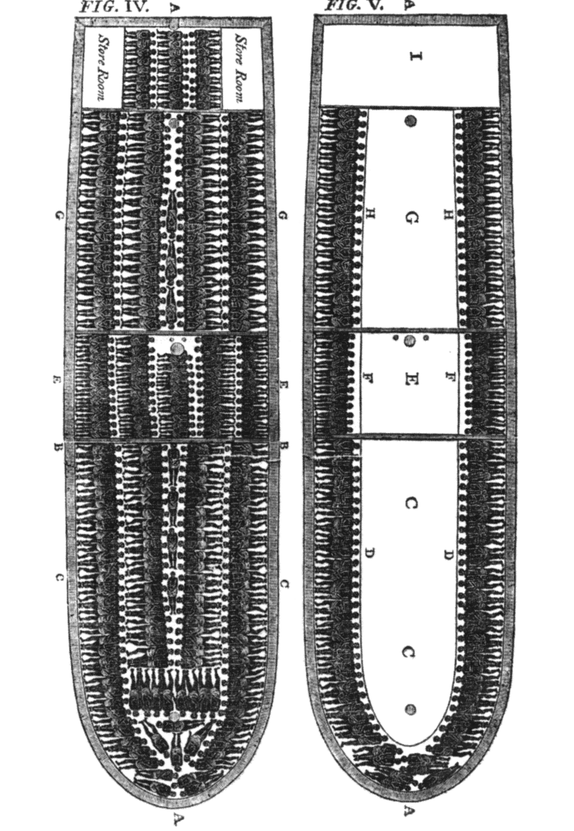
Here is where the conversation must come home — literally.
Black British people of Caribbean heritage are not distant observers of this story. We are its living consequence. Our grandparents and great-grandparents came to Britain on the Windrush and its successors, invited to rebuild a nation that their ancestors’ enslaved labour had enriched. They arrived into a country that had been capitalised, in significant part, by the plantation economy — and were offered the lowest-paying jobs, the worst housing, and a social contract that has never fully included them.
The data in 2026 is unambiguous. For every £1 of White British household wealth, Black Caribbean households hold approximately 20 pence. Black African households hold roughly 10 pence. Individual median wealth for White British people stands at £166,700; for Black Caribbean people, it is £85,000 — barely half — and for Black African people, just £18,100.
| 20p in Black Caribbean household wealth for every £1 held by White British households |
Thirty-one per cent of Black Caribbean people in Britain are in net debt, compared with 15% of the White British population. Black British, African, and Caribbean employees earn approximately £1 less per hour than their White counterparts. These are not gaps that are closing. Research from the London School of Economics confirms that the ethnic wealth gap in the UK has widened over the past decade. While White British and Indian ethnic groups experienced substantial increases in median wealth, Black African, Black Caribbean, and Bangladeshi groups remain with “almost no accumulated household wealth.”
| This is not a coincidence. It is a continuum. |
The Missing Link: How Caribbean Debt Forgiveness Does — and Doesn’t — Reach Black Britain
When Caribbean nations receive debt relief, the intended beneficiaries are the citizens of those countries — through freed-up public spending on healthcare, education, and infrastructure. And this matters to Black Britain, because our communities are transnational. Remittances flow regularly from Black British households to family in Jamaica, Trinidad, Barbados, Grenada, and beyond. When a Caribbean government can invest more in its public services, the pressure on diaspora families to fill those gaps through personal transfers eases — at least in theory.
But here is the disconnect: the economic conditions facing Black British people at home remain wholly unaddressed by any foreign debt policy. Debt forgiveness for the Caribbean does nothing to close the domestic wealth gap. It does not address the fact that Black British people are disproportionately refused mortgages, offered worse lending terms, and under-represented in asset-owning professions. It does not compensate for the Windrush scandal, nor for the generations of compounded disadvantage that preceded it.
There is a quiet injustice in the framing of Caribbean debt relief as if it were, in some way, reparatory towards Black Britain. It is not. It is diplomacy between states. And while it may indirectly benefit the Caribbean relatives we love and support, it leaves entirely untouched the structural inequality that defines Black British economic life.
The Architecture of Money: Who Prints It, Who Controls It, Who Benefits
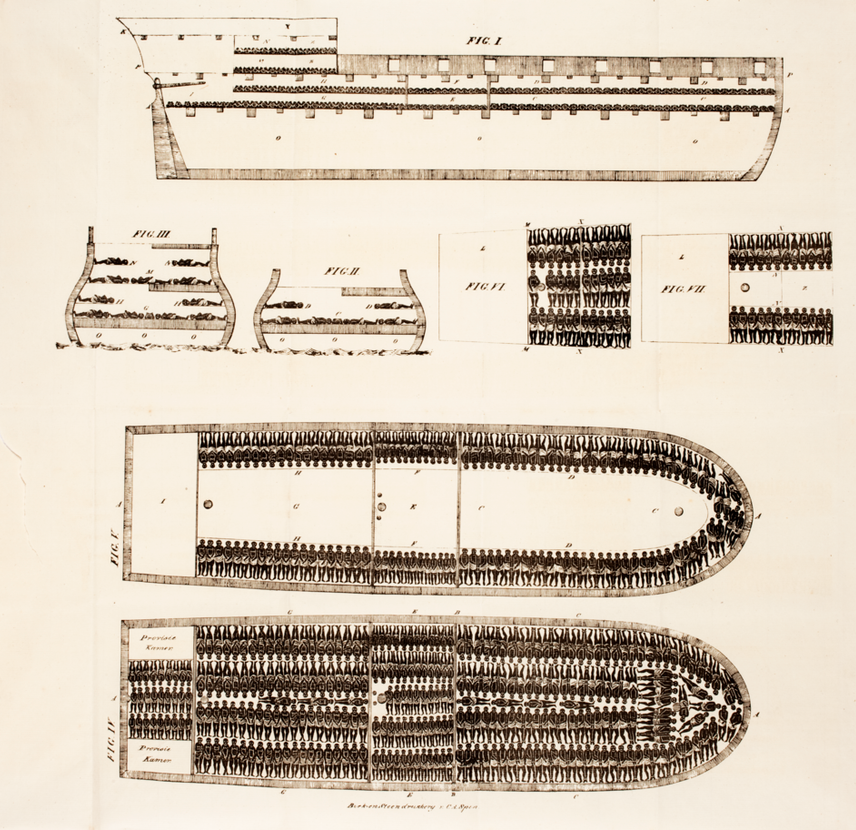
To speak of Reparations without speaking of monetary architecture is to describe symptoms while ignoring the disease.
The global financial system, as it exists today, was built by and for the nations that industrialised first — industrialisation that was, in Britain’s case, significantly capitalised by the profits of the slave trade and the plantation economy. The City of London, Lloyd’s of London, the Bank of England — institutions that have since issued formal apologies for their historical links to slavery — are the very institutions that set the terms of international trade, lending, and currency valuation.
Caribbean nations trade in currencies pegged to or valued against the US dollar and the pound sterling. They borrow in currencies they do not control. They service debts denominated in units of value that their own economies have limited capacity to generate. And when they cannot pay, the response is structural adjustment: austerity measures imposed by international financial institutions that constrain precisely the kind of public investment — in education, healthcare, local industry — that might break the cycle.
Haiti provides the most devastating illustration. Having won its independence through revolution in 1804, Haiti was forced to pay France 150 million francs — later reduced to 90 million — as compensation for the “property” (enslaved human beings) that French slaveholders had lost. By 1900, 80% of Haiti’s government spending went to debt repayment. The country did not finish paying until 1947. Economists estimate this cost Haiti between $21 billion and $115 billion in lost economic growth — one to eight times the nation’s total economy.
| This is not a historical footnote. It is the blueprint. And it is the blueprint that Caribbean nations are still living within, even as the specific creditors and instruments have changed. |
What Reparations Could Actually Look Like
CARICOM’s Ten Point Plan for Reparatory Justice — strengthened in 2026 into a comprehensive manifesto — is neither radical nor unreasonable. It asks for formal apologies, educational and public health programmes, development support for Indigenous peoples, debt cancellation, and, yes, monetary compensation.
From a Black British perspective, a domestic reparations framework might include:
• A national wealth equity fund, capitalised by a percentage of profits from institutions with documented links to the slave trade, directed towards Black British homeownership, business capitalisation, and pension provision.
• Educational reparations — not just curriculum reform, but fully funded scholarships and enterprise grants specifically addressing the intergenerational wealth deficit.
• A formal audit of institutional wealth derived from slavery, with transparent reporting and binding commitments to redistribution.
• Recognition of the Windrush generation as economic reparations claimants in their own right — not merely victims of an administrative scandal, but a community whose labour rebuilt post-war Britain and whose descendants remain among the least wealthy people in the country.
The Real Question
Prime Minister Burnham wrote that he does not believe “British people today can be held liable for historical wrongs, however heinous, that happened in a different age under different laws.” It is a sentence designed to close the door while appearing to leave it ajar.
But here is what that sentence elides: British people today are not being asked to pay for the past. They are being asked to acknowledge that they are living in the proceeds. The wealth gap between Black and White Britain is not a relic of history — it is history’s ongoing dividend, compounding daily.
When British taxpayers were still, until 2015, servicing the debt taken on to compensate slave owners in 1833, the past was not past. When Black Caribbean households hold 20 pence for every pound of White British wealth, the past is not past. When Caribbean nations spend a quarter of their revenue servicing debts to institutions built on the profits of their ancestors’ forced labour, the past is not past.
| “An apology is an essential first step. But an apology without repair is incomplete.” And Black Britain, watching from both sides of the Atlantic, knows this better than anyone. |
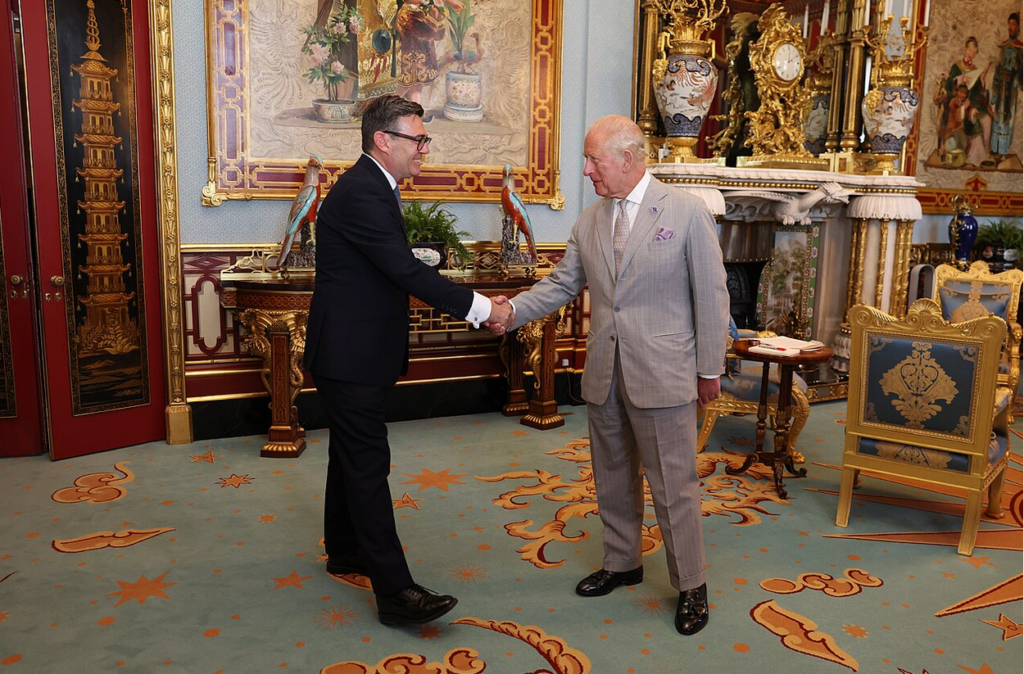
Burnham being received by Charles III at Buckingham Palace in 2026.
Sabrina Bell–U.k. Parliamentary Candidate, Race Relations Activist, and Promoter of Diversity and Equality.