Above Photo: Shane Heskin, left, and Justin E. Proper, in image from the firm’s website.
Amie Riggle Berlin, the former Securities and Exchange Commission senior trial counsel who led the civil enforcement case against Par Funding, is now working with the law firm of Shane Heskin, a lawyer who supplied information and helped deliver witness declarations to the SEC before it took the company to court.

The move raises questions about when Berlin and Heskin first discussed employment, whether the SEC reviewed the move and whether Berlin has worked on any Par Funding matters in private practice.
Berlin’s Florida Bar profile lists her in private practice.
Heskin copied her at a Heskin & Proper PLLC email address when he responded to Black Star News’ request for comment. Asked when she first discussed joining the firm, whether she sought or received SEC ethics guidance, and whether she has worked on Par Funding matters since the move, Berlin did not reply by the editorial deadline. Heskin did not address the questions. He wrote, “How much is LaForte paying you for your pardon propaganda?”
Berlin was not listed on Heskin & Proper’s website as of Nov. 14, 2026. Her Linkedin profile still lists her as SEC senior trial counsel.
On May 20, 2025, the SEC moved to withdraw Berlin as its counsel in the case, citing “the assignment of other matters.” U.S. District Judge Rodolfo A. Ruiz II granted the motion that day. It remains unclear when Berlin began employment discussions with Heskin or whether those discussions overlapped with her work on the case. Federal ethics rules can require recusal from certain matters while a government employee seeks private employment, and federal law restricts certain representations before the government after an employee leaves.
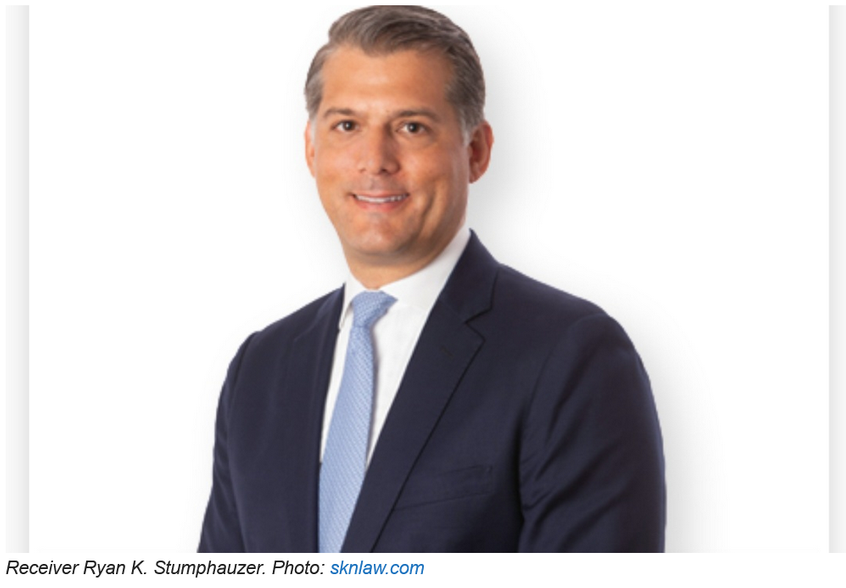
The SEC’s ethics office and court-appointed receiver Ryan K. Stumphauzer did not respond to requests for comment by the deadline. The U.S. Attorney’s Office for the Eastern District of Pennsylvania, which handled the separate criminal prosecution, also did not respond when asked whether Berlin had contacted it about Par Funding since joining the firm or whether it had reviewed the move for potential conflicts.
Before the SEC sued Complete Business Solutions Group, the Philadelphia merchant cash advance company known as Par Funding, Heskin represented merchants who challenged its financing agreements. In a June 24, 2020 email reviewed by Black Star News, he directed Berlin and SEC attorney Linda Schmidt to a recorded call involving Par Funding. On July 22, Berlin asked him how cases filed by NY Unity Factor were connected to the company. Heskin pointed her to affidavits he said explained the relationship.
In a subsequent discovery response signed by Berlin, the SEC acknowledged exchanging draft declarations with Heskin and receiving signed declarations from his clients through him. A 2024 Philadelphia magazine investigation also documented Heskin’s years of litigation against Par Funding and how depositions taken by him and Justin Proper figured in the criminal indictment.
In 2021, former CEO Joseph LaForte and other defendants sought dismissal, alleging that the SEC had failed to independently verify information supplied by Heskin and financially interested clients, including Kara DiPietro. They argued that the merchants wanted to avoid repaying tens of millions of dollars in advances. Ruiz denied the motion.
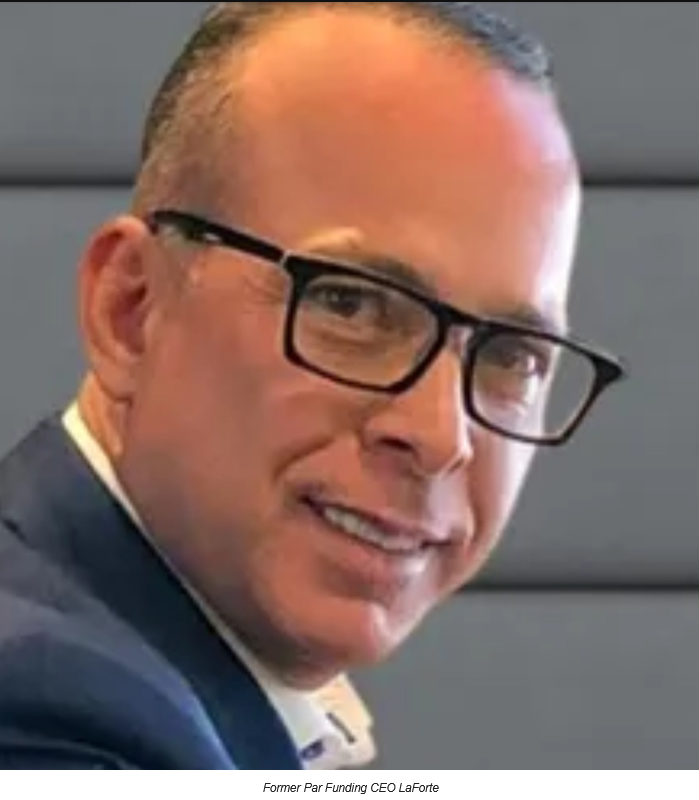
LaForte’s supporters say Berlin’s move to Heskin’s firm adds to their questions about how the SEC brought the case and selected a receiver. As Black Star News previously reported, Stumphauzer and Ruiz both clerked for U.S. District Judge Federico A. Moreno in the Southern District of Florida. Stumphauzer clerked from 2003 to 2004 and Ruiz from 2005 to 2006. The SEC recommended Stumphauzer in a sealed emergency application on July 24, 2020, and Ruiz appointed him three days later.
Black Star News asked the SEC whether Berlin knew of the shared clerkship when Stumphauzer was recommended and asked Stumphauzer whether the connection had been disclosed to Par Funding’s counsel. Neither responded before that article was published.
In an earlier interview with Black Star News, LaForte attorney Ian Healy said Par Funding received no Wells notice before the SEC sought emergency relief in 2020. A Wells notice ordinarily gives the recipient an opportunity to respond before SEC staff recommends enforcement. The agency can proceed without a notice when it concludes that immediate action is necessary to protect investors, which Par Funding attorneys said was not the case since the company was profitable.
“The company had lawyers on payroll. They hit hard with federal agents and didn’t ask a single question. They just took Heskins false narative,” a former Par Funding employee said. “They held back discovery for six months while the receiver dismantled the estate,” the employee said.
Heskin previously told Black Star News that he represented merchants he considered victims and disputed the suggestion that his clients were working with the FBI. The receiver separately disputed the merchants’ usury claims, arguing in court that the agreements at issue were purchases of receivables.
In a separate Maryland case, federal prosecutors announced on Oct. 20 that the former Heskin client DiPietro had been indicted on six counts of bank fraud. They allege she submitted more than 20 Paycheck Protection Program applications seeking more than $7.5 million and that accounts she controlled received more than $2.5 million.
On April 22, 2026, Ruiz approved a receivership settlement with merchants that reduced certain outstanding balances and provided for a collective $490,000 payment to their lawyers from the proceeds of a separate settlement. The agreement identifies Heskin, his then-firm White and Williams LLP, another attorney and that attorney’s firm as the recipients collectively. The court said the agreement resolved litigation and helped avoid potential delays in distributions to investors. When Black Star News previously asked Heskin about the $490,000 provision, he accused the publication of producing paid propaganda and did not address the payment.

The SEC brought its civil case in 2020, and the court placed Par Funding into receivership that July. In the separate criminal case, LaForte pleaded guilty to offenses including racketeering conspiracy, securities fraud and tax crimes and was sentenced to 15½ years in prison. He has told Black Star News that he pleaded guilty under pressure after prosecutors threatened to bring tax charges against his wife and Par Funding co-founder, Lisa McElhone. He said his plea secured an agreement intended to spare her jail time. McElhone also pleaded guilty in the tax case. In March 2026, the company itself pleaded guilty through the receiver to conspiracy to commit wire fraud and securities fraud.
In June 2024, at the receiver’s request, Judge Ruiz found by a preponderance of the evidence that Par Funding operated as a Ponzi scheme for the purpose of determining how to distribute receivership funds. Yet, the SEC told Black Star News in May 2026 that its complaint had never described Par Funding as a Ponzi scheme. The agency had used the term in an April 2022 motion before removing it from a revised filing.
LaForte’s defense disputed the Ponzi characterization, citing August 2021 reports by forensic accountant Joel D. Glick of Berkowitz Pollack Brant. Glick’s analysis found that merchant repayments were sufficient to cover principal and interest paid to investors. Consultants at Development Specialists Inc.—the firm hired by the receiver—including Bradley D. Sharp, analyzed the company’s cash flows for the receiver and concluded that Par Funding depended on new investor funds to make those payments.
LaForte and his lawyers claim the receivership’s fees and expenses have been exorbitant. In a Nov. 2, 2026 filing, the estate reported $209.7 million in investor disbursements through Sept. 30. Adding the separately listed expense categories in that same schedule yields approximately $61.1 million in professional payments and other receivership costs since 2020. That is 29.1% of the amount disbursed to investors, or nearly $30 in expenses for every $100 paid to investors.
The schedule lists $30.3 million in payments to the receiver and other professionals, a category that also includes certain technology and tax-preparation costs. It separately lists $30.8 million in other expenses, including $8.45 million in business expenses, $7.96 million in life-settlement policy premiums, $7.53 million in property and real estate liquidation expenses, and $6.84 million in third-party litigation fees.
Development Specialists Inc., the receiver’s operations adviser, reported that its staff handled accounting, worked on tax filings and continued to manage the merchant advance portfolio.
The size of those bills has also drawn attention to how quickly some were approved. As Black Star News previously reported, on Feb. 17, 2026, Ruiz approved a request for $347,356 in fees and reimbursements the same day it was filed. The application and exhibits ran 243 pages.
In June, Ruiz approved a $280,242 request the day after it was filed. Stumphauzer did not respond to earlier questions from Black Star News about the billings.