By Milton Allimadi
Photos: YouTube Screenshots|Wikimedia Commons
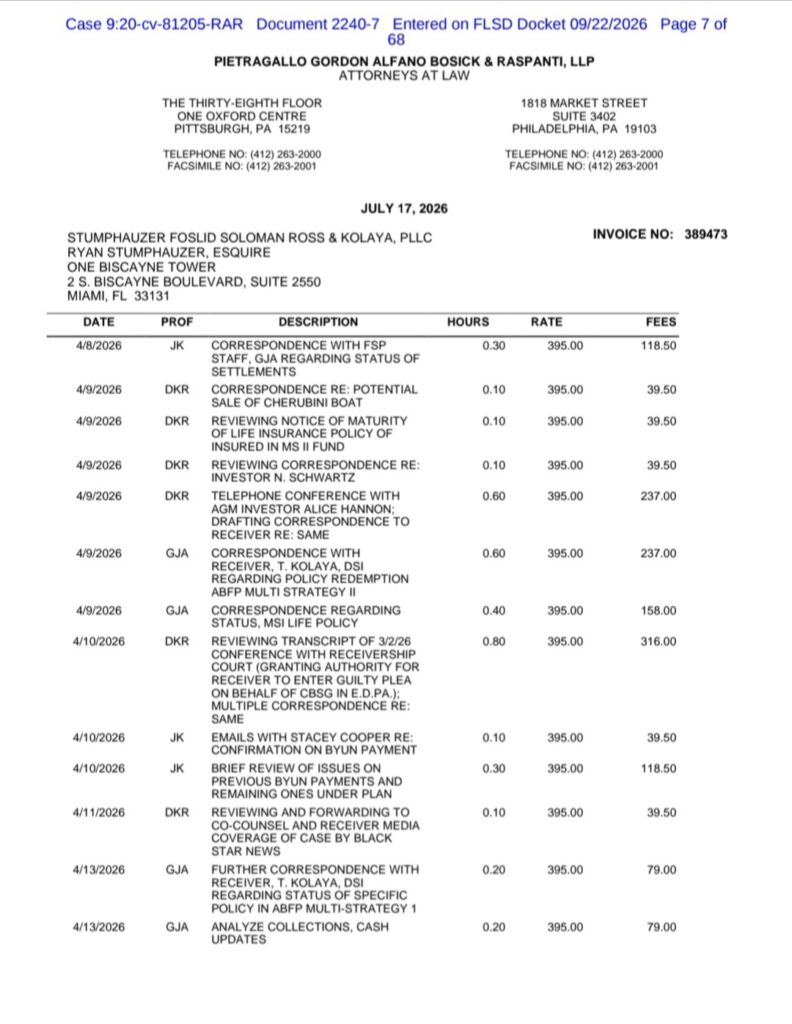
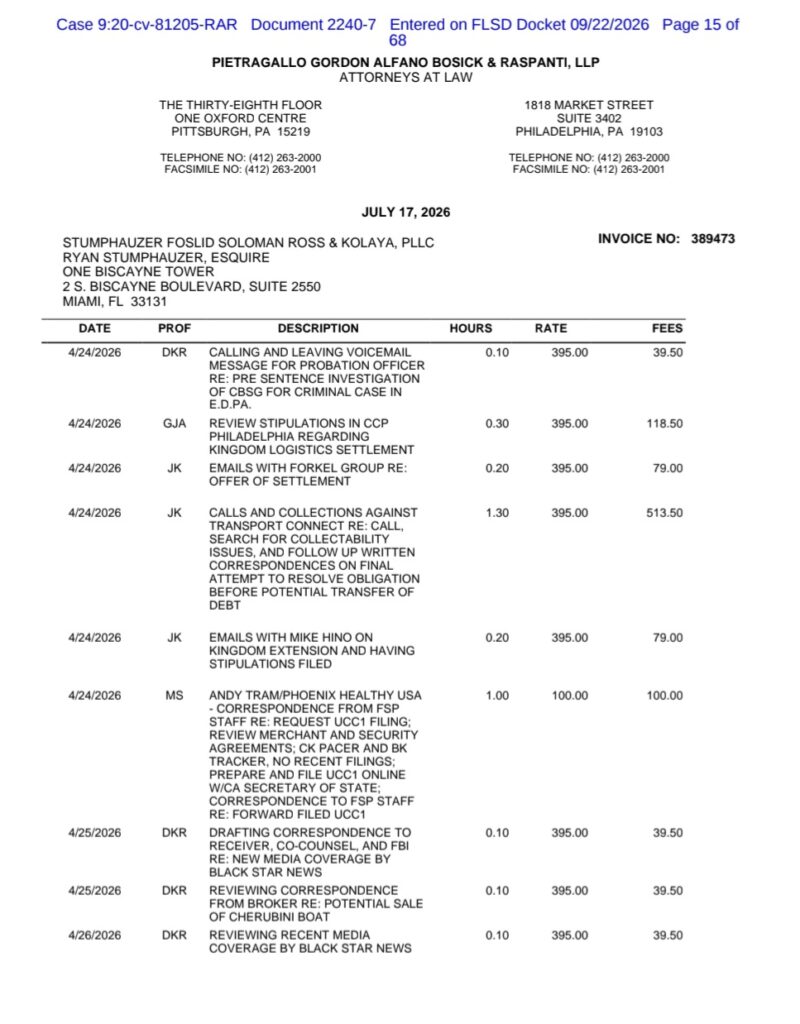
Attorneys for the court-appointed receivership overseeing Complete Business Solutions Group (CBSG), also known as Par Funding, billed the estate for reading Black Star News investigative articles, reviewing questions submitted by the publication, discussing whether to respond, and forwarding news coverage to the FBI and unspecified “government” officials, according to billing records submitted to federal court.

The records also show charges to the estate for monitoring former Par Funding executive Joseph LaForte’s efforts to obtain a presidential pardon, including his website www.freejoelaforte.com.
The records don’t indicate why the receiver’s lawyers would forward articles by Black Star News to federal law enforcement. “This is the kind of thing they used to do in the old Soviet Union,” a lawyer who declined to be identified said.
The disclosures come as former Par Funding employees, lawyers, and LaForte have been questioning approximately $30 million in receivership professional fees and about another $30 million in operating expenses. This is the sixth year of the receivership.
These critics argue that the combined $60 million in expenditures is “excessive,” amounting to 30 percent of the $200 million so far that the receivership has distributed to investors.
They also point to the Glick report, which they contend concluded that Par Funding was a highly profitable business that never should have been dissolved.
The disputed financial claims have been the subject of Black Star News coverage over the last several months, including a review of documents on court-appointed receiver Ryan K. Stumphauzer’s website. During the course of one such review, Black Star News learned for the first time that lawyers for Stumphauzer had been forwarding the articles to federal law enforcement. The billing entries do not state why.
Stumphauzer and his partner Timothy A. Kolaya—both of Stumphauzer Kolaya & Sloman, which also serves as the receiver’s counsel—did not respond to questions sent by email. The receiver’s outside counsel, Gaetan J. Alfano and Douglas K. Rosenblum, both of Pietragallo Gordon Alfano Bosick & Raspanti, also did not respond to the email.
The email asked about the purpose of forwarding Black Star News articles to the FBI and whether articles from The Philadelphia Inquirer, which has also covered the CBSG receivership history extensively, had been forwarded to law enforcement.
Black Star News was the first to report a statement from the Securities and Exchange Commission (SEC) that it would “take exception” if the media outlet reported that the agency considered Par Funding a Ponzi scheme.
The SEC did not respond to an email seeking comment. Stumphauzer has not responded to a single inquiry from Black Star News about the billings or whether he still considers Par Funding to have been a Ponzi scheme.
FBI and “Government” Entries
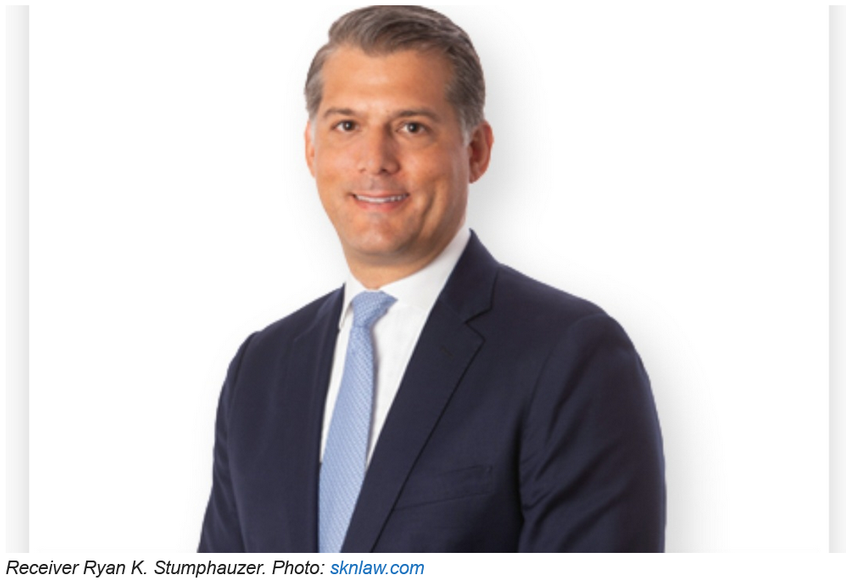
The reviewed charges appear in Receiver Stumphauzer’s 24th Application for Allowance and Payment of Professional Fees, Document 2240, including records submitted by outside counsel Pietragallo Gordon Alfano Bosick & Raspanti.
According to the document, on April 11, 2026, attorney Rosenblum billed $39.50 for: “Reviewing and forwarding to co-counsel and receiver media coverage of case by Black Star News.”
On April 25, Rosenblum billed another $39.50 for: “Drafting correspondence to receiver, co-counsel, and FBI re: new media coverage by Black Star News.”
On April 26, he billed $39.50 for: “Reviewing recent media coverage Black Star News.”
On May 8, Rosenblum billed $79 for: “Reviewing media coverage of case; forwarding same to receiver, co-counsel, and government.”
The billing descriptions do not explain why the FBI was contacted, which agency was meant by “government,” whether any official had requested the articles, whether the process was initiated by the attorneys representing receiver Stumphauzer, or what purpose the communications served.
The Black Star News inquiry submitted via email asked Stumphauzer, Kolaya, Alfano, and Rosenblum whether referring media articles to law enforcement was routine practice. The SEC, which initiated the enforcement action leading to the receivership, was separately asked whether it considers such referrals customary.
The references to the FBI also arise against the background of earlier disputes concerning the origins of the federal investigation of Par Funding.
In an earlier Black Star News article, Ian Healy, an attorney representing LaForte, said the SEC case had its genesis in a dispute between Par Funding and merchants represented by attorney Shane Heskin.
According to Healy, the merchants discovered that LaForte had a prior criminal conviction and used that information as justification for not repaying tens of millions of dollars owed to Par Funding.
Healy further claimed that the merchants subsequently became FBI informants and recorded thousands of hours of telephone conversations. Heskin disputed that characterization when contacted by Black Star News.
“I had merchants who were victimized. I represented these merchants in civil court cases. I don’t think it’s accurate to say that my clients were working with the FBI. My clients were victims and had cases in civil court,” Heskin said.
He added: “I can’t confirm or deny what happened with the FBI. The only thing I can comment on is what was publicly disclosed.”
More recently, Black Star News contacted Heskin seeking clarification concerning a reported $490,000 payment from the receivership to him and other attorneys.
Rather than address the question about the payment, Heskin accused Black Star News of being a “propaganda” front for LaForte and demanded that the publication never contact him for comment again.
Billing Estate for Questions Receiver Didn’t Answer
The records also show that the receiver and his attorneys billed the estate for reviewing Black Star News inquiries and considering whether the receiver should respond to questions submitted via email.
On May 8, Rosenblum billed $39.50 for: “Reviewing and replying to correspondence from client re: Decision whether to comment on case to Black Star News.”
Another entry describes: “Reviewing and replying to correspondence from receiver re: refraining from responding to request for comment from Black Star News.”
On May 18, Rosenblum recorded 0.20 hours, or $79, in a billing entry that requires examination alongside the surrounding correspondence.
On June 16, Stumphauzer billed $39.50 for: “Case administration: reviewed email correspondence from M. Allimadi re: request for media comment pertaining to on-site merchant underwriting visits.”
On June 17, Kolaya recorded time for: “Case administration: review of email from D. Rosenblum forwarding article regarding Par Funding merchant declarations and collapse of Ponzi narrative.”
On June 30, Kolaya billed $39.50 for: “Case administration: reviewed email correspondence from M. Allimadi regarding a request for comment relating to the DSI and Glick Reports.”
That same day, Rosenblum recorded time for: “Case administration: review of R. Stumphauzer email regarding media inquiry about Par Funding DSI/Glick report and intended criticism about Judge Ruiz.”
The questions submitted by Black Star News concerned the financial management of the receivership, the Glick and DSI reports, and merchant underwriting practices.
The distinction between the two reports is significant. The Glick report concluded that Par Funding was a highly profitable business, a finding that contrasts with the financial conclusions reportedly presented in the DSI report prepared by the receiver’s consultant. Critics have also challenged the DSI report’s accounting methodology, contending that it did not comply with Generally Accepted Accounting Principles (GAAP). The competing findings raise questions about the financial characterization of Par Funding and the basis for the receivership’s conclusions.
“How does charging the estate for discussions about whether to answer questions from media concerning the receiver’s own performance benefit investors or the estate?” the lawyer who didn’t want to be identified, said. “Then to forward the articles to the FBI?”
The SEC, “Ponzi” Question, and LaForte’s Pardon Bid

A May 27 entry by Rosenblum, totaling $118.50, states: “Reviewing new media coverage supporting Joseph LaForte’s position that the SEC overreached and does not agree with the ‘Ponzi’ designation.”
The entry continues: “Drafting correspondence to client and co-counsel re: same.”
That description omits an important distinction, which Black Star News pointed out in an email to Stumphauzer and the three attorneys representing the receivership.
The SEC itself told Black Star News that “…in our complaint we never refer to this case as a Ponzi scheme so we would take issue if you refer to it as such in any context attributed to the SEC.”
Black Star News was therefore reporting a communication received directly from the SEC, not merely repeating LaForte’s position.
The records also reveal expenditures relating to LaForte’s campaign for presidential clemency.
On May 8, Kolaya billed $79 for: “Case administration: review of articles from counsel for LaForte in effort to support pardon request and emails with co-counsel re same.”
On May 26, Kolaya billed $276.50 for: “Case administration: review of freejoelaforte.com website and emails with co-counsel re same.”
On June 10, a $79 billing entry involving Rosenblum and Alfano states:
“Conferring regarding Joseph LaForte’s efforts to obtain a presidential pardon and US Attorney’s response to same.”
LaForte was sentenced to 15½ years in prison after pleading guilty to racketeering conspiracy, securities fraud, tax crimes, and other related offenses. He spent approximately 2½ years under house arrest and has been in prison for four years.
LaForte has claimed that he was pressured into pleading guilty when the government threatened his wife with criminal charges.
“Why would a court-appointed receivership pay attorneys to review a presidential pardon campaign which is protected by the First Amendment?” the lawyer said. “A pardon could conceivably affect related legal proceedings. But the entries do not explain how these activities protected receivership assets, facilitated investor distributions, or otherwise served the estate.
Former Par Funding employees, attorneys, and LaForte supporters have questioned what they describe as Rosenblum’s contradictory and potentially conflicting dual roles.
On the one hand, Rosenblum serves as legal counsel for CBSG in criminal proceedings, a role that involves minimizing the company’s criminal exposure, defending its viability, preserving its assets, and protecting it from unfounded corporate fines and forfeitures.
On the other hand, Rosenblum also serves as co-counsel to Receiver Stumphauzer, whose objective has been, and continues to be, to liquidate the company, take control of and dispose of corporate assets, settle liabilities on the receiver’s terms, and continue billing the estate, the critics contend.
The critics question how Rosenblum can simultaneously represent the interests of the corporate entity and those of a receiver pursuing its liquidation.
Rosenblum did not respond to a previous request for comment concerning his dual roles in an earlier Black Star News article.