By Milton Allimadi and Colin Benjamin:
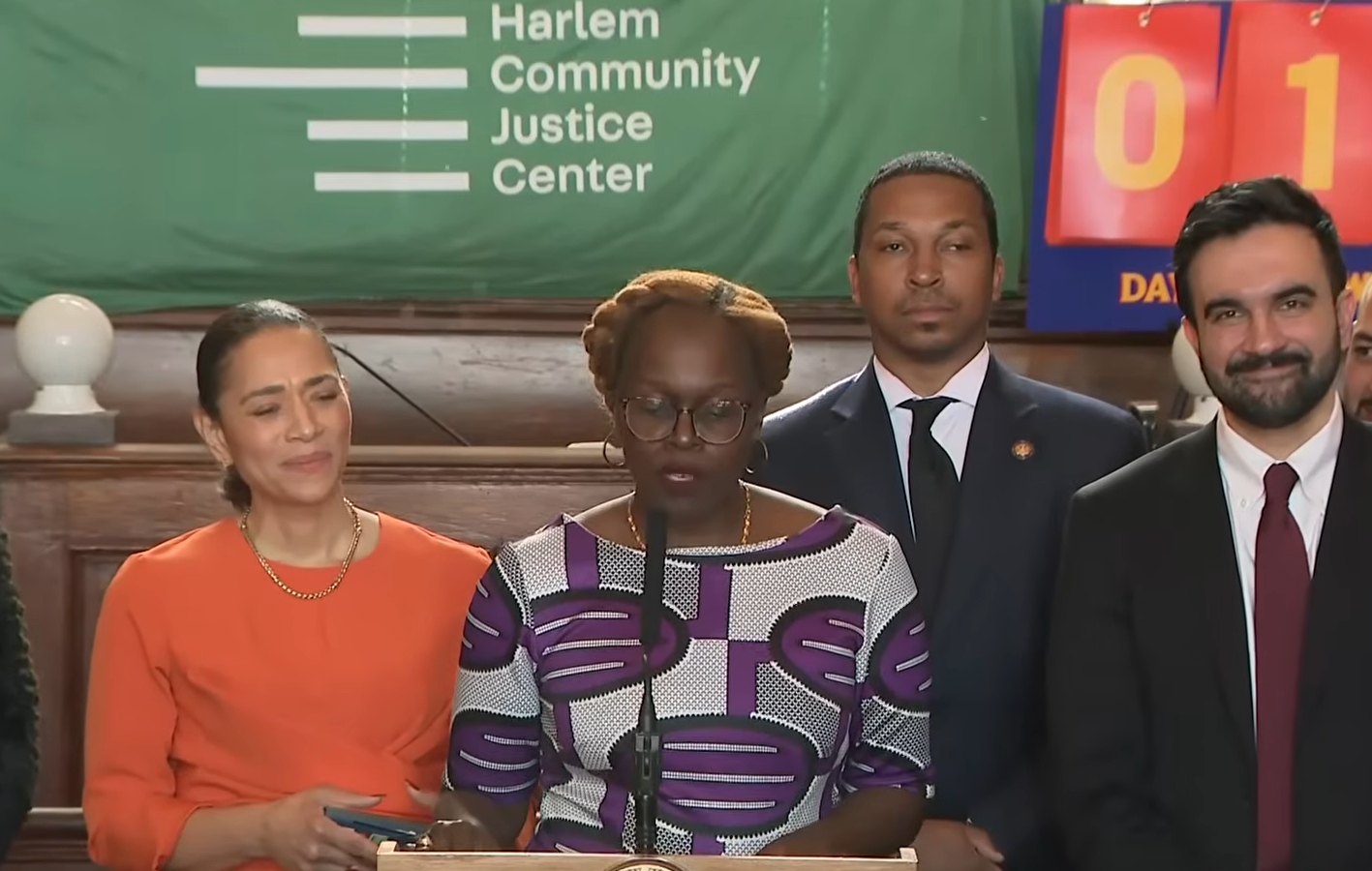
New York City’s Commissioner of Equity and Racial Justice, Afua Attah-Mensah, says the administration of Mayor Zohran Mamdani is determined to confront longstanding racial and economic inequalities, even as diversity, equity and inclusion (DEI) initiatives face growing political and legal attacks across the country.
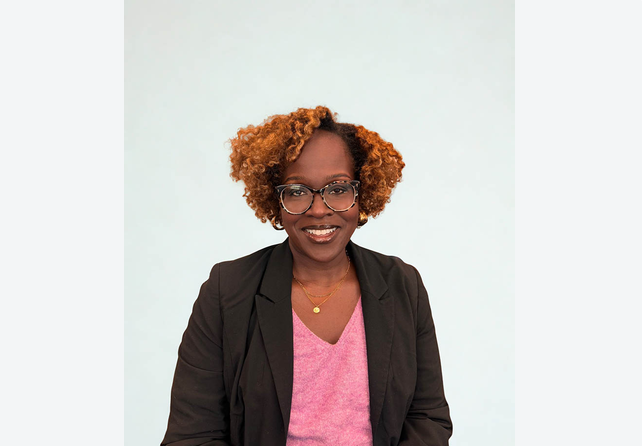
In an extensive interview with Milton Allimadi and Colin Benjamin, co-hosts of the Black Star News Show on WBAI 99.5 FM, Attah-Mensah discussed the administration’s racial equity agenda, the disproportionately small share of city contracts awarded to Black-owned businesses, support for small businesses in historically neglected communities, and the challenges of implementing reforms in an increasingly hostile national political environment.
The commissioner emphasized that racial disparities in New York City cannot be understood without examining the historical role of government policies in creating and perpetuating inequality.
“Government has an obligation to play an equal role in removing the hurdles that they put in place,” she said.
Attah-Mensah described her responsibilities as a “Herculean task,” particularly at a time when corporations, universities and government institutions elsewhere are retreating from commitments to racial equity.
“A lot of folks are backing away from issues of equity. They’re backing away from issues of racial justice,” she said. “And this administration has done the opposite.”
She said Mayor Mamdani recognizes that addressing New York City’s affordability crisis requires confronting racial and economic inequality.
“The mayor has said several times, we cannot tackle the affordability crisis without engaging in issues of racial justice and equity,” she said.
Allimadi opened the interview by asking Attah-Mensah to explain the mandate of the Mayor’s Office of Equity and Racial Justice and what measurable achievements would constitute success after one year.
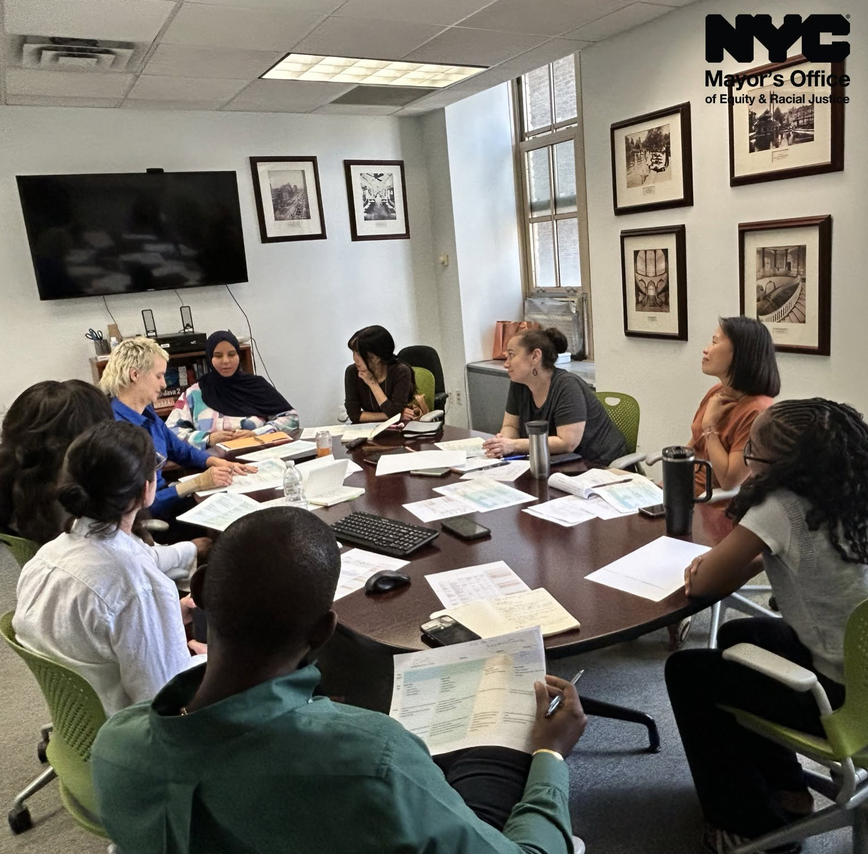
The commissioner explained that the office was created following voter approval of an amendment to the New York City Charter. The amendment also requires the city to develop a citywide racial equity plan every two years, annually assess the true cost of living in New York, and establish an Accountability Partner Corps.
She emphasized that the requirement is for an actual plan, rather than merely another government report.
The office is responsible for helping coordinate implementation of the racial equity plan across 45 city agencies.
Attah-Mensah said success would mean establishing clear benchmarks, helping agencies begin implementing their commitments, and maintaining meaningful engagement with residents to determine whether government policies are producing tangible improvements.
“Success looks like implementation beginning to happen and engagement from community,” she said.
She acknowledged that the process would inevitably encounter difficulties and insisted that the city must be transparent when agencies fall short.
“We should assume that this will not be a smooth road. It was not a smooth road that got us here,” she said.
When Allimadi asked whether the office would publish an assessment of the participating agencies’ performance, Attah-Mensah confirmed that a preliminary report would be released.
“Here’s where we’re meeting the mark. Here’s where we’re falling short. Here’s what we’re learning,” she said, describing the information the report would contain.
She added that other municipalities across the country are watching New York City’s approach to racial equity and could draw lessons from its implementation.
The commissioner said her office has approximately 62 to 65 staff members across several units, including the Young Men’s Initiative, NYC Her Future, the Commission on Gender Equity, an LGBTQIA+ office, and a central policy, planning and implementation team.
One of the interview’s central questions concerned the distribution of New York City’s enormous procurement budget.
Allimadi noted that figures he had examined for 2025 indicated that the city spent approximately $42 billion on private vendors, with less than 2% going to Black-owned businesses. He said Latino-owned businesses appeared to receive similarly small shares, while women-owned businesses fared only somewhat better.
He asked whether correcting these disparities would fall within the commissioner’s responsibilities.
Attah-Mensah confirmed that improving opportunities for minority- and women-owned business enterprises (MWBEs) is part of the city’s racial equity plan.
“The short answer to your question is yes,” she said.
“Issues of MWBEs, their access, the pipeline, are part and parcel of the plan.”
She explained that individual city agencies have procurement-related equity commitments and that her office would help oversee the implementation of those goals.
She also pointed to the city’s dedicated MWBE office, headed by Michael Garner, who previously worked on minority-business development in both city and state government.
The commissioner’s response underscored an important test for the administration: whether its racial equity commitments will translate into a substantially greater share of public contracts for Black- and Latino-owned businesses.
With billions of dollars in public procurement at stake, the issue extends beyond representation. City contracts can help businesses expand, create employment, accumulate capital and strengthen the economic foundations of communities that have historically been excluded from such opportunities.
Although Attah-Mensah confirmed that procurement equity is part of the plan, she did not provide a specific target for increasing the share of city contracts awarded to Black-owned businesses.
Benjamin asked the commissioner to elaborate on her description of the job as a Herculean undertaking and identify the obstacles confronting the administration.
Attah-Mensah said the national backlash against racial justice initiatives makes the work especially challenging.
She argued that racial disparities in housing, healthcare and economic opportunity must be examined in their historical context.
“When we talk about issues of disparate access in housing, we have to talk about the redlining that happened here,” she said.
She also pointed to the relationship between urban planning and public health, citing high asthma rates in the South Bronx and the impact of the Bruckner Expressway.
These conditions, she argued, did not arise by accident or because of shortcomings within the communities affected.
“We have to put this in the historical context so that we’re not left with this harmful myth that this is about a lack of individual ability, or a lack of ability of a culture,” she said.
The commissioner described the racial equity plan as an “all-of-government approach” designed to identify disparities, measure access to services and develop policies that remove longstanding barriers.
She emphasized that responsibility cannot rest with one commissioner or one agency.
“It is the absolute responsibility of all of government to make sure that we are doing the work of government in a way that all New Yorkers can access it,” she said.
Benjamin, noting that Attah-Mensah is a lawyer and Fordham University graduate, raised the prospect of legal challenges to the administration’s equity initiatives.
He referred to billionaire investor Bill Ackman’s involvement in the controversy surrounding former Harvard University President Claudine Gay and to conservative activist Edward Blum’s legal campaign against the Fearless Fund, whose grant program supported Black women entrepreneurs.
Benjamin asked how the commissioner was preparing for similar challenges to New York City’s racial equity policies.
Attah-Mensah said the administration had involved its legal offices in developing the racial equity plan and expressed confidence that the policies would withstand legal scrutiny.
“As part of putting out the plan, we were in partnership with the Office of Chief Counsel, with Corporation Counsel, and they are confident. We are confident that it will withstand scrutiny,” she said.
She emphasized that the administration had examined both its obligations under the City Charter and the legal framework governing implementation.
The commissioner did not discuss specific potential lawsuits but made clear that the administration intends to proceed despite the national backlash against DEI programs.
Allimadi also raised the threats made by some wealthy New Yorkers during the mayoral campaign that they would leave the city if Mamdani were elected.
He asked whether some of those who had been particularly vocal were becoming more pragmatic.
Attah-Mensah challenged the narrative that wealthy residents were fleeing New York because of the administration’s policies.
She said the mayor had repeatedly pointed to data disputing claims of a mass departure of millionaires.
Instead, she argued, the city’s more pressing problem is the departure of working-class residents who can no longer afford to remain.
“Who has left the city are working New Yorkers,” she said, referring to residents forced to choose between paying rent and purchasing insulin, or between childcare and healthcare.
She described workers who help sustain New York City’s economy and cultural institutions but cannot afford to enjoy the entertainment and other amenities they help make possible.
The commissioner cited the administration’s efforts to broaden access to cultural events, including opera, theater and World Cup-related activities, as part of its larger vision of making the city accessible to all residents.
“How do we make this city accessible for all New Yorkers? How do we make it so that they are able to live in dignity and thrive here?” she asked.
Benjamin turned the discussion to the need for greater Black and Latino ownership of businesses operating in their communities.
Invoking Malcolm X’s longstanding criticism of businesses that extract profits from Black neighborhoods without employing local residents or reinvesting in those communities, Benjamin asked how the administration intended to promote community-based economic development.
He also raised the legacy of the war on drugs, which devastated many Black communities through incarceration and other consequences, and questioned whether those communities were benefiting sufficiently from the legalization of cannabis.
Benjamin said that while traveling through New York City, he frequently encountered cannabis businesses that did not appear to be Black-owned.

Attah-Mensah began by outlining the administration’s broader small-business strategy.
She pointed to the appointment of a dedicated official responsible for supporting neighborhood mom-and-pop businesses, as well as initiatives aimed at microbusinesses, street vendors and entrepreneurs in historically disinvested communities.
She also cited programs administered through the Department of Small Business Services and initiatives such as WeNYC, supporting women entrepreneurs, and BeNYC, which has focused on Black entrepreneurship.
Attah-Mensah said the administration recognizes the economic multiplier effect of supporting locally owned businesses.
“We know that small business owners, particularly small business owners of color, are more likely to hire other people of color in the community,” she said.
Such businesses, she explained, can strengthen local employment and economic stability.
The commissioner also emphasized that childcare providers, many of whom are women of color and immigrants, should be recognized as essential small-business owners.
She said the administration’s expansion of childcare services, including its 2-K initiative, must be implemented in ways that preserve and support existing home-based childcare providers.
Although Attah-Mensah did not directly address Benjamin’s concern about racial disparities in cannabis dispensary ownership, her communications office subsequently provided additional information about Mamdani’s record on cannabis equity.
Timothy Turane, senior communications director for the Mayor’s Office of Equity and Racial Justice later provided additional information about Mamdani’s public support for Black-owned cannabis businesses.
Turane cited Mamdani’s remarks celebrating the opening of Matawana, a Black woman-owned legal cannabis dispensary in Brooklyn.
“The first Black woman to open a legal cannabis dispensary in Brooklyn, Leanne Mata embodies the future of legal cannabis in New York City,” Mamdani said, according to the commissioner’s office.
Turane also noted that Mamdani voted in favor of New York’s Marijuana Regulation and Taxation Act (MRTA) and subsequent legislation advancing cannabis normalization.
The communications office additionally highlighted the administration’s announcement of more than $8.4 million in grants to community-based organizations across the five boroughs, intended to support small businesses, increase foot traffic and improve neighborhood commercial districts.
The question of whether communities disproportionately harmed by decades of marijuana criminalization are receiving an equitable share of the economic benefits of legalization remains an important issue for the administration.
Benjamin also pressed the commissioner on whether New York City would use its considerable contracting power to encourage private corporations to advance racial equity.
He asked whether companies seeking city contracts might be expected to work with more Black-owned businesses and address inequities within their own organizations, particularly as the federal government moves in the opposite direction.
Attah-Mensah distinguished between encouraging voluntary partnerships and imposing binding requirements.
“While I can’t speak to lobbying or mandates in regards to that, what I can say is that there is clearly a willingness and an encouragement of partnership,” she said.
She explained that the administration wants to work with private businesses and industries interested in expanding opportunities for historically disadvantaged communities.
“Partnering with any business owner and industry that wants to have that conversation and figure out how we can do that, the door is always open,” she said.
Her response left unanswered whether the administration would eventually introduce additional enforceable equity requirements for companies benefiting from city contracts.
Toward the end of the interview, Allimadi asked Attah-Mensah what she enjoyed most about her work and whether there were other issues she wanted to bring to listeners’ attention.
The commissioner spoke about her personal investment in the city’s future.
“I’m a New Yorker. I am self-interested in this work,” she said, explaining that she wants New York to remain a place where families can live with dignity and raise future generations.
She acknowledged the obstacles confronting the administration but expressed optimism about the opportunities to make meaningful improvements.
Attah-Mensah also announced plans to visit all five boroughs with fellow commissioners to discuss the racial equity plan, explain the responsibilities of participating agencies and hear directly from residents.
She invited Black Star News listeners to participate in the process and said she would welcome another appearance on the program to provide updates about the borough visits.
“My call to action is we need partnership in this,” she said.
The commissioner encouraged residents to follow her office’s work online, including through the Instagram account @EquityCommish.
The interview highlighted both the ambition of the Mamdani administration’s racial equity agenda and the questions that will determine its ultimate success.
Among them are whether city agencies will meet measurable targets, whether Black- and Latino-owned businesses will receive a substantially larger share of municipal contracts, whether communities historically harmed by discriminatory policies will benefit from new economic opportunities, and whether the administration can withstand anticipated legal and political challenges.
For Attah-Mensah, the central question is whether New York City can move beyond acknowledging historical inequalities and demonstrate that government is capable of reversing them.
As she told the co-hosts, the objective is to ensure that all New Yorkers have the opportunity not merely to survive in the city, but to thrive.
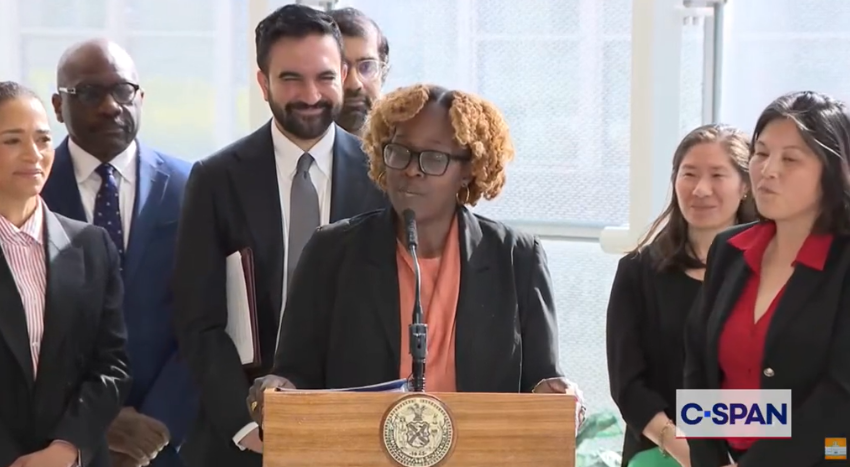
Milton Allimadi and Colin Benjamin co-host the Black Star News Show on WBAI 99.5 FM in New York.