By Black Star
Uganda’s Foreign Affairs ministry announced on November 27 that Ambassador Adonia Ayebare had spoken to his Democratic Republic of Congo (DRC) counterpart, Therese Kayikwamba Wagner; the DRC Foreign Affairs minister, in which conversation they agreed to address emerging escalating issues through diplomatic channels and that they would remain in constant contact.
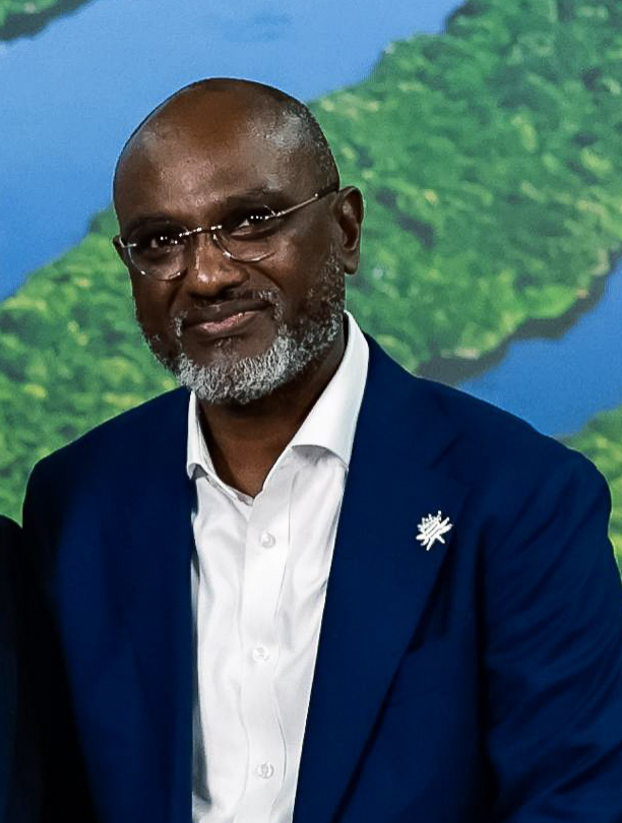
“Uganda Minister of Foreign Affairs, Amb Adonia Ayebare,” said a statement from Uganda’s Foreign Affairs ministry, “held a telephone conversation with his counterpart, H.E Therese Kayikwamba Wagner, Minister of Foreign Affairs of the Democratic Republic of Congo, on 27 November 2026. The Ministers discussed ways to enhance bilateral relations between the two brotherly countries and agreed to continue addressing any emerging issues through diplomatic channels. They agreed to remain in constant contact.”
The diplomatic telephone conversation was in consonant with the DRC’s November 24 complaint in which Uganda’s Head of Mission of the Embassy of Uganda in the Democratic Republic of the Congo was summoned by its DRC counterpart. The DRC summon said whereas it remains committed to preserving regional peace and stability, it equally remains determined to uphold its dignity and its institutions in the face of any form of provocation or interference.
According to the summons, the Congolese Government expected the Republic of Uganda to clarify its official position and take the necessary measures to prevent such lapses from recurring in the future. “This summons follows the deep concern of the Congolese Government arising from the recent messages posted on X account (formerly Twitter) of General Muhoozi Kainerugaba. These remarks, of particular gravity, create a major media incident and undermine the necessary restraint that must prevail in relations between Sovereign States.
“During this meeting, the Congolese side expresses its firm disapproval and demands clear explanation from the Ugandan authorities. The DRC recalls the imperative of mutual respect, national sovereignty and territorial integrity, fundamental principles that govern diplomatic relations and that can suffer no breach, including on digital platforms.”
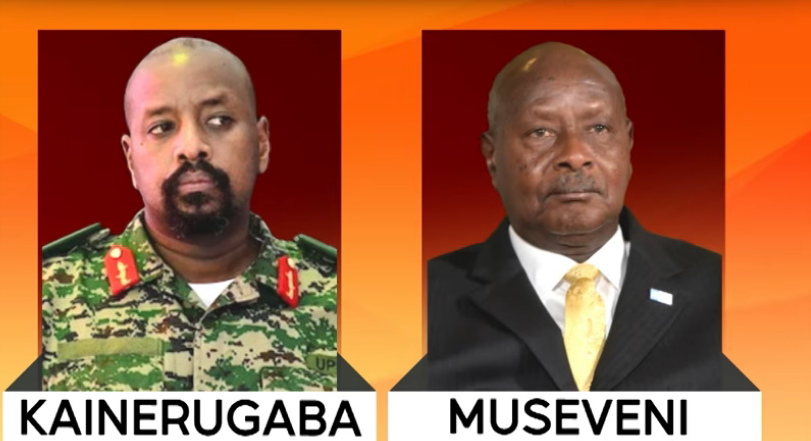
Gen Muhoozi Kainerugaba is Gen Yoweri Museveni’s son. Gen Muhoozi, who heads the military, had said in a volley of tweets, thus; “We approve the FRN’s capture of Walikale [in DRC]. UPDF [Uganda People’s Defense Forces] will not oppose them,” before continuing: “If FRN wastes a lot of time, we shall capture Walikale ourselves,” Gen Muhoozi dared.
FRN is the French acronym for the Front for the Refoundation of the Nation. FRN is a rebel political-military group stitched together on October 14 with former DRC president, Joseph Kabila, as its head.
The lingering big question mark, however, is who exactly speaks for Uganda nowadays, and who is running the show in the country?
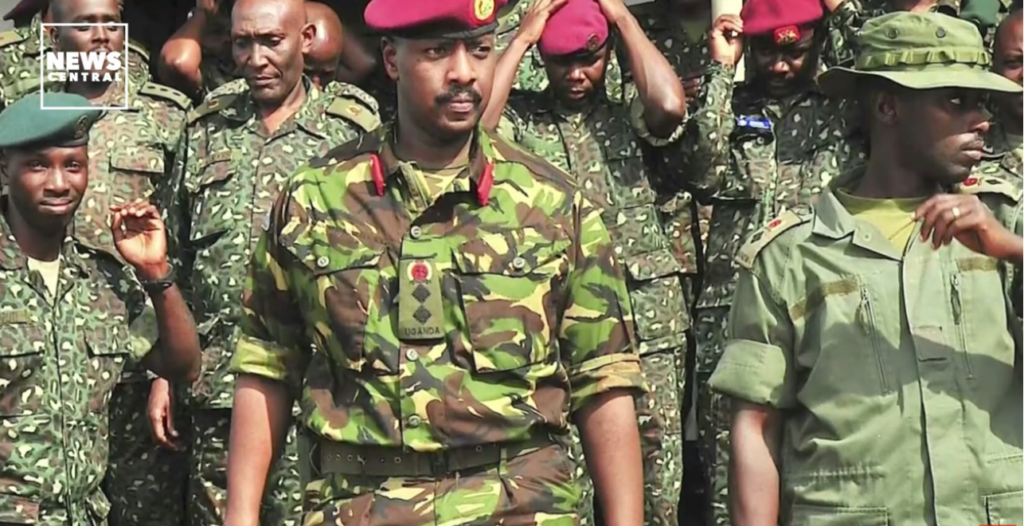
In the wee morning of November 29, Gen Muhoozi returned to his tweeting mode and mood with the usual bang! “Our Foreign Minister [of Uganda, Amb Adonia Ayebare] did not have my permission to call the DRC Foreign Minister to discuss anything. He made a mistake,” Gen Muhoozi roared on November 29.
Amb Adonia, who is a dripping member of Gen Muhoozi’s political outfit—the Patriotic League of Uganda—had been Uganda’s Permanent Representative to the UN as well.
“Thank you Afande [Swahili language for Senior-ranking officer as used in the armed forces] for taking my call and giving me time to explain, and your support for my work in protecting Uganda’s interests in the region and beyond,” Adonia replies Gen Muhoozi in an apparent capitulation and supplication, to which Gen Muhoozi retorts: “Our Foreign Minister has explained everything to me. It was not him who looked for the DRC Foreign Minister but the other way round. She called him many times asking to speak. He is forgiven. He has no problem.”
In the opinion of a one Karenzi Aime, on November 29, “Uganda is no longer a country; it’s not even a farm, but something else! A foreign minister is doing their right job and then the general says he made a mistake. Then barely 3 hours [later], the general comes to tell us how the Minister didn’t make any mistake. And some Ugandans are still chanting and praising whatever is happening. Ugandans were cursed!”
But that was not the end of things to come and go DRC’s way for Gen Muhoozi declares that “friendly advice to our brothers in Kinshasa: summon our Ambassador again. We shall reciprocate.” Kinshasa is DRC’s political and administrative capital.
And it appears the military incursion into the DRC by the UPDF is still on the horizon for the General says; “On Isiro [in DRC], we are simply waiting for the greenlight from the Commander-In-Chief,” Muhoozi declared on November 29. Museveni is the Commander-In-Chief. “We have a lot of love and respect for our brothers in the FARDC,” Muhoozi claims, nonetheless. FARDC are the DRC’s national army.
Overturning an earlier declaration, however, “To the wanainchi [Swahili for citizens] of Lubero. This is General Muhoozi Kainerugaba addressing you. Under the guidance of H.E. Yoweri Museveni, Commander-In-Chief of the UPDF, we shall not withdraw from Lubero. You are safe,” Gen Muhoozi assured on November 29 afternoon.
Gen Muhoozi’s ‘safety address’ to the citizens of Lubero in DRC runs parallel to the November 27 statement issued by the UPDF’s Acting Director Defense Public Information in Uganda’s Ministry of Defense and Veteran Affairs. “The UPDF will soon withdraw its forces from out of Lubero Town in eastern Democratic Republic of Congo, handing over its security to the Congolese armed forces, FARDC. The UPDF withdrawal from the town located in the North Kivu province will start in the next two weeks,” Colonel Chris Magezi had gone on to announce: “The UPDF has operated in the area since January 2025 to counter fleeing Allied Democratic Forces (ADF) remnants that sought to escape pressure of joint military operations in North Kivu and Ituri provinces of eastern DRC,” the statement had said.
ADF is a rebel formation which had been destabilizing Uganda from Eastern DRC since the 1990s.
What remains uncertain, however, is what holds for Uganda which is seemingly rapidly uncontrollably turning upside down every other day with a foggy future staring at citizens.
