By Black Star:
At the risk of being misconstrued as sounding like members of the political opposition, more and more disciples of Uganda’s ruling National Resistance Movement (NRM) party appear increasingly to be seeing the proverbial light at the end of the tunnel. Whereas a majority of NRM enthusiasts are said to be fearful to speak out, a handful are now breaking away with the convention of playing political rhetoric and chosen what citizens would prefer calling truth-telling, facing realities and facts on the ground head on.
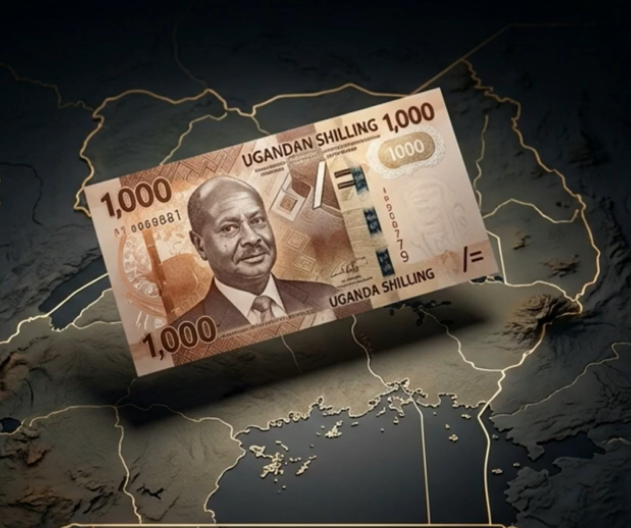
The latest surprise is the youthful NRM acolyte and former Presidential Assistant, in-charge of Research and Information in the Office of the President of Uganda, Duncan Abigaba on October 26: “UGX [Uganda Shilling] is the second worst-performing currency after Iraq’s dinar. It’s time to have an honest conversation about our plunging human rights record that is killing FDI [Foreign Direct Investment], capital flight to Nairobi [Kenya’s capital] and Dubai [in the Middle East] by our political and business class and a review of the Sovereignty Bill.”
The “plunging human rights record” is widely said to be orchestrated by the military headed by Gen Yoweri Museveni’s son, Gen Muhoozi Kainerugaba. Political and business elites are to be fleeing Uganda for fear of the political uncertainty so far engulfing the country. A dwindled investor confidence coupled with the enactment of the Protection of Sovereignty Law in May are together, among other factors, pointed as the major reasons why the UGX has weakened to the extent of becoming the world’s second-worst-performing currency only after the Iraqi dinar, according to Bloomberg.
The Protection of Sovereignty Law chokes foreign funding into Uganda which previously balanced the economy’s Balance of Payments, especially through Non-Governmental Organizations (NGOs) which remain suspended in the country with their bank accounts frozen. Consequently, the local currency has lost about 16% against the US Dollar (USD) in October 2026.
And whereas Museveni had denounced the central bank—Bank of Uganda (BoU)’s—proposal to touch the foreign reserves in order to save the rapidly sliding shilling—BoU has finally caved in and tapped into its foreign exchange reserves on October 26, selling an undisclosed amount in a bid to stabilize the speedily falling shilling in a monetary policy intervention. As a fiscal policy intervention, the finance ministry has already directed all Ministries, Departments and Agencies (MDAs) to cut on non-essential spending by half in an attempt to save the shilling. The dual interventions seek to minimize the gulf between the amount of UGX chasing after the USD. The interventions are also intended to crowd out the amount of the shillings in circulation via expenditures. “Having witnessed the Ugandan shilling become the world’s second-worst-performing currency this month [October] after Iraq’s dinar, I now understand that it doesn’t [take] just a war to crash an economy,” journalist Gabriel Buule commented on October 26.
The Euro crossed 5,000 for the very first time ever, the Great British Pound hurrying towards 6,000 as the USD ran away an extra 75 for a UGX as of October 26. The USD almost kissed 4,500. Customers with UGX at forex bureaux are displaced by those wielding the USD to be served first.
According to senior economist, who is also NRM MP and NGO head in Kampala-Uganda, Dr Patrick Wakida, external shocks may have lit the fire, but domestic weaknesses have allowed it to spread. The Uganda shilling, he says, is under pressure from two forces: External shocks are real, but they are not the whole story; domestic factors are also amplifying the strain. The Treasury is right: When US interest rates rise, investors chase those higher returns, pulling money out of Kampala into New York. The Middle East conflict has also driven up oil and shipping costs. Since Uganda imports all its fuel, every spike in global oil prices puts more pressure on the shilling. This explains the trigger, “but not why we are so vulnerable”.
“The deeper problem lies in the structure of our economy. Uganda exports primary products like coffee but imports almost everything else, including fuel, medicine, edible oil, machinery, even toothpicks. So, when the dollar strengthens, the import bill explodes and there’s little local production to cushion the shock. Add to that a persistent fiscal deficit, heavy domestic borrowing by the government and foreign reserves covering less than four months of imports and you get an economy that catches a cold every time the world sneezes,” Dr Wakida analyses.
Human Rights Advocate, Gad Kanyesigye, on October 26, says curtly; “Let’s face reality”. When you list the world’s most unstable economies: South Sudan, the Democratic Republic of Congo, Palestine, Syria, Ukraine—and “realize their currencies are holding more value than ours [UGX], it’s no longer an economic debate; it’s a leadership failure”.
This is not about global shocks, at least according to Kanyesigye. “This is about economic governance. A currency is a reflection of confidence, productivity and leadership. And right now, ours is reflecting failure. You have failed to protect the purchasing power of Ugandans. You have failed our people,” Kanyesigye tells Finance Ministry’s Permanent Secretary and Secretary to the Treasury, Dr Ramathan Ggoobi and the ruling NRM.
And on October 26, Gichuki Kahome, of Financial Literacy spreading financial wellness, warned that Uganda is edging toward a currency crisis. “Two weeks ago [addressing the nation on the country’s 64th Independence Day on October 9,” Kahome remembers, “President Museveni said he had blocked the Bank of Uganda from using forex reserves to defend the shilling…Today, [October 26], Uganda is drawing on those same reserves. In between, an emergency 225bp rate hike to 12%, the largest since 2011 and the first direct dollar sale since 2022.”
Through a Monetary Policy Statement on October 14, BoU raised the Central Bank Rate from 9.75% to 12% in an attempt to clip borrowing, but according to Kahome, “It didn’t work. The shilling lost more than 11% in October, closing near UGX4,420. Second-worst currency in the world this month after Iraq’s dinar.”
The problem is the size of the war chest, he explains. About $6-7 billion in reserves, roughly 2.7 months of import cover. The EAC benchmark is 4.5 months. “When a central bank raises rates and sells dollars at the same time, it is telling you the pressure is bigger than expected. Foreign investors are leaving the bond market and the oil bill keeps rising.” In his address, Museveni had rebuked BoU, thus; “Don’t squander our dollars.”
Constitutional lawyer and closed NGO head, Dr Sarah Bireete, however, attempts taming the powerful in leadership: “UGX—second worst-performing currency in the world after Iraq’s dinar. When we say the Pearl is consistently listed among failed states, some regime propagandists come here to quarrel…Without fixing the politics, forget about 10-fold growth…” Uganda parrots a strategy growing the economy Ten-Fold from $50 billion to $500 billion by 2040.
But Financial and Investment expert Alex Kakande, on October 26, proffers pessimism for the UGX suggesting “the most important graph as you make decisions around USD-UGX. Forward premium is as high as 400 for a dollar to lock in FX [foreign exchange] in a year’s time. This is higher than last week. Whatever you do, this is not about to slow down anytime soon.”
A forward premium occurs when the forward exchange rate of a currency is higher than its spot exchange rate. It is defined at meaning a currency is traded at a higher value for future delivery than its current market price.
Forward premium signals that the market expects the domestic or base currency to appreciate in value relative to the foreign currency; in Uganda’s case the USD. Its cause is primarily driven by interest rate differentials between two countries in which a currency from a country with lower interest rates often trades at a forward premium against a country with higher interest rates, as well as inflation and economic conditions. Businesses use forward contracts to lock in this higher rate and hedge against future currency risks.