By Tom Oniro Elenyu
Photos: YouTube Screenshots|Tom Oniro Elenyu
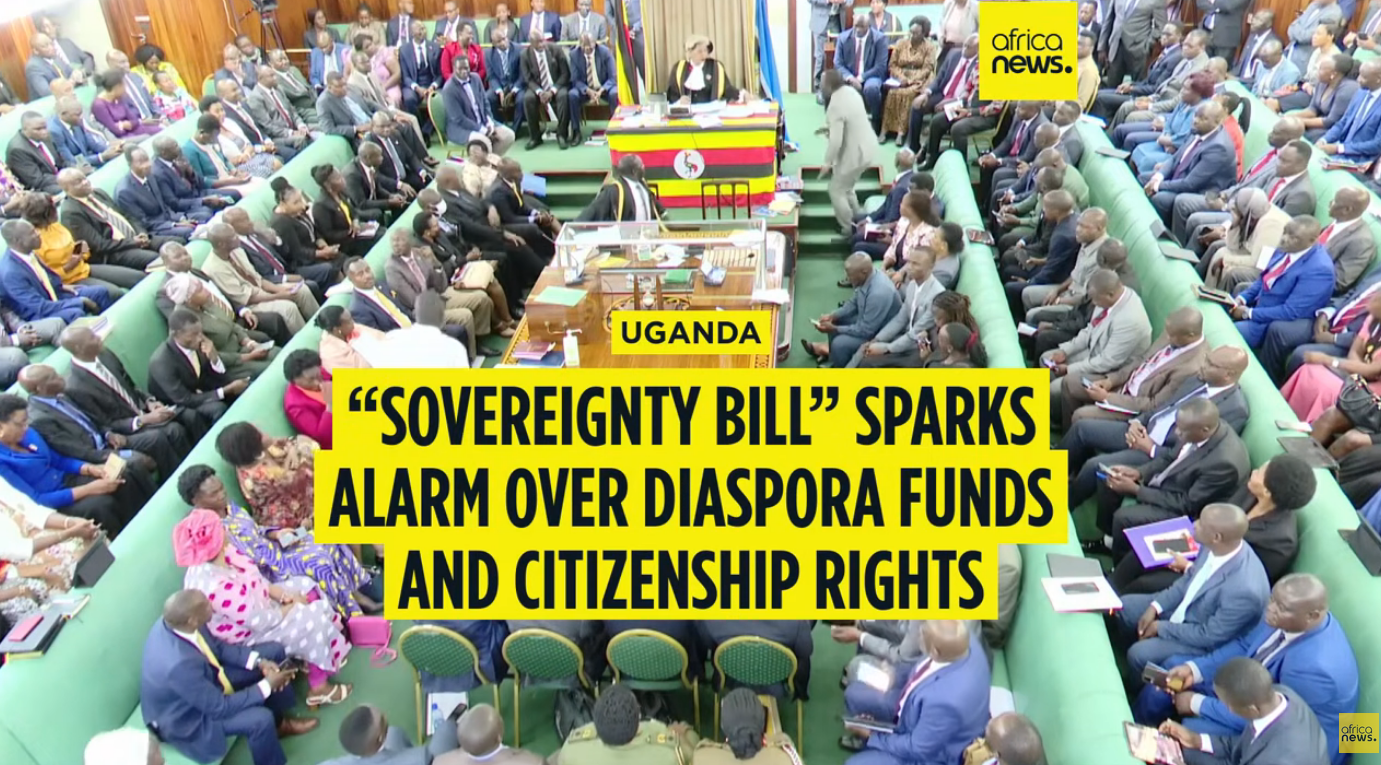
Just as Ugandans were constipating that the “rubberstamp” Parliament of Uganda was on the verge of passing the Government’s Protection of Sovereignty Bill, 2026 in its current crude form, Gen Yoweri Museveni has somersaulted on the controversial piece of legislation.

Following a month-long citizen disgust with the Bill, Museveni came out to disown the much-accelerated Bill.
“Of recent,” Museveni broke his silence on the cabinet and ruling party-approved Bill, “I have noticed a lot of noise, regarding the Sovereignty Bill. Which Sovereignty Bill is the noise about? The one I initiated in the Cabinet or another one? The Bill will stop FDIs (Foreign Direct Investments), support for religious bodies from abroad, Remittances from Ugandans working abroad, etc. Really!! That is not the Bill I initiated.”
In the April 30 letter, Museveni, went on: “I have talked to [the Government Chief Whip] Hon [Denis Hamson] Obua and the Chairpersons of the relevant Parliamentary Committees to make the Bill concentrate on the Sovereignty of policy-decision-making and not to meander in the areas of the freedom of Private enterprise transfers or private money transfers or church donations.”

According to Museveni’s clarification, the Bill he initiated was about what they fought for and what the whole of Africa fought for ever since 1900 when the whole of Africa, except for Ethiopia, had been shamefully colonized after 400 years of slave trade because of “our egocentric Kings that were spending more energy causing wars among us than uniting us to defend ourselves”.
The Horn of Africa’s Abyssinia—now renamed Ethiopia—survived being colonized following the fierce battle of Adowa in 1896 when and where Africans are reputed to have defeated a Whiteman—the Italians. Museveni has always portrayed himself as a Pan-Africanist who loves the Black continent so much. “Starting with Afro-American Pan-Africanists such Marcus Garvey and the ANC [South Africa’s anti-apartheid and current ruling African National Congress] founded in 1912, the African Resistance, assisted by some other factors such as the support of the Socialist countries of the USSR [Union of Soviet Socialist Republics] and China,” Museveni’s letter reads, “finally defeated the colonial invasion with the freedom of South Africa in 1994. A whole century spent on that effort for survival as a free people.”
Marcus Mosiah Garvey was a Jamaican political activist who was founder and first President-General of the Universal Negro Improvement Association and African Communities League, through which he declared himself Provisional President of Africa. South Africa gained independence from the apartheid regime there in April 1994 in the aftermath of Nelson Mandela’s release from a 27-year imprisonment. He then ruled for only one term of four years and volunteered to retire; a surprise move in a continent akin to leaders dying in power.
“If we have to dredge up 125 years of Africa’s woes and the global history of Pan-Africanism to explain away a colonial-style denationalization of Ugandan citizens abroad,” veteran Ugandan journalist Charles Onyango-Obbo pours cold water on Museveni’s Pan-Africanism, “and a law that seizes the sweat of its Diaspora, then we are deep in a bizarre alternative universe. It’s the flip side of the slave trade. Marcus Garvey would be mortified.”

Writing on X, a one Namusisi Nantambi says Africa should not talk about sovereignty when the west still funds its budgets. “President Museveni isn’t a real Pan-Africanist;” Nantambi claims: “he hides behind it when he needs something. How can an African country talk about sovereignty when it still has most of its projects funded by the West?”
The Bill, under Clause 22, seals foreign funding at approximately US$106,000 within a 12-month period beyond which amount the recipient should report the transaction to the minister of the interior seeking permission. In its current form, the Bill strangles civic space in the country by criminalizing critical journalism, political opposition and participation, human rights defence and chokes NGO/CSO operations in the country. Diaspora citizens sending money back home are labelled “foreigners” and recipients back home become “agents of foreigners”. Those found guilty become liable to a fine of over US$1.1 billion and a jail term of 20 years.
“Mr President, it’s called advocacy in governance terms. Your letter is an indication that you have listened 50% of the noise,” constitutional lawyer and human rights defender, Dr Sarah Bireete, who heads East and Horn of Africa’s constitutional watchdog—the Center for Constitutional Governance—told Museveni on April 30.
Museveni, in his letter, says his ruling party and Ugandans have made choices on politics, social issues, diplomatic issues and economic issues over the last 40 years. Museveni has been in power since January 1986. “None of them says: ‘Do not send to Uganda or take out of Uganda money you have earned legally anywhere in the world; do not send church donations to or from Uganda; do not receive or send out remittances from Ugandans working abroad’. We run a free economy…This is the strength of the Ugandan economy.”
The Diaspora Elders’ Desk: “Our contention was the drafting of the Bill tagging us as foreigners yet the dual national law allows us to hold both passports. We contribute to the economy. I am particularly happy about the removal of the classification of Diaspora Ugandans under the foreigner tag. This is a significant step forward and can be regarded as an important achievement for all Ugandans living abroad,” writes Dr David Nyekorach-Matsanga from London on May 1.
The Bill has been rejected by all Ugandans except a few ruling party acolytes. Workers’ representatives, too, petitioned Museveni on the Bill during International Labour Day commemorations on May 1, but the latter, in his speech did not make mention of the Bill.
And according to a one Silver Kayondo, a Bill criminalizing “economic sabotage” was going to be the greatest own goal of economic sabotage recorded in modern times. “It is the worst piece of legal drafting I have ever seen. Totally lacking in perspective, shallow in outlook [and] amateurish in nuance. A mockery of citizens,” he so described on X. Museveni has always chosen to label critiques and critical media houses and journalists “economic saboteurs”. Political opponents and human rights defenders, to Museveni, are “agents of foreigners” and “terrorists” as well.