By Mel Gurtov
Photos: Wikimedia Commons
A widening war
After nearly three weeks of resumed warfare, it is safe to say not only that the cease-fire is over but so is the Memorandum of Understanding (MOU). An Iranian official said Iran would no longer carry out its obligations under the MOU, citing US attacks that continued for 13 days before halting July 24.
This latest round of fighting began when Washington and Tehran exchanged threats and fire. Trump said: “Next week it gets really bad for them because next week comes the power plants.”
“Next week comes the bridges. We’re going to knock out all their power plants. We’re going to knock out all their bridges unless they get to the table and negotiate.”
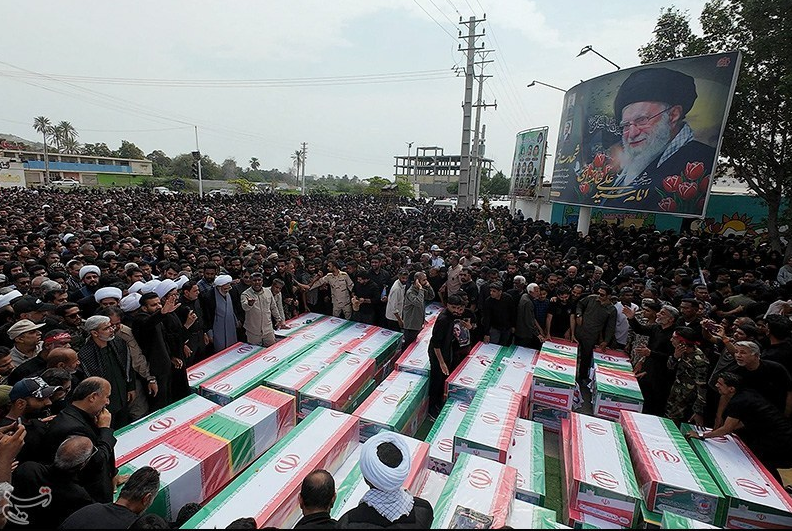
In a statement published on Telegram last Thursday, a spokesperson for Iran’s top military command said that if Trump’s threats are carried out, “everything that is still intact … that is, all the infrastructure in the region – will be crushed under the steel blows of the powerful armed forces of the Islamic Republic of Iran . . . ” Kuwait says Iran has attacked water desalination and electric plants.
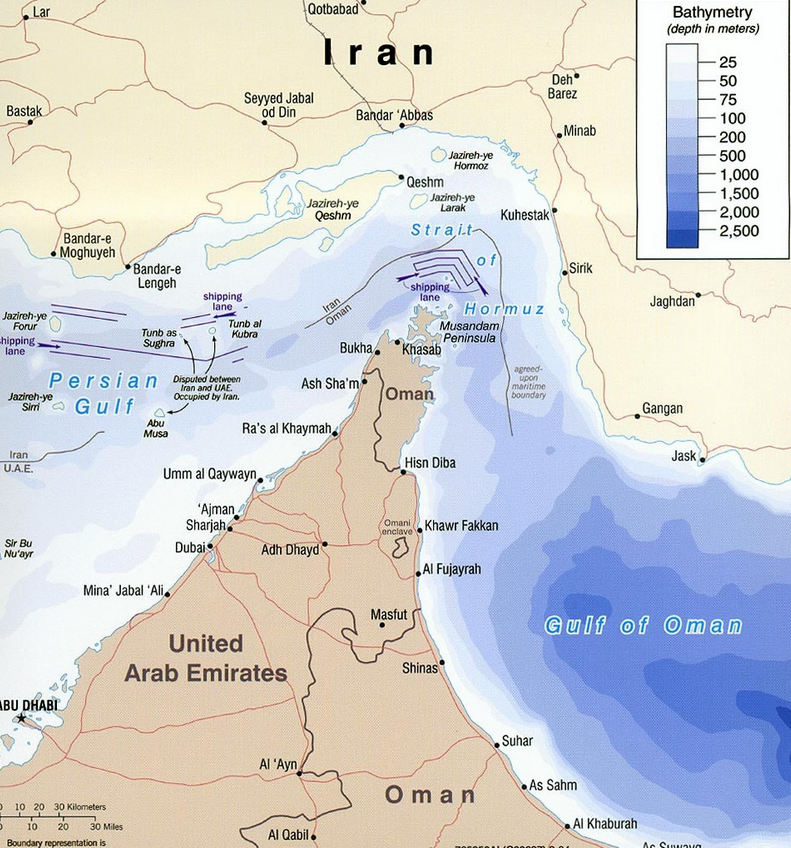
Control of the Strait of Hormuz remains unresolved, with the US blockade in force and oil tankers fearful to move. The Iran official said that “under no circumstances and in no way will we allow America, as a foreign and extra-regional country, to interfere in the Strait of Hormuz. This is Iran’s invincible red line.”
Trump on July 21 repeated his threat to bomb civilian targets in Iran any time a ship was hit. He also threatened the Iran-aligned Houthis in Yemen. Their partial blockade of the Red Sea is preventing Saudi ships from entering and leaving, a move that opens a new front in the war. Oil prices are spiking again.
We’re currently in another pause, which Trump says he ordered to resume talks with Iran. What talks? Pakistani and Qatari officials are in a quandary about facilitating negotiations since neither party seems to have an interest in them.
Secretary of State Marco Rubio says “the door is open” to talking with Iran, but Iran’s “behavior has to change in order for ours to change.” That’s a recipe for more war, not peace talks.
Yet Trump, speaking out of both sides of his mouth, says talks are going well but Iran better watch out. The reality is that the war is expanding, with joint US-Saudi attacks on Iran-supported militias in Iraq and Iranian attacks on US bases in Jordan. In essence, a three-party war has become a seven-party war. Iran “is going to get a beating,” Trump threatens.
Losing on the Home Front
The escalating warfare has resulted in three more US service members killed, bringing total US fatalities in the war to 18. (In an outrageous manipulation, the Pentagon only acknowledged 14 combat deaths.) Hundreds more have been wounded, though the Pentagon won’t say exactly how many.
The new US death toll is more bad political news for Trump in a war backed by fewer than 29 percent of voters. The war’s rising costs–$37 billion, according to defense secretary Pete Hegseth, surely an understatement—and no end point are causing even MAGA voters to back away from Trump. The administration is asking for an additional $67 billion to finance the war, on top of $1.15 trillion it wants for the next military budget.
The dilemma for Republicans is revealed in this contradiction: They are willing to fund the war, which they did in a vote in the House July 22 (with six Democrats joining them). Yet four Republicans also voted with Democrats to resolve that Trump either stop his war or seek Congressional authorization to continue it. In the Senate, a similar resolution was blocked from coming up.
Trump reportedly has decided against a dramatic escalation for now. Why? Not because he’s worried about casualties, inflation, and other costs of war as he should be. According to the Times, his main concern is that “intensifying the war could dangerously drain the Pentagon’s already diminished stockpile of Patriot antimissile interceptors and other air defense munitions in the Middle East.”

Forever War
Donald Trump seems incapable of breaking the pattern of bombing and threatening. He told the visiting Lebanese president that the next major Iran target will be an underground nuclear complex in Iran known as Pickaxe Mountain which, according to the Wall Street Journal, is a site to which Iran moved nuclear centrifuges when the war with the US began. “We’ll be hitting that area pretty soon, and very heavily,” Trump said. He again boasted that Iran is desperate for talks, “but until they’re ready to meet in a meaningful way, we have no interest.”
That’s the same line he took in June, when he claimed Iran had agreed to the MOU because it feared further bombardment. (“We were going in for the big one, and they said, ‘Please don’t do it, we will make a deal.’ And we made a deal right after that,” he said.) Trump doesn’t get that Iran isn’t acting out of desperation.
Ali Vaez with the International Crisis Group sees the situation as a classic case of forever war:
“Both countries believe time is on their side. Iran expects oil shocks and market turmoil, as well as the political calendar, to exhaust Washington’s resolve. The United States expects financial attrition and military degradation to exhaust Tehran’s. Neither has a path to victory. Yet each may feel compelled to prove that it can endure more pain than the other. That is the logic of a forever war: Each side uses violence to test the other’s endurance. War becomes negotiation by other means.”
Mel Gurtov, syndicated by PeaceVoice, is Professor Emeritus of Political Science at Portland State University.