By Mehdi Hasan
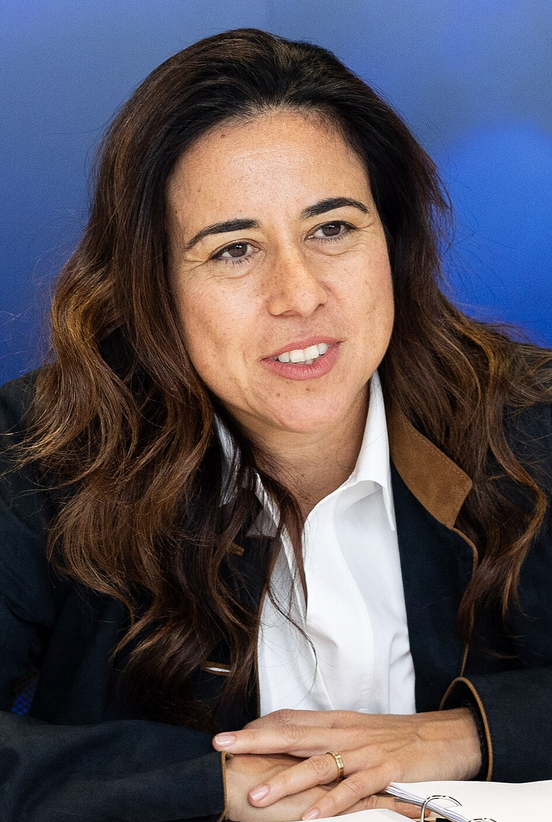
Diplomat Lana Nusseibeh has entered the race to succeed António Guterres as the United Nations’ 10th Secretary-General. If she succeeds, she will be the first woman, the first Muslim, and the first person of Palestinian descent to be appointed UN Secretary-General.
She sounds great, right?
Wrong.
Nusseibeh was until earlier this month minister of state in the Emirati foreign ministry, and spent much of the past decade as the United Arab Emirates’ Permanent Representative to the United Nations. In both positions, she has whitewashed the UAE’s involvement in the genocide in Sudan. She has – for want of a better phrase – gallons of blood on her hands.
If the UN Security Council confirms Nusseibeh as the next secretary-general – and her chances are pretty high, given that all of the other candidates are believed to be opposed by the Trump administration – it will be making a monumental error of judgment, which could destroy the already weakened credibility of the UN for generations to come.
First, some background on what has been repeatedly described as “the world’s worst humanitarian crisis.”
The current round of horrific violence in Sudan began in April 2023 after a falling out between the two generals – Sudanese Armed Forces (SAF) chief Abdel Fattah al-Burhan and Rapid Support Forces (RSF) militia commander Mohamed Hamdan Dagalo, better known as Hemedti – who together overthrew a civilian-led government in Khartoum two years earlier.
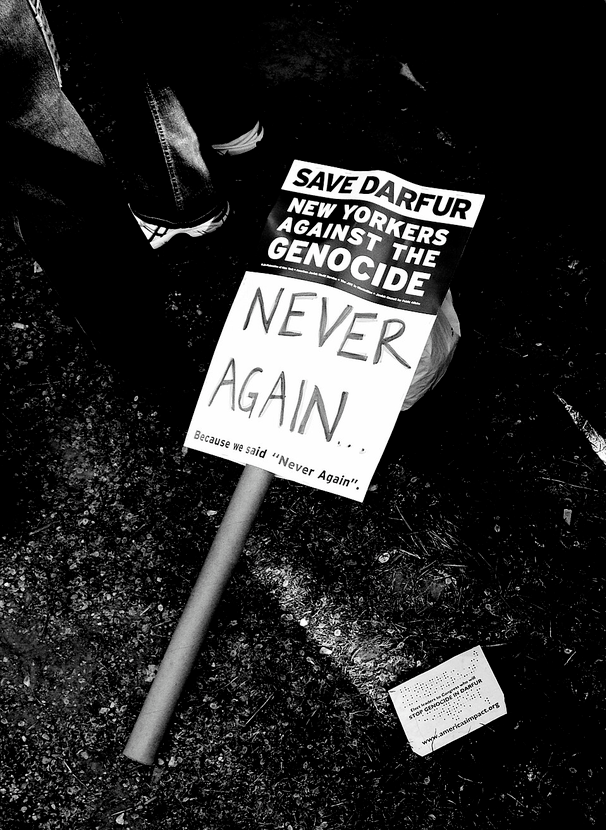
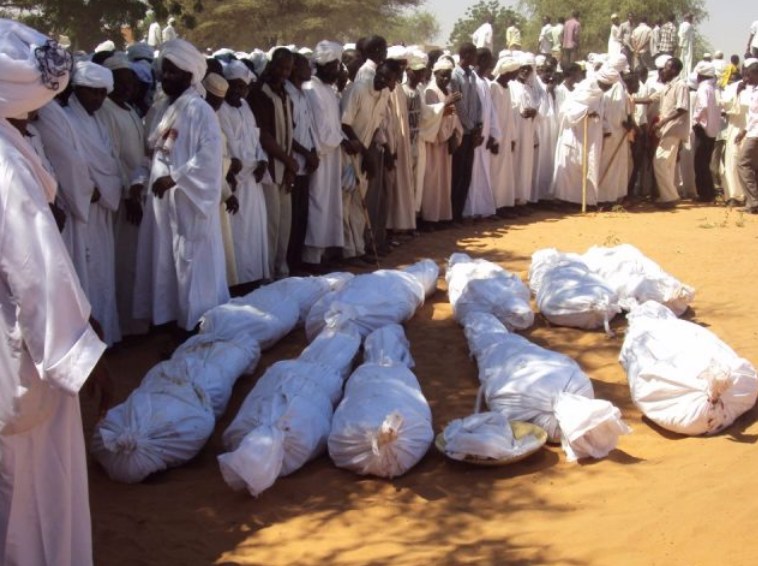
By October 2025, the besieged city of El Fasher in Darfur had fallen to RSF fighters, unleashing a wave of mass killing and sexual violence. So much blood was spilled in and around El Fasher that it was “visible from space.”
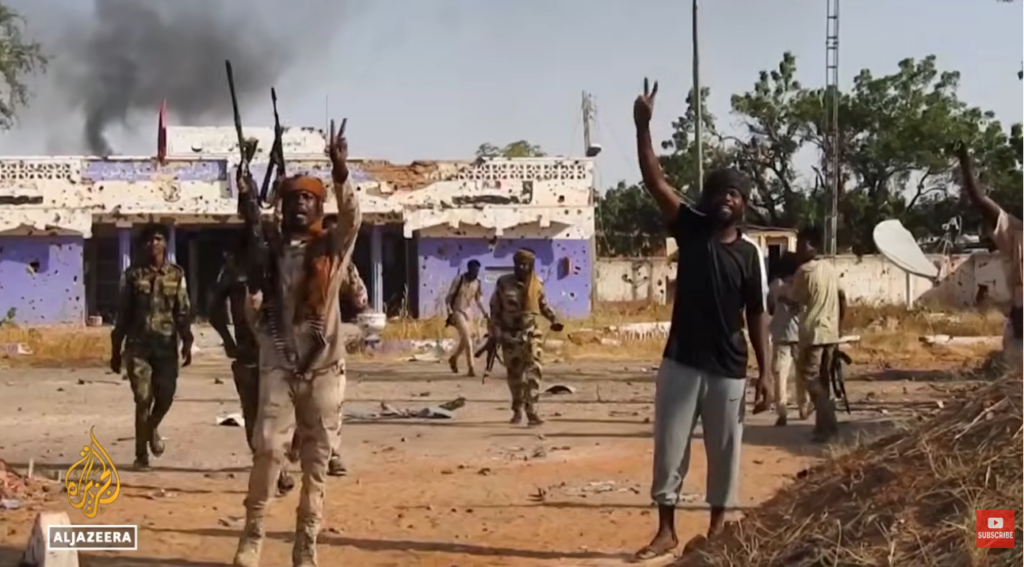
As in Gaza, a UN fact-finding commission said the atrocities in El Fasher bear the “hallmarks of genocide.” However, unlike in Gaza, in the case of Sudan the U.S. government agrees: “I have now concluded that members of the RSF and allied militias have committed genocide in Sudan,” declared outgoing Secretary of State Anthony Blinken in January 2025.
Jeremy Konyndyk, the president of Refugees International, recently returned from a “harrowing” visit to Sudan, where he interviewed survivors of RSF attacks. “Women who fled El Fasher as the RSF unleashed genocidal massacres there told us of being gang-raped for days on end,” he told me. “We walked through health centers in Khartoum that had been shelled by the RSF and then completely looted.”
It is in this awful and bloody context that the UAE’s decision to put forward one of its most senior diplomats to become the next secretary-general of the UN should be seen as both an astonishingly audacious and astonishingly shameless move.
Nusseibeh herself told Reuters last week that the UN needed to become a “problem solver,” not a spectator, in global crises.
A problem solver? Perhaps Nusseibeh could begin by explaining why her own government has been repeatedly implicated in helping fuel the genocidal catastrophe in Sudan.
In May 2025, Amnesty International published a detailed investigation identifying “sophisticated” Chinese-made bombs and howitzers used by the RSF and concluding that they had almost certainly been “re-exported” by the UAE, in breach of the UN arms embargo on Sudan.
In May 2026, Human Rights Watch published an 83-page investigation tracing the recruitment and deployment of Colombian military contractors who went to fight alongside the RSF and were “apparently hired by a United Arab Emirates (UAE)-based company” and “transited through UAE military bases before being deployed to Sudan.”
And, in September 2026, a UN-mandated fact-finding mission reported that “individuals and entities” linked to the UAE had “played a significant role in networks involved in the recruitment, financing, transportation, and deployment of foreign military contractors and the provision of military-related support benefiting the Rapid Support Forces.”
It would be one thing if Nusseibeh had remained silent about the UAE’s alleged role in Sudan. But she did not.
In July 2024, CNN’s Becky Anderson asked her directly whether the UAE was arming the RSF.
“No,” Nusseibeh replied. “Those allegations are categorically untrue.”
Anderson then pointed out that UN experts had described accusations of Emirati military support for the RSF as credible. Did Nusseibeh dispute their findings?
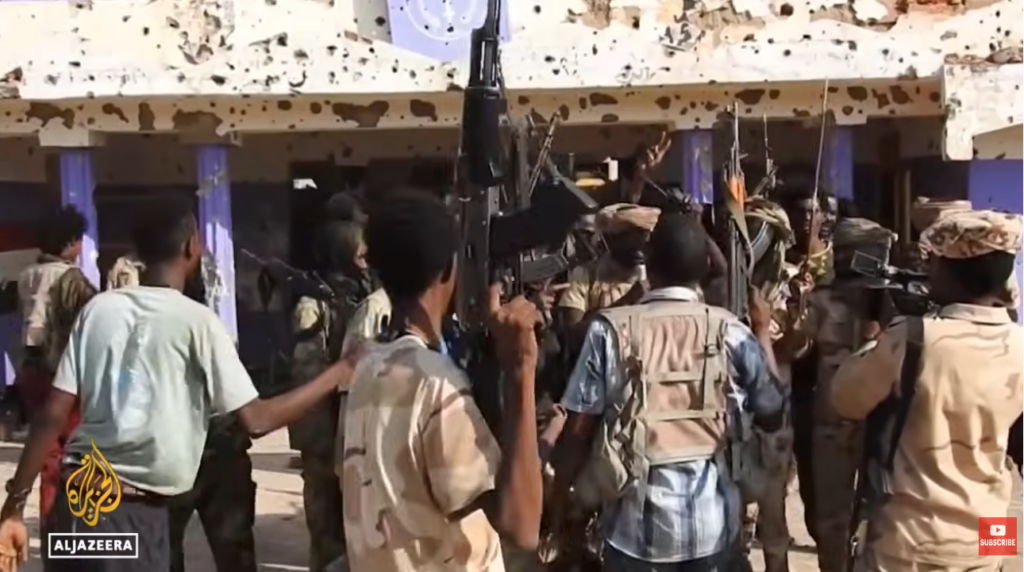
“Yes, absolutely.”
Got that? The woman who wants to be the next head of the UN is on record, on video, “absolutely” and “categorically” rejecting the findings of UN experts.
“Her nomination poses a fundamental test of the credibility both of her and of the UN,” says Refugees International’s Konyndyk, who served in both the Obama and Biden administrations. “Will she maintain her earlier lies about her government’s actions, and will UN member states look past those lies and appoint her regardless? What should a UN employee in Sudan, or a UN official investigating UAE violations of the Darfur arms embargo, or a UN human rights official conclude about the integrity of their mission and their institution if she takes charge of it without having come clean about her past statements?”
This isn’t about whether Nusseibeh is intelligent, or highly qualified, or an effective diplomat. By most accounts, including her own slick social media videos, she is all three. It is about three much more fundamental things: her own credibility, her complicity in a genocide, and the lack of accountability for that genocide.
As Sudan expert and conflict analyst Justin Lynch has argued, Nusseibeh was not a bystander to the genocide in Darfur and her government’s role in it; she “was the point person for the… policy that directly facilitated the RSF’s mass rape, sexual slavery, mass murder, and war crimes.”
To be clear: the Sudanese Armed Forces (SAF) have also been implicated in serious war crimes. There is no reason to excuse or overlook their abuses or pretend they have clean hands. But the SAF’s crimes do not absolve the RSF. Nor do they absolve a foreign government credibly accused of arming the RSF – regardless of its repeated denials and regardless of how much humanitarian aid it has pledged for Sudan and its refugees, some of whom have publicly and angrily rejected Nusseibeh’s offer of food aid. (Plus, according to reporting from the New York Times, the UAE cynically uses aid as cover “for its secret operation to fly drones into Sudan and smuggle weapons to fighters.”)
Don’t get me wrong. It would be nice to have a woman as UN Secretary-General. Then again, four other eminently qualified women are still in the race. It would be nice to have a Muslim in that role too – but maybe not a minister from a government accused of “stoking European Islamophobia.” It would also be nice to have a Palestinian as the next SecGen – but maybe not one from a country that so enthusiastically threw the Palestinians of Gaza under the Trump/Netanyahu bus.
In recent years, Sudan has become a forgotten war; a humanitarian crisis neglected by the international community. The people there have been starved, ethnically cleansed, and massacred while rich and powerful governments have either failed to stop the bloodshed or, in the case of the United Arab Emirates, helped fuel it.
But to appoint the UAE’s Lana Nusseibeh as head of the UN, the body ostensibly charged with ending Sudan’s conflict, would risk turning that shameful neglect towards the long-suffering Sudanese people into something much worse: an insult.