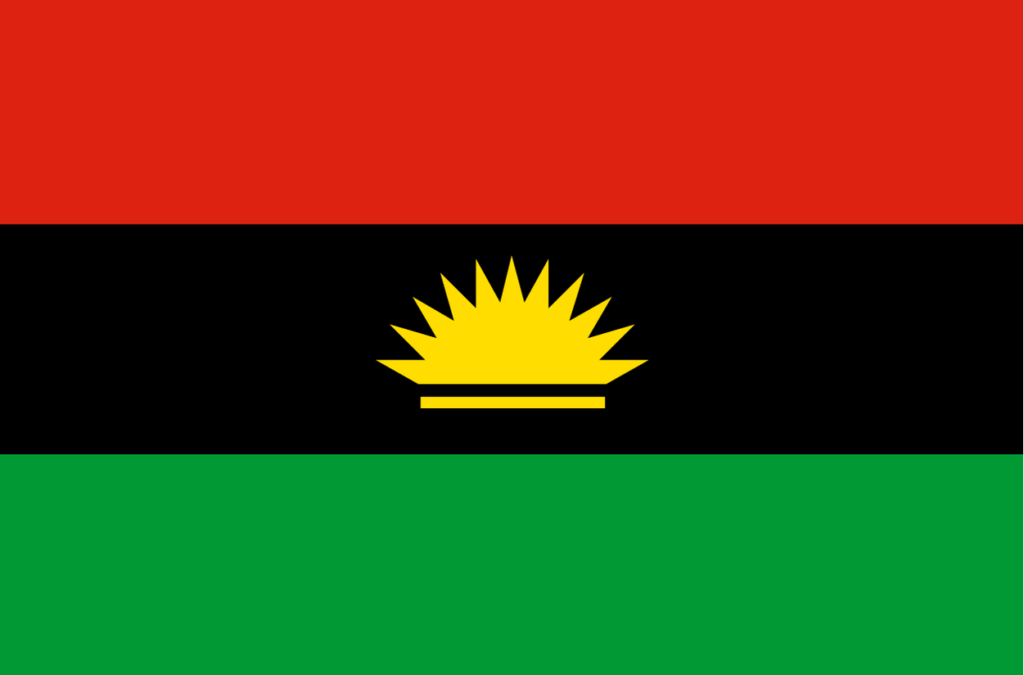
Reviewer: Asta Tall:
A book about how Africa’s wars are told…
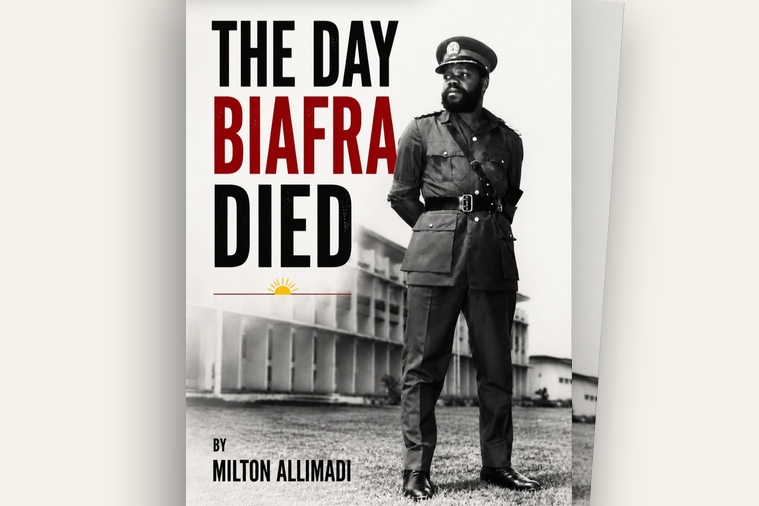
Milton Allimadi’s The Day Biafra Died is a history of the Nigeria–Biafra war, but it’s also a study of how that war was reported. Its central question is what objectivity and responsibility mean for Western journalists covering conflict on the continent. In particular, it asks who decides whether a war is called a “tribal” fight, or a struggle between communities over the perceived misallocation of resources and opportunity.
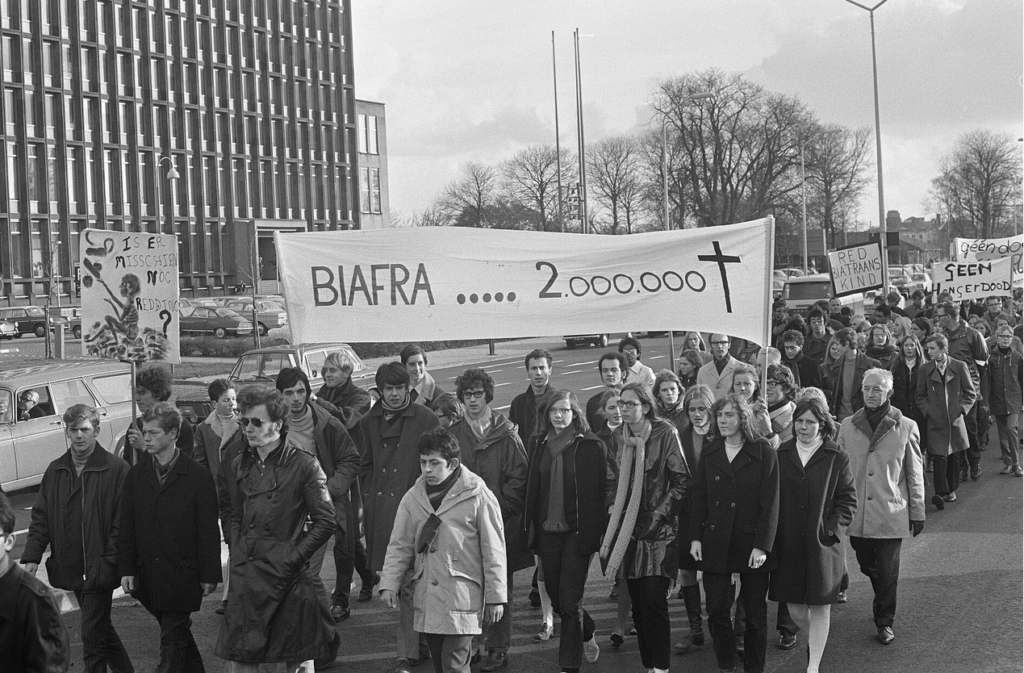
Student protesters in The Hague, 20 November 1969.
For young Africans, and those in the diaspora, the book offers something rare. It traces how problems we have been taught to see as endemic actually began. And it shows how much of our worldview has been shaped by organizations and individuals who had agendas of their own.
The cost of one word: “tribe”
One of the book’s most revealing details is that Lloyd Garrison, The New York Times correspondent at the centre of the story, objected to the words “tribes,” “tribal” and “tribesmen” in the dispatches he filed from Africa. His editors in New York used them anyway. That editorial choice still carries weight today.
The word flattens history. It makes a conflict with deep colonial roots, over education, opportunity and resources, sound inborn and permanent. Once a war is framed as ancient hatred, there seems to be nothing to understand, and nothing to negotiate, and the space for reconciliation closes. Africa is rarely granted the careful examination of causes that conflicts elsewhere routinely receive.
The witness and the cause
The book also asks a quieter question about journalism itself: how close can a reporter get to a cause before bearing witness becomes taking part? Allimadi does not cast Garrison as a villain. He shows a correspondent moved by real suffering, who came to sympathise deeply with the Biafran cause and grew close to those fighting for it, including the Swedish aviator Carl Gustaf von Rosen. Those bonds were human and understandable. They also shaped what got told, and what went unexamined.
That tension has not gone away. War reporting still tends to put the correspondent at the centre of the story, and still reaches for heroes. The book is a reminder that a journalist’s first duty is to witness all of it, including what complicates the story they hoped to tell.
Allimadi also widens the frame beyond Nigeria. Outside powers shaped the war’s course in different ways. Britain, France and the Soviet Union backed one side or the other, often with oil and strategic influence in mind. The United States stayed officially neutral, and its concern for Biafran civilians showed in the relief it helped send. Seen together, these choices make clear how much of the war’s outcome was decided far from the people living through it.
Complexity without heroes or villains
What I value most in Allimadi’s book is what it asks of us as readers: to let go of our need for heroes and villains. There are no clean sides here. It shows human beings trapped by their own failings, and calculations on every side that put human lives last behind power and resources.
That is the book’s real achievement. It holds the suffering of civilians, the political choices made in their name, and the outside interests at play together, without collapsing them into a simple moral story. It does what so much coverage of conflict in Africa and the wider Global South fails to do: it treats war as complex, and its harm as real.
Verdict
The Day Biafra Died is a must-read for anyone who wants to understand why certain regions are covered the way they are. It offers institutions a valuable moment to question their own bias. In the rush to simplify a conflict for Western audiences, nuance is stripped away, and African wars come to be seen not as complex, but as the product of a supposed predisposition to violence. The word “tribe” does that work: it turns communities boiling over, driven by historical grievance and exploited by actors local and foreign, into something barbaric and senseless.
The atrocities suffered by civilians in this war should never be forgotten. Neither should the way our wars have been reported. Allimadi’s book is a call to respect nuance, to honour the complexity of history, and to reckon with the disastrous effects of foreign interference based not on the needs of civilians but on the interests of capital and individuals.
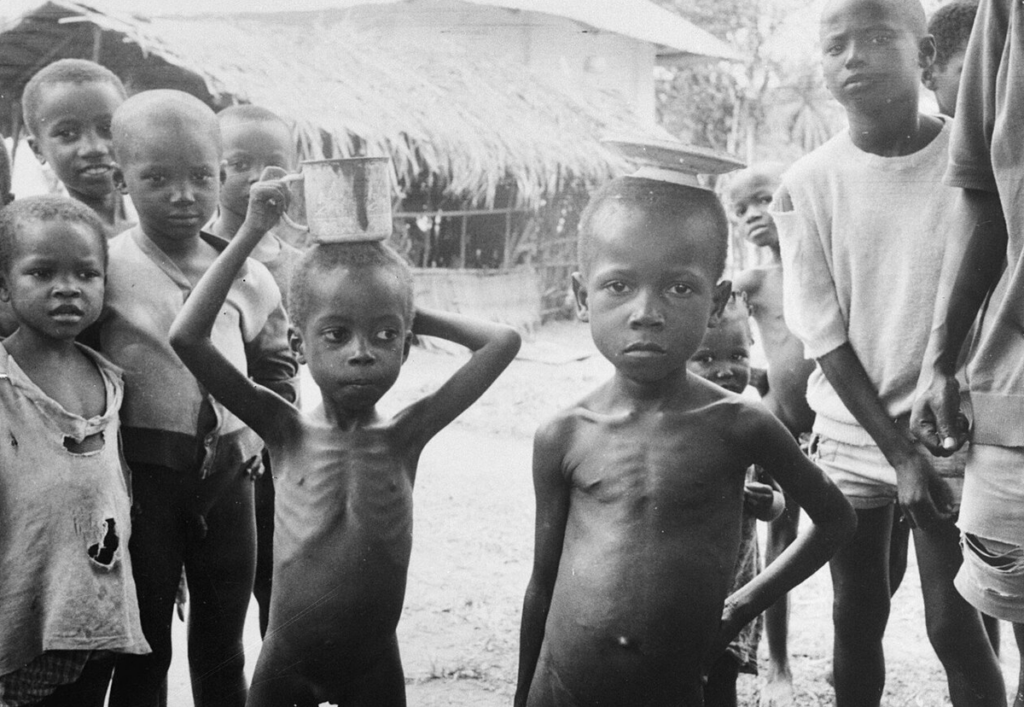
Reading about what millions of Igbo civilians endured during this war is as gut-wrenching today as it must have been to witness then. It is a sad testament to our world that the same images of starvation and displacement now reach us from Sudan, Gaza and Congo. As these wars rage on and civilians continue to pay the highest price, the institutions that tell their stories must find ways to cover war that break with past patterns: ones that honour complexity and centre the people living through it.
The book can be ordered via www.thedaybiafradied.com