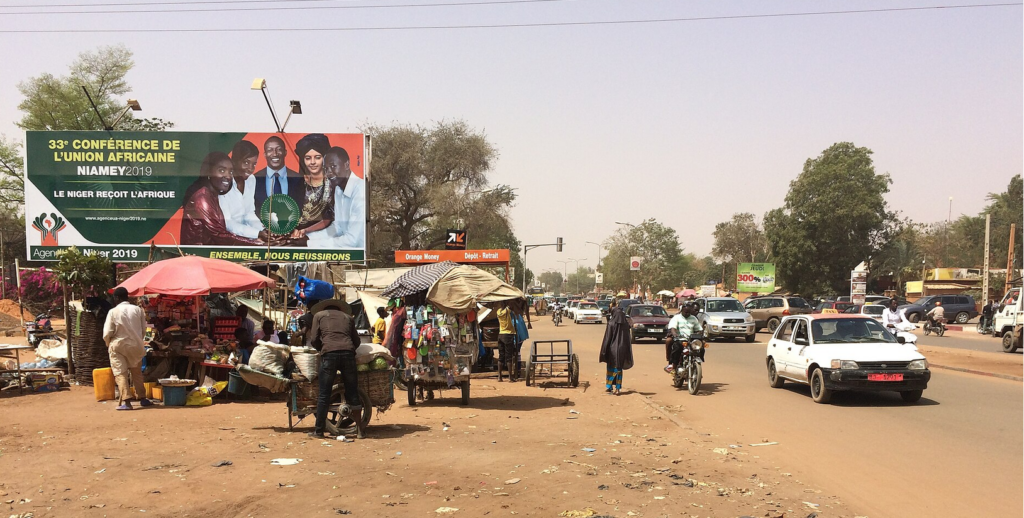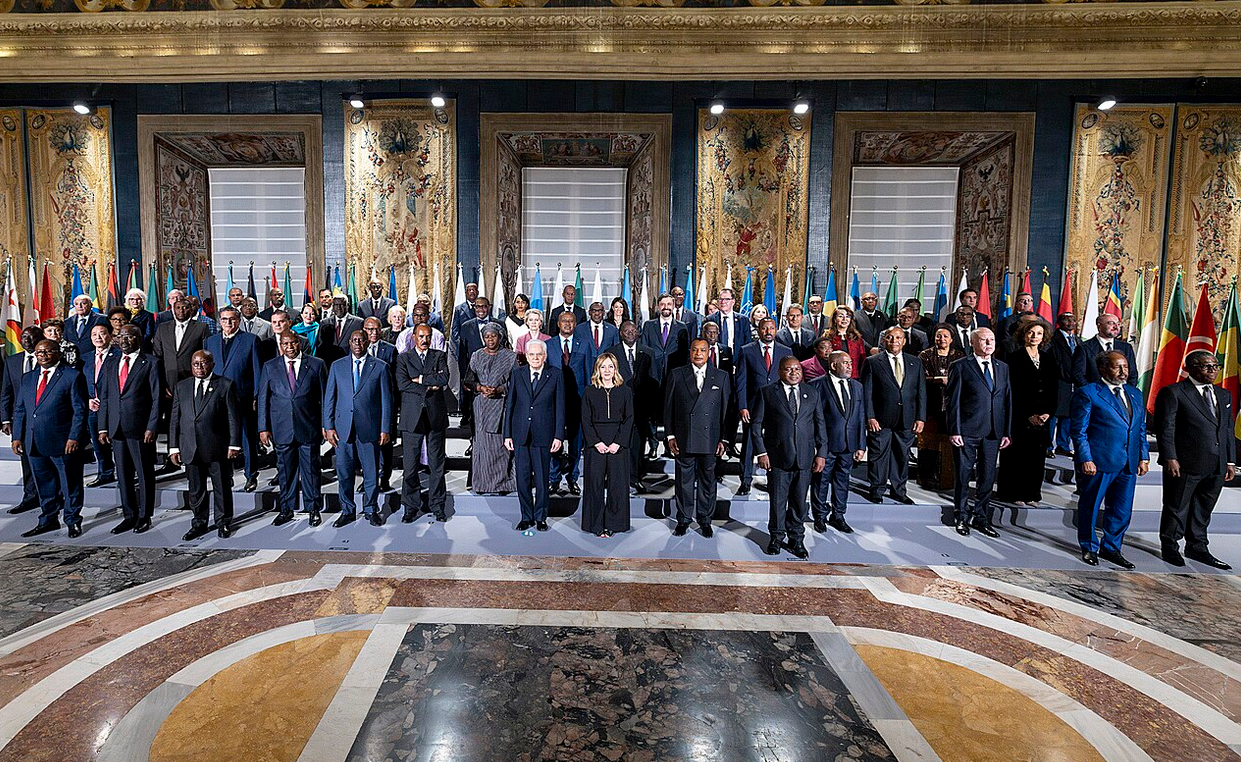
On May 25, 1963, 32 African leaders gathered in Addis Ababa to establish the Organization of African Unity and complete the continent’s liberation from colonial rule and apartheid. Among them were Kwame Nkrumah, Sékou Touré, Modibo Keita, Gamal Abdel Nasser, Julius Nyerere, Milton Obote, Leopold Senghor, and Ahmed Ben Bella, hosted by Emperor Haile Selassie. Nkrumah urged immediate unity— “We must unite now or perish”—he said warning that divided states would remain weak, poor, and vulnerable.
Although the progressive Casablanca Group supported Nkrumah, most leaders favored gradual integration. The OAU was therefore a compromise: it embraced eventual economic and political unity while preserving principle of noninterference in members’ internal affairs.
The OAU for the next 4 decades began a trajectory of a steep decline to irrelevancy. Many of the founding visionaries were killed, overthrown, or imprisoned and replaced by leaders focused on power and enrichment. The organization became an annual gathering of dictators, unable to address recurring crises—most notably the Rwandan genocide.
From the OAU to the African Union
Although the OAU did not achieve continental unity, it largely fulfilled its founding mission by supporting liberation movements that helped bring colonialism and apartheid to an end by the close of the twentieth century. Yet decades after independence, many African countries remained burdened by civil wars, weak adherence to the rule of law, constitutional amendments designed to prolong incumbents’ rule, persistent underdevelopment, and the pressures of globalization.
Against this backdrop, the 1999 Sirte Declaration called for a more effective continental organization focused on political and economic integration. In 2002, the African Union replaced the OAU, marking a shift from liberation to integration (POA, Feb. 6/26). Its new name reflected this broader purpose.
Most significantly, the AU embraced a principle of non-indifference in place of the OAU’s strict commitment to noninterference. This change shifted the emphasis from state sovereignty toward the welfare of African people. To put that principle into practice, the AU established the Peace and Security Council, with a mandate to intervene, responding to grave crises, including genocide and crimes against humanity.
High Expectations, Repeated Failures
Those of us who hoped the AU would finally advance Nkrumah’s vision of a United States of Africa were soon disappointed. Rather than becoming a decisive continental institution, the AU often slipped back into the habits of the OAU. It presided over crisis after crisis, unable or unwilling to intervene under the provisions of its own Peace and Security Council, while foreign powers frequently shaped the outcomes.
Libya: A Defining Failure
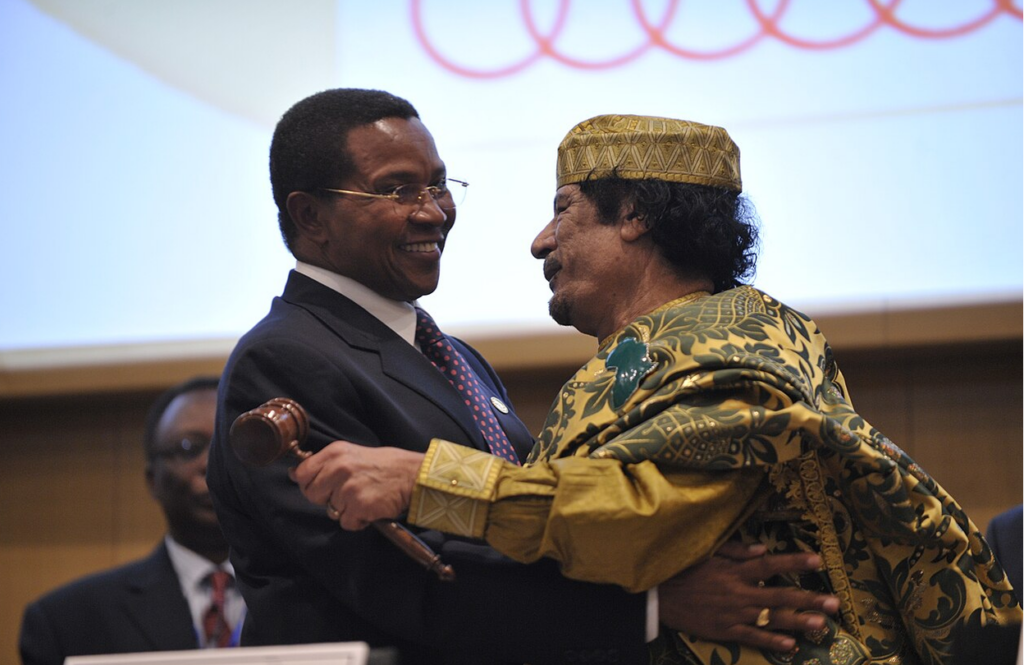
Muammar Gaddafi embracing Tanzanian President Kikwete after assuming the African Union chairmanship.
Perhaps the clearest example of this failure was Libya. Western powers, led by France and the United States with the self-proclaimed public intellectual Bernard-Henry Levy as cheer leader for dismantling of Libya- (some of us know him as a leader of a vicious public character assassination campaign against Nafissatou Dialo who accused his friend DSK of rape) presented themselves as defenders of the Libyan people and launched a massive aerial bombing campaign to remove Muammar Gaddafi. Gaddafi was a committed Pan-Africanist who advocated African unity and control over the continent’s resources. In Libya, oil revenue had helped finance free education and public health care and overall welfare of the people under Gaddafi.
Gaddafi was captured and summarily killed. As with Patrice Lumumba’s assassination, foreign powers relied on local collaborators to carry out the heinous final act. The consequences have been devastating Libya is now divided with two competing governments and unlike Ghaddafi’s regime has become increasingly hostile to African migrants.
Libya’s instability has also reshaped its oil sector. The once-dominant publicly owned state oil company now faces competition from private firms whose ownership structures remain unclear. General Khalifa Haftar, the country’s powerful eastern commander, is widely seen as the public face of these interests.
Further reading:
https://libyaobserver.ly/economy/rise-private-oil-firms-libya-corruption-or-power-shift
The War in Tigray
From 2020 to 2022, Ethiopia—an influential member of the African Union and host of its headquarters—waged war in Tigray with support from a neighboring country-Eritrea. The conflict became the deadliest war of the 21stCentury.
Humanitarian organizations, and some political leaders have characterized it as a genocide against Tigrayans. The human toll was catastrophic. Estimates suggest that between 600,000 and one million people died from the fighting and from famine linked to the blockade—by some accounts, roughly 10 percent of Tigray’s population. Amid widespread reports of grave human rights violations, war crimes, and crimes against humanity, the African Commission on Human and Peoples’ Rights (ACHPR) opened an inquiry. The AU terminated the Commission’s mandate on May 23, 2023, without releasing findings or recommendations. By contrast, the UN International Commission of Human Rights Experts on Ethiopia (UNICHREE) reported systematic atrocities, the use of starvation as a weapon, and ethnic cleansing by the Ethiopian government and its allies. Its mandate was later terminated under pressure from Ethiopia.
The war formally ended in November 2022 with the Pretoria Cessation of Hostilities Agreement. The agreement called for:
- An independent investigation into wartime atrocities and mechanisms for accountability
- The return of approximately one million internally displaced Tigrayans to their homes and farms
- The withdrawal of Eritrean and Amhara forces from occupied areas of Tigray
- The disarmament, demobilization, and reintegration of the Tigray Defense Forces
These provisions remain largely unimplemented. The AU and the United States, which mediated the agreement, have largely disengaged as tensions deepen and the risk of renewed hostilities grows. The conflict could spread beyond Ethiopia into neighboring countries across the Horn of Africa. War with Eritrea appears increasingly likely—and may already have begun—amid Ethiopia’s repeated demands for access to the sea.
Sudan and South Sudan
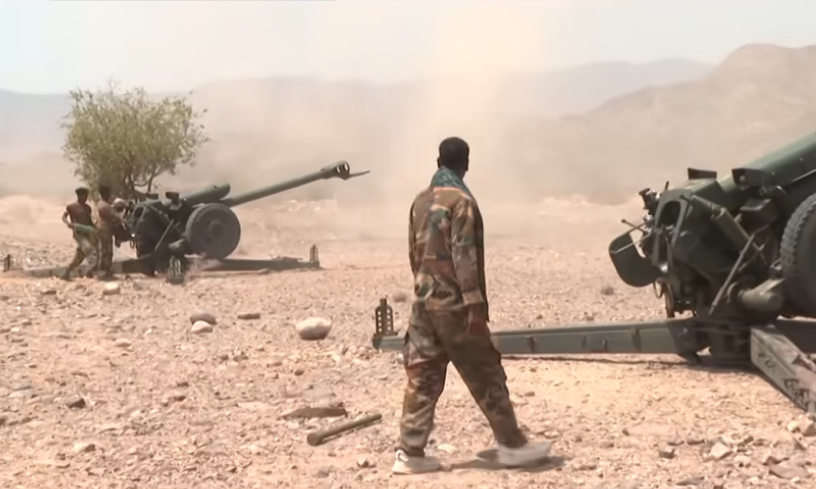
Sudan and South Sudan each remain trapped in prolonged conflict. South Sudan has struggled to function as a viable state since gaining independence in 2011, as a power struggle between two leaders and their ethnically divided armed forces has fueled recurring violence.
Sudan, once viewed as a promising case for democratic transition, has also been torn apart. Two generals engaged in a deadly struggle for power have plunged the country into a catastrophic humanitarian crisis. Both sides receive foreign support, primarily from the United Arab Emirates and Saudi Arabia. Yet the AU again appears unable to act—whether in Ethiopia, Sudan, or South Sudan.
If ever circumstances called for the AU to invoke the authority of its Peace and Security Council, the crises in Ethiopia and the Sudan would qualify.
Why Is the AU Impotent?
Part of the answer lies in the structure of the AU’s budget and the influence that structure gives external donors.
Member states fund the AU through assessments based on the size of their economies. The strongest economies fall into Tier 1, the weakest into Tier 3, and roughly one-third of member states fall into Tier 2. Countries in every tier, however, fail at times to pay their annual contributions.
As a result, outside sources, principally the European Union provide about 60 percent of the AU’s budget. The old saying applies: “Who pays the piper calls the tune.” This financial dependence constrains the AU’s independence and helps explain why it often mirrors the priorities of its Western sponsors and why it felt impotent in the case of Libya allowing France and the US to dictate the outcome.
The Sahel and External Influence
The AU has been quick to sanction Sahel states whose military-led governments have challenged France, severed longstanding ties, and rejected relationships they regard as neocolonial. These leaders came to power through coups that displaced entrenched political structures widely seen as serving French interests rather than those of their own populations.
With approximately 70 percent of the region’s population under the age of 30, many young people welcomed the change enthusiastically. Supporters argue that the new generation of military leaders is pursuing a more progressive and independent course, particularly in Burkina Faso.
Time to Rethink the African Union
The AU’s central purpose is to accelerate Africa’s political and economic integration. Nearly a quarter-century after the organization was established, however, that goal remains as elusive as ever.
A renewed AU must refocus on integration and pursue three priorities:
- Achieve genuine independence. Member states—particularly Francophone countries, must move beyond flag independence toward true political and economic sovereignty by breaking the chains of neocolonial dependence.
- Reclaim Africa’s natural resources. African countries must assume ownership and stewardship of their resources, especially in the extractive industries, while ensuring that value-added production remains on the continent. The resulting revenue could reduce Africa’s dependence on debt and international financial institutions.
- Invest in Africa’s youth. With roughly 70 percent of the continent’s population under the age of 30, governments must create opportunities at home. Too many young Africans leave in search of a better life, risking—and often losing—their lives while crossing treacherous deserts and seas.
- Unite around a common continental agenda. Africa is both the world’s youngest continent and one of its richest in natural resources—resources the developed world increasingly needs. To negotiate on equal terms with the integrated economies of Europe and major powers such as the United States and China, African countries need a unified position. Fifty-four nations competing individually cannot build lasting strength. “Africa must unite” is therefore not merely an aspiration but a strategic imperative. A reformed AU should place the creation of a United States of Africa firmly on its agenda.