By Tom Oniro Elenyu
Photos: YouTube Screenshots|Wikimedia Commons
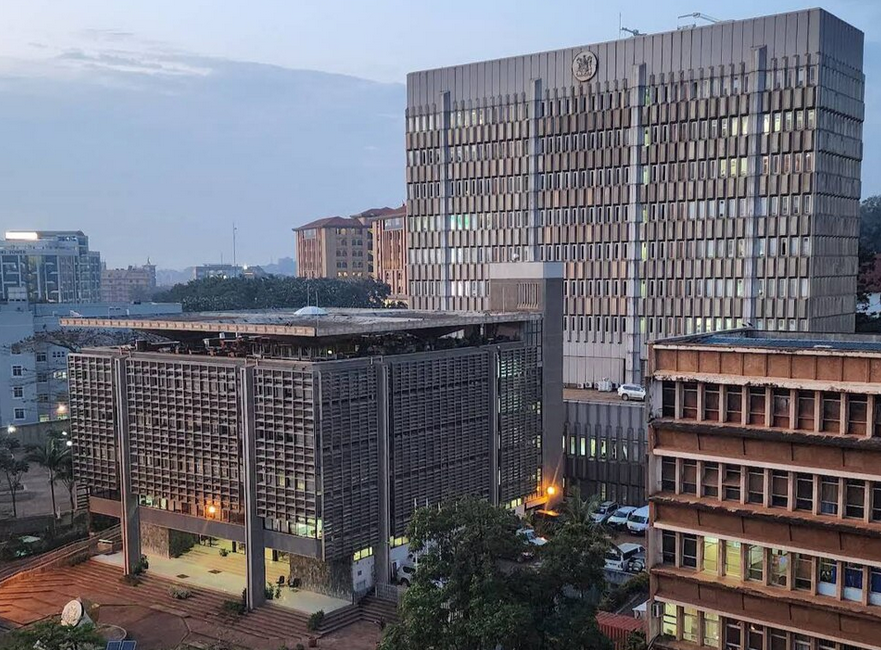
The unpopularity of Uganda’s Protection of Sovereignty Bill, 2026 remains steadfast with the Bill’s rejection now receiving a gubernatorial and global lender’s impetus. The central reserve—Bank of Uganda (BoU)—head and the global lender—the World Bank Group (WBG)—have simultaneously roundly rejected the Bill in a space of a week.
“Chairman, a country without reserves is not sovereign. The potential of this Bill to destabilize Uganda’s balance of payments is our primary concern as a central bank,” BoU Governor, Michael Atingi-Ego, told the Joint Committee of Parliament scrutinizing the Bill. “For example,” the Governor explained, “last financial year, the overall balance of payment surplus was US$1.5 billion. That’s how we were able to increase our reserve coverage by US$1.5 billion. Today, as we speak, our reserves are close to US$ 6 billion. Why? Because these inflows have been coming in. The moment you tamper with these inflows here, we risk running down our reserves, and that is economic disaster for a country.”
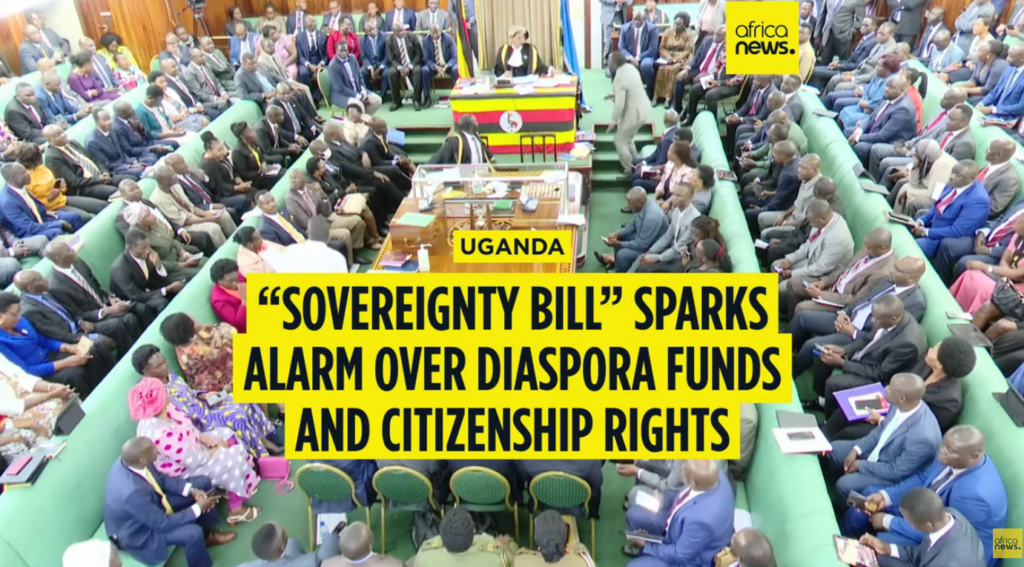
The Protection of Sovereignty Bill, 2026 was lain before the Floor of Parliament on April 15. It has since been referred to the Joint Committees Parliament on Defence and Internal Affairs as well as Legal and Parliamentary Affairs for scrutiny. The Bill seeks to regulate foreign funding and curb activities deemed to threaten Uganda’s sovereignty.
From the onset of its introduction, however, the Bill has attracted widespread criticism from civil society organisations and activists, who warn that it risks undermining constitutional rights and disrupting livelihoods, including through its potential impact on families and individuals who receive financial support from the Ugandan diaspora. Many Ugandans are living and working in the diaspora whose remittances back to Uganda hit US$2.5 billion in 2025.
The global lender—the World Bank—meanwhile has rejected the Bill saying a significant concern is that the Bill criminalizes conduct that closely aligns with the World Bank Group’s core work. In an April 23 letter to the Joint Committee scrutinizing the Bill, through the Clerk to Uganda’s Parliament, Adolf Mwesigye-Kasaija, the Bretton Woods Institution singled out clauses which penalize influencing the development of policy or even organizing meetings that promote positions government deems unpalatable to it.
In the letter, a copy of which is available to this publication, the WBG notes that the Bill seeks to address the protection of the sovereignty of the people of Uganda, including the registration and regulation of agents of foreigners, as defined by the Bill, and regulation of funding or other assistance to agents of foreigners. “The WBG,” the multilateral lender tip-toed in a humble, but feeble tone, or else it is accused of colonial mentality, “recognizes the sovereign right of the Republic of Uganda to enact legislation in furtherance of its national interests, including to regulate the conduct of foreign actors within its territory.”
“These comments are submitted in a spirit of partnership and constructive engagement,” the April 23, 2026 feeble letter explains, “with a focus on seeking clarification regarding the Bill’s scope of application as it relates to the WBG’s legal status and its ability to operate in Uganda. Specifically, we would like to draw to the attention of the Committee that the Bill could materially affect how the World Bank Group, and other multilateral development banks (MDBs) operate in Uganda.”
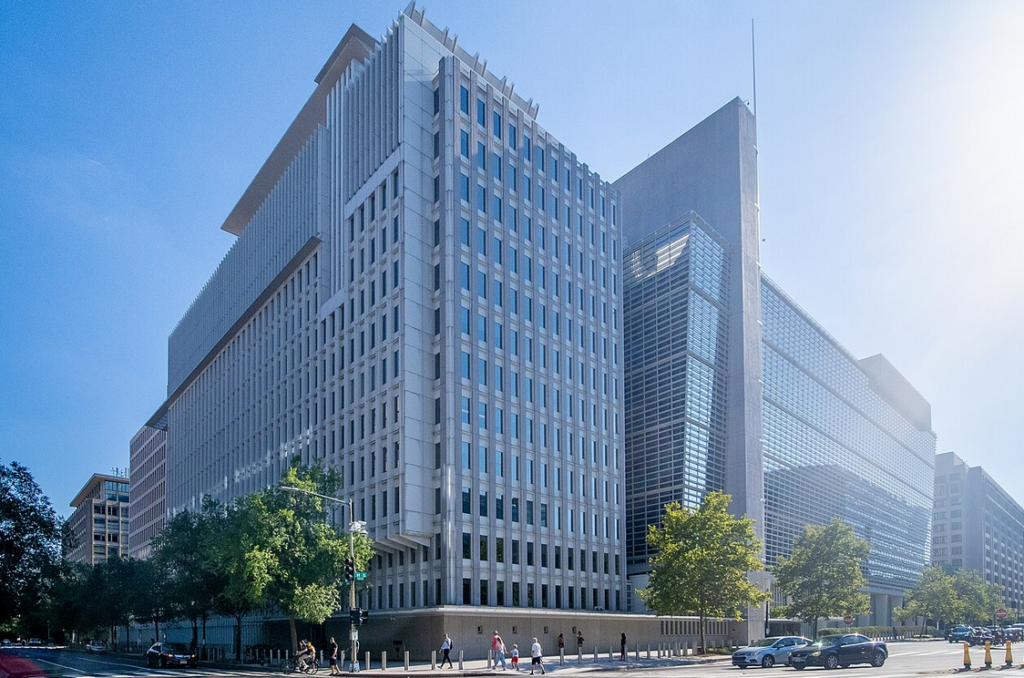
The World Bank Group is engaged in various development partnerships with Uganda’s Government with the so-far most outstanding being the Uganda Cities and Municipal Infrastructure Development which has given the country’s cities and municipalities a majestic facelift since 2018.
The latest upset to the proposed Bill comes from the country’s oldest and dominant cultural institution—the Buganda Kingdom. Feared by government for its historical record of influencing political discourse and dynamics in the country, the kingdom’s prime minister, lawyer Charles Peter Mayiga, in a letter addressed to the Attorney-General, ensured he carefully first and foremost, cleared the air: “I write to respectfully submit the Kingdom of Buganda’s detailed concerns, observations and recommendations… for your urgent consideration, before the Bill proceeds to its further stages in Parliament,” and goes on to explain, “For avoidance of any doubt, I emphasize that these submissions are not partisan politics in nature and are not made in opposition to the Government of the Republic of Uganda.”
The Kingdom—whose majority subjects are in the diaspora eking out a living and sending remittances back home to support families—is worried about the bottomless word “foreigner” as well as the phrase “agents of foreigners”.
“To label such contributions as ‘foreign funding’ and to designate family members back home as ‘agents of foreigners’ is a profound injustice,” in part, reads the royal letter.
According to the 1987-founded Global Campaigner for Free Expression–ARTICLE 19 Eastern Africa—it has filed two submissions to Uganda’s parliament in response to the Protection of Sovereignty Bill 2026, currently under consideration. “We are deeply concerned that the Bill will significantly curtail freedom of expression, association, and civic participation under the guise of protecting national sovereignty. In its current form, the Bill is fundamentally flawed and raises serious constitutional and human rights concerns. We urge the Ugandan parliament to withdraw the Bill in its entirety.”
The Bill, Article 19 regrets, adopts an excessively broad definition of an ‘agent of a foreigner’ in Clauses 1 and 2; extending to individuals and organizations engaged in advocacy, research, journalism, or public discourse, particularly where there is any form of foreign funding or foreign connection. “In practice,” the Global Campaigner notes, “this risks treating ordinary civic engagement as a matter of national security concern.”
