By CARICOM
Photos: YouTube Screenshots|Wikimedia Commons
CARICOM Secretariat, Turkeyen, Greater Georgetown, Guyana – Security, governance, justice, humanitarian support and political progress must advance together for Haiti to achieve lasting stability.
This message was underscored on Thursday, 24 September 2026, at the Ministerial-Level Meeting of the United Nations Economic and Social Council’s (ECOSOC) Ad Hoc Advisory Group on Haiti, held on the margins of the 81st United Nations General Assembly (UNGA81) in New York.
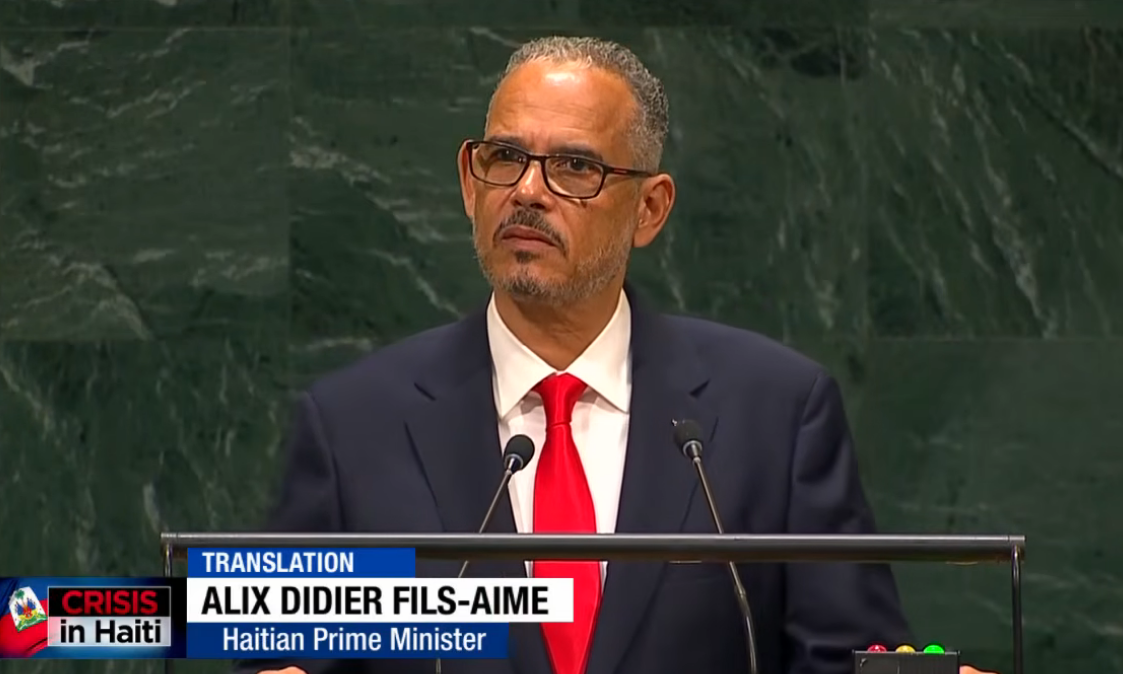
Caribbean Community (CARICOM) Secretary-General Dr Carla Barnett and Prime Minister of Haiti, His Excellency Alix Didier Fils-Aimé, both placed the security effort within a wider recovery agenda that includes elections, justice sector reform, disarmament, and economic development.
Elections security
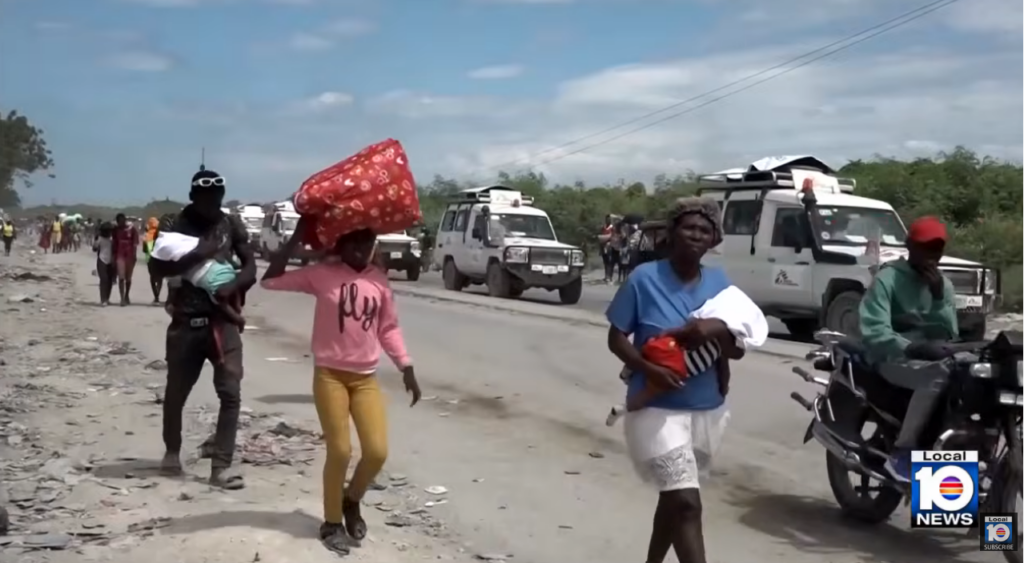
“Critically, it is very difficult for persons and candidates to safely move around the country as many of the main highways are controlled by the armed gangs,” said Dr Barnett, emphasizing the need for a “minimum level of effective security” for persons to safely participate in the upcoming elections as voters or as candidates.
The Secretary-General said recent visits to Haiti by the CARICOM Eminent Persons Group in early September and an Organization of American States (OAS)-organized mission in mid-August provided updated information on developments on the ground, including progress in electoral preparations and efforts to address security challenges.
While noting progress by the Provisional Electoral Council in implementing the electoral decree and publishing deadlines for voter and candidate registration ahead of the first round of elections scheduled for 13 December 2026, Dr Barnett said significant challenges remain.
Haiti Gang Suppression Force
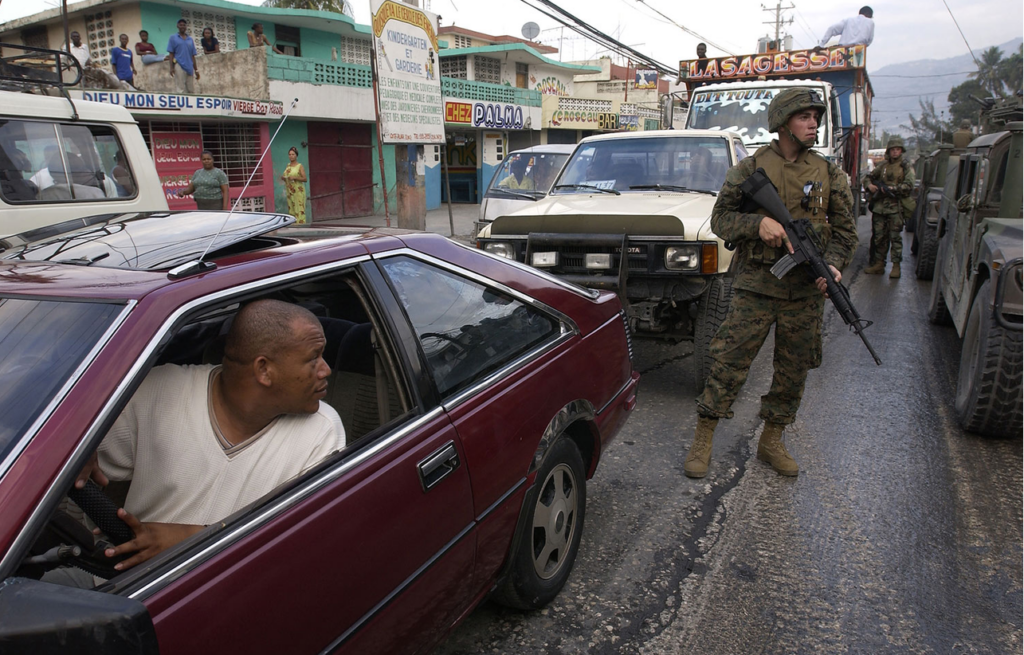
The Secretary-General stressed the need for the UN Security Council to renew the Gang Suppression Force (GSF) mandate and for troop deployments to reach the required strength.
“We urge the international partners to work in concert to ensure that troops have timely and adequate airlift, equipment and resources, to provide an increased security presence with urgency,” she stated.
A comprehensive approach to security
Dr Barnett also called for strengthened support for Haiti’s justice system to facilitate implementation of the Disarmament, Demobilization and Reintegration (DDR) strategy for members of armed groups.
“The people of Haiti are counting on us to stand with them as they strive to move toward stability, democratic renewal, and long-term sustainable development. We must not let them down,” she said.
Prime Minister Fils-Aimé joined calls for the UN Security Council to renew the mandate of the GSF and for its full deployment
He also outlined the Government’s approach to peace and security as a state-building strategy in which Haiti assumes responsibility for its own security while partners help address key challenges, including illicit flows that fuel criminality.
He highlighted elections, the Disarmament, Demobilization and Reintegration strategy, justice sector reform, action to address the drivers of gang recruitment, and economic development as key priorities.
“Security makes voting possible; voting restores legitimacy, and legitimacy paves the way for stability,” he said.
While the Government is leading efforts to hold the elections, Mr. Fils-Aimé said that the scale of the security challenge means support from international partners “remains essential.” He also expressed gratitude to “partners and friends who continue to stand with Haiti.”
The CARICOM position
Speaking on behalf of CARICOM, Minister of National Security of The Bahamas, Miles Laroda, said the Community welcomed progress towards elections in Haiti and reaffirmed that they “must be Haitian-led, credible, free fair, and inclusive elections.”
He added, “Haitian authorities and stakeholders must remain at the center of every decision concerning their country’s future. The role of the international community is to support not substitute for that leadership.”
Calling for continued support for the Gang Suppression Force, he said, “Haiti stands at a crossroads. The deployment of the Gang Suppression Force and the promise of elections later this year offer a narrow but real window of opportunity.”
The ECOSOC Ad Hoc Advisory Group on Haiti Ministerial-Level Meeting was co-chaired by Secretary of State of Canada, Hon. Randeep Sarai and the Minister of Foreign Affairs of Haiti, Her Excellency Raina Forbin.