By Rob Okun
Photos: Wikimedia Commons
How is it possible any man would ever believe gang rape is permissible? Are we at a cultural crossroads where Jane Doe’s courageous voice is sparking a resurgence of the #MeToo movement? Let’s hope so.
Sexual assaults against women is an epidemic. Women have been saying as much for, well, forever. There are male allies, but not nearly enough, and the silence of too many men is too easily characterized as tacit approval. An individual man righteously saying, “I’d never act that way” is an empty gesture if it’s not part of a systems overhaul.
Rape is not about sex. It’s about power. In her lawsuit, Jane Doe says the Cornell 7 coerced her into taking drugs and took turns raping her for hours, each reinforcing the others’ twisted sense of male entitlement. Not one shouted, “Stop!” Ever.
This isn’t about how any one man was raised; it’s about how all men are socialized. For years, I’ve called on Congress to fund a national study of how preschool boys are socialized, including training teachers to avoid the blue/pink trap, and nurture sensitive, caring, compassionate boys, and strong, courageous, compassionate girls.
Sexual violence predates the occupant of the White House, but it certainly doesn’t help having a man there with a sexual assault history. U.S. voters twice elected this man. who boasted about grabbing women by their genitals. A man who a federal jury in 2023 found liable for sexually abusing E. Jean Carroll, (a verdict the Supreme Court let stand). A man who was pals with convicted sex offender Jeffrey Epstein. A man whose name appears tens of thousands of times in the Epstein files. (Millions of pages are still being withheld by his Attorney General, Todd Blanche.) Young men hear the message: power protects men who abuse women.
The pattern is old. In 2010, it was Cleveland, Texas, where 19 men and boys gang-raped an 11-year-old girl. In 2012, it was Steubenville, Ohio, where football stars raped a barely conscious 16-year-old while classmates filmed. In 2015, it was Stanford University, where a star swimmer sexually assaulted an unconscious woman until two male cyclists passing by stopped him. Now it’s Cornell. The towns change, but the script doesn’t.
Of course women are outraged. Many men are, too, just not enough. Yet. Journalist Jessica Valenti recently recalled Emma Sulkowicz, the Columbia University student who, in 2014, carried the mattress she says she was raped on around campus for months, even across the graduation stage.
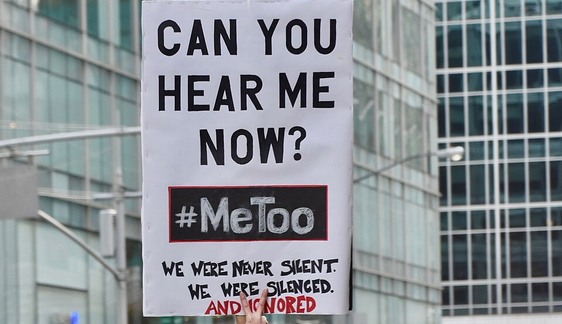
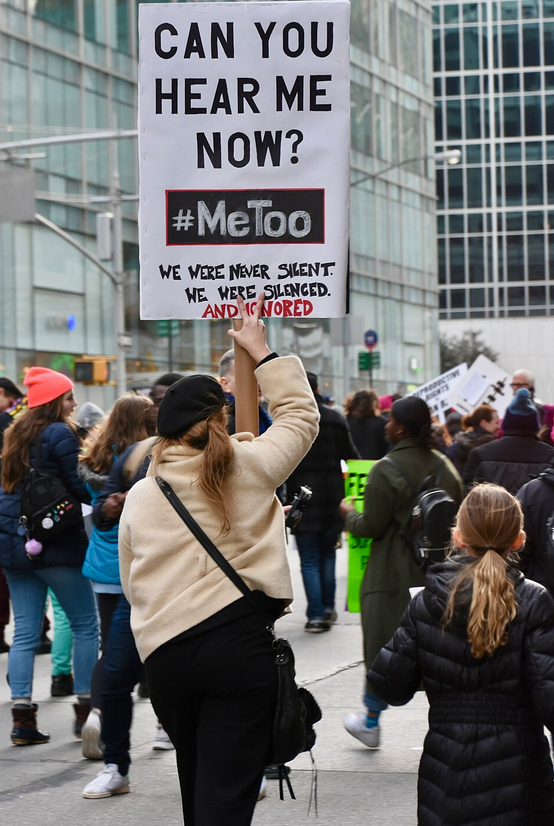
When men online tried to unmask Jane Doe, women answered by the thousands declaring: “I am Jane Doe,” an act of solidarity reminiscent of #MeToo’s early days. Despite the reckoning that befell powerful men—the convictions, firings and social ostracism—there’s been backsliding. Jane Doe’s courageous act is changing the conversation. Call it #MeToo 2.0.
Men have been following women’s lead in championing gender equality for half a century, yet the profeminist men’s movement remains one of the most important social justice movements you’ve never heard of. Our culture has names for the worst of manhood—“toxic masculinity” and “the manosphere”—but no common language for the men transforming it, and little coverage of our efforts. No wonder many women feel hopeless about men, especially if few know male allies exist.
Outrage alone won’t fix this. Institutions that shape young men—like the military and higher ed—must do some of the heavy lifting.
Before Pete Hegseth started destroying the Defense Department, the military wasn’t completely opposed to listening. In 2012, 48 hours after then-Defense Secretary Leon Panetta watched The Invisible War, a searing exposé of rape among the ranks, he changed how the military prosecutes sexual assault. The 2015 follow-up, The Hunting Ground, is a damning look at how colleges shield rapists to protect their reputations. Campuses still spend heavily on adjudicating assaults and pennies on preventing them.
Meanwhile Congress, with its own sordid history of members being credibly accused of sexual misconduct, has never treated preventing men’s violence as a priority worth funding. This has to change.
All these institutions should invest in men’s efforts to prevent violence against women, and double their support for women’s campaigns. Men have long been allies, and profeminist organizations in North America have been hard at work for decades: Mentors in Violence Prevention Strategies, Next Gen Men, Equimundo, MCSR, Men4Choice, A Call to Men, White Ribbon Campaign. Globally, there’s MenEngage Alliance.
Imagine a four-year-old boy scraping his knee and starting to cry. What if his caregiver scolded: “Big boys don’t cry.” It still happens. We must intervene before boys get the message to toughen up and harden their hearts. Cornell fraternity men were once four years old. What were they taught about expressing their feelings, about bullies, about respecting girls—and themselves? We spend billions responding to men’s violence and almost nothing studying where it starts.
As a man, I can’t say “I am Jane Doe.” It’s not my place. I’ll say something clunkier: “I am Jane Doe’s ally.” If we are ever to create a world where girls and women feel safe, we need more male allies, and we need them now.
Rob Okun ([email protected]), syndicated by PeaceVoice, is editor emeritus of Voice Male, which has long chronicled the profeminist men’s movement.