By Dr. Theogene Rudasingwa
Photos: YouTube Screenshots\Wikimedia Commons
In 2025, the United States issued a National Security Strategy (2025-National-Security-Strategy) that signaled a fundamental shift in how power, security, and responsibility are understood globally. Sovereignty was elevated over cooperation. National resilience was prioritized over global stewardship. Alliances became conditional. Climate change, pandemics, development, and democracy were treated as secondary concerns unless they directly served immediate national interests.
It would be a mistake to reduce this document to partisan politics or a single administration. Its deeper significance lies in what it reflects—and what it has since inspired. The 2025 Strategy articulated a mindset increasingly attractive to governments everywhere: secure yourself first; cooperate only when it pays; leave global problems to others.
Now consider a simple but unsettling thought experiment: What if all 195 countries in the world adopted that same mindset?
That question is not theoretical. Over the past decade, we have watched versions of this thinking spread across democracies and autocracies alike, across North and South, East and West. The result has not been a sudden apocalypse. It has been something quieter and more corrosive: a world slowly losing its capacity to manage shared risks.
When every nation stands alone, the global commons fray. Climate change accelerates not because solutions are unknown, but because collective action collapses. Pandemics are managed nationally but fail globally. Migration is treated as a security threat rather than a symptom of instability. Oceans, cyberspace, and even outer space become contested zones rather than shared systems that sustain life and commerce.

Peace, too, begins to change character. Large-scale war between major powers remains unlikely—but not impossible. In its place emerges a world of endless proxy conflicts, arms races, miscalculation, and permanent crisis. Deterrence still works, but it works narrowly and precariously. Technology accelerates decision-making faster than diplomacy can keep up. Restraint erodes not through malice, but through neglect.
The most dangerous illusion of our time is the belief that a global catastrophe is impossible because it would be irrational. History teaches the opposite. World wars do not begin because leaders desire destruction. They start because systems fail—because fear, ambiguity, compressed timelines, and absent institutions leave actors with fewer and fewer off-ramps. A world governed entirely by strategic solitude is not stable; it is brittle.
Yet this is not an argument for nostalgia or naïve internationalism. The old world order was deeply unequal and often hypocritical. Nor is it a plea for permanent dependence on any single great power. In fact, one of the clearest lessons of the post-2025 era is that no hegemon can—or will—carry the burden of global stability alone.
The real question before us is whether humanity can build alternative futures—ones that respect sovereignty while recognizing interdependence, that balance national dignity with shared responsibility. Such futures are not fantasies. They depend on reframing security around human well-being, investing in climate adaptation as a form of peacebuilding, governing technology ethically, revitalizing regional cooperation, and restoring diplomacy as a tool of first resort rather than last resort.
Nowhere is this challenge—and opportunity—more urgent than in Africa.
As global powers retrench and multilateral guarantees weaken, Africa can no longer afford strategies based on waiting for inclusion, aid, or external rescue. But neither can it survive by imitating the most cynical versions of global realism. Africa’s future will be shaped by whether it can redefine security around people rather than regimes, transform its economies from extraction to value creation, strengthen regional integration, and ground governance legitimacy in accountability rather than coercion.
This is not a call for isolation. It is a call for agency.
In an unforgiving world, Africa’s greatest assets are its people, its youth, its diasporas, its moral traditions, and its capacity to leapfrog old models. The continent’s task is not to replicate the strategic solitude of others, but to demonstrate that cooperation—rooted in self-interest, dignity, and justice—is a survival strategy, not a weakness.
The stakes could not be higher. A world in which every nation thinks only of itself may limp along for years. But it will do so at the cost of mounting instability, deepening inequality, and ever-present risk of systemic failure. The choice before us is not between realism and idealism. It is between managed interdependence and unmanaged decline.
This op-ed introduces a forthcoming four-part weekly series that will explore these questions in depth:
- A Warning from the Future;
- Building Alternative Futures;
- Is World War III Inevitable?; and
- What Is to Be Done by Africa?
The full series will appear in the upcoming edition of Africa Arise Ascend, where these arguments will be developed at length—not to predict doom, but to insist on responsibility, imagination, and choice.
The future is not yet written. But it is watching what we do next.
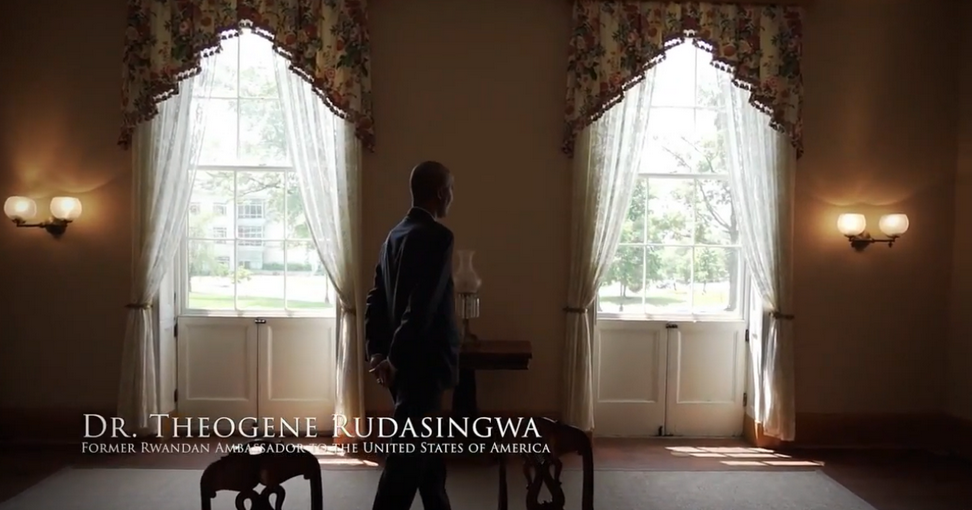

Dr. Theogene Rudasingwa
Former Ambassador of Rwanda to the United States of America