By Jared O. Bell
A few weeks ago, during a trip to the Philippines, I made my way across congested Manila to Bantayog ng mga Bayani, the memorial in Quezon City to Filipinos who resisted Ferdinand Marcos. The Wall of Remembrance outside, inscribed with the names of those who died resisting, was overrun with grass. I asked one guard where to find the museum, then another, before finding it around a corner. The receptionist asked who I was with. I told her I was a professor and researcher. She indicated to me that there were no tours on Monday and that I’d be free to tour the museum on my own.
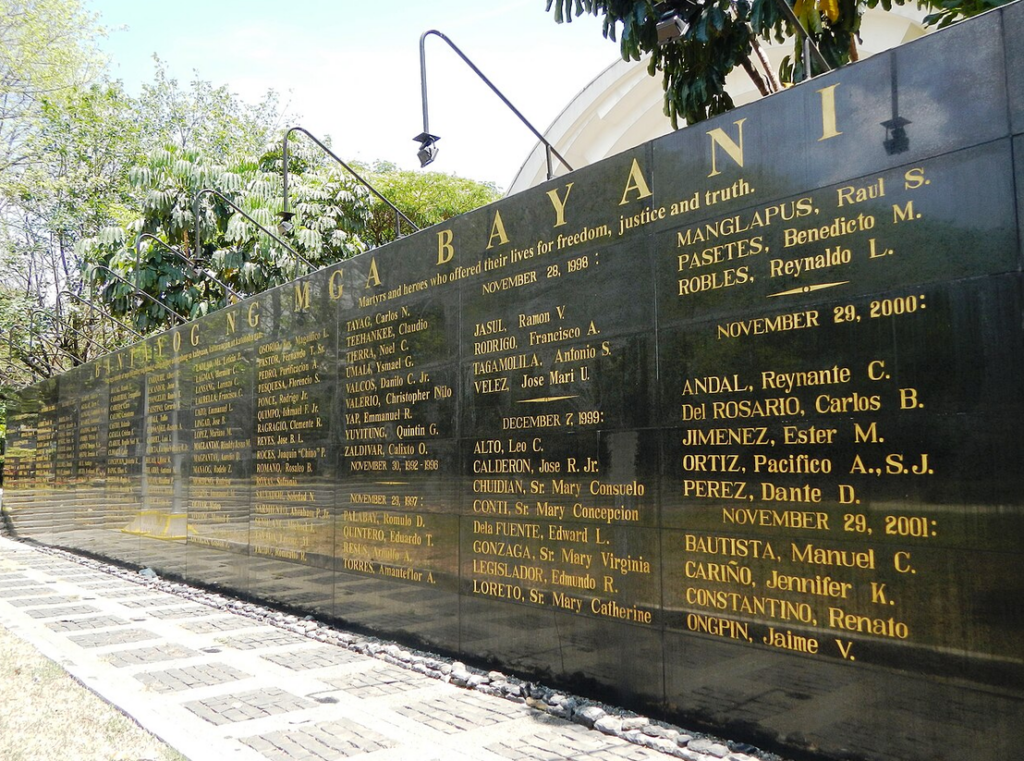
The museum was worn, its displays far smaller than the story they told of one of the most precarious periods in Philippine history. They traced Marcos’s rise and the movement, and the bloodshed, it took to stop him. The exhibits were heartbreaking and, paradoxically, empowering. Among them was a newspaper front page from 1972. Its banner headline reads “FM DECLARES MARTIAL LAW.” Just beneath it, the paper reassures readers: “But civilian gov’t still functions; no military takeover.” Farther down: “Nation is calm; business, life go on normally.” As I moved through the rooms, I kept thinking about where my own country seemed to be headed.
Life did not go on normally. Under martial law, according to Amnesty International, some 70,000 people were imprisoned, 34,000 tortured and 3,240 killed.
What stayed with me was what happened after. Filipinos drove Marcos from power in 1986. But many officials who had tortured prisoners kept their posts, and a law recognizing and compensating victims did not arrive until 2013, 27 years later. By then, a sustained campaign to recast the era as a golden age was well underway. In 2022, Marcos’s son won the presidency in a landslide. An uprising had removed the father. It did not settle what he had done.
I think one of the key lessons from the Philippines is that when a country has no way of dealing with its past, the abuses come back. Three years after that reparations law, Rodrigo Duterte became president. He allowed Marcos to be buried in the national Heroes’ Cemetery and launched a drug war that killed more than 6,000 people by the government’s own count and as many as 30,000 by the estimates of human rights groups. In 2022, Duterte’s daughter, Sara, ran alongside Marcos’s son and became vice president. Their alliance has since fallen apart. Marcos let the International Criminal Court arrest the elder Duterte, whose trial for crimes against humanity opens on Nov. 30. Even that reckoning is happening in The Hague, and only because two political families turned on each other.
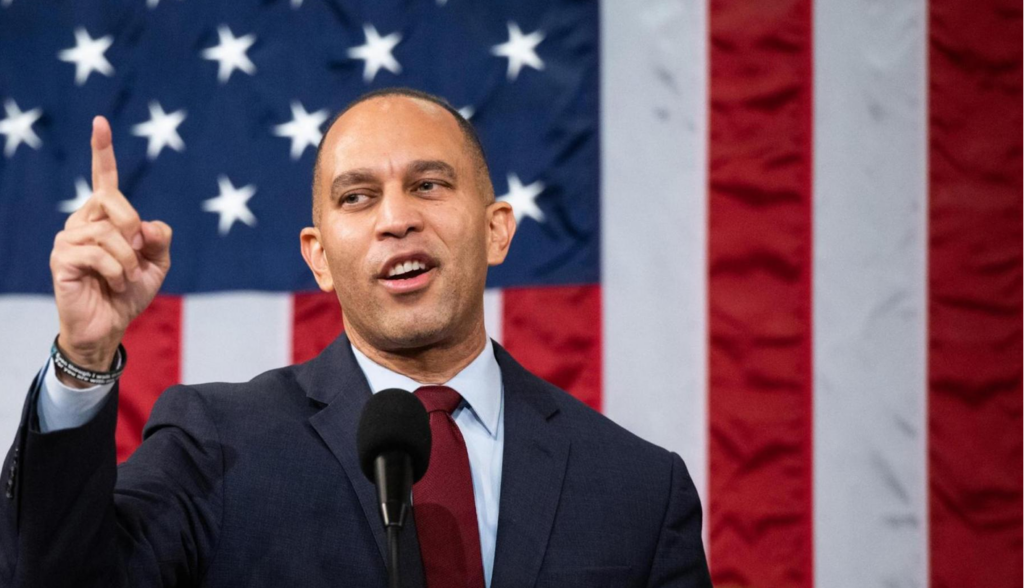
I have been thinking about that newspaper since voters handed Democrats control of both the House and Senate. Hakeem Jeffries promised to “bring accountability to those who have visited unprecedented corruption on this country.”
I have spent more than 15 years in international development, leading governance and accountability programs in Central Asia, Africa, the Balkans, and Latin America, including at the U.S. Agency for International Development. The United States financed truth commissions from South Africa to Colombia. It has never applied those tools to itself. In 2025, to my shock, horror and disbelief, I watched that agency dismantled, and I was pushed out along with nearly all of its staff. I believed in it, regardless of its imperfections. It was a purge of “deep state” operatives, who apparently couldn’t or wouldn’t be loyal to the president or his agenda. We were treated as enemies of the American people and the government we served.
Over the past two years, I have watched things happen here that I spent my career helping activists and concerned citizens fight against. In a single night in January 2025, President Trump fired 17 inspectors general. The Justice Department dropped corruption charges against allies, including New York’s then-mayor, Eric Adams, and opened investigations of opponents. A federal judge found probable cause that officials had willfully defied his order halting deportation flights. In Minneapolis, federal immigration agents killed two American citizens, Renée Good and Alex Pretti, an ICU nurse.
The new majorities will be tempted to answer all of this with two years of hearings aimed at the 2028 campaign. I understand the appeal. It would also play into the “lawfare” narrative the administration has spent years building. The White House is already making that case. Days after the election, Trump called Democrats’ investigative requests “extortion at the highest level“ and ordered the Justice Department to look into them. The White House counsel then warned Robert Garcia, the incoming Oversight Committee chairman, that aggressive oversight “may cross the line into blatant criminality.” Garcia, for his part, had posted “LAWYER UP“ on election night. Hearings run as a fight between two parties will only help Trump tell his story.
There must be justice and accountability, in a sequenced manner. Congress should start by creating an independent truth commission by statute. Of course, it doesn’t have to be called a truth commission, and it may draw some political ire from Democrats and Republicans alike, as it may appear as retribution or an overreaction to the harms done. The House January 6 committee expired with the Congress that created it. A statutory body with subpoena power, bipartisan appointments and terms that outlast the next election could produce a full public accounting of how American institutions broke down. The closest American precedent is the 9/11 Commission.
I first came to this work as a doctoral student in Morocco, whose truth commission could not compel officials to testify or publicly name perpetrators. Years later, I taught at a university in The Gambia as the country rolled out its Truth, Reconciliation and Reparations Commission after Yahya Jammeh’s long rule. Both commissions left behind a public record, something congressional hearings rarely do.
President Trump will almost certainly veto such a bill. Congress should pass it anyway. A veto becomes part of the record, and the legislation will be ready in 2029.
The findings should then drive institutional reform, including real protection for inspectors general and a statutory bar on the new rule stripping civil service protections from career employees.
Prosecutions should be left to the courts, without political interference. Deciding who should be barred from public office is the hardest part, and it should come last. That decision has to rest on what a person did and what a court has proven, rather than on which party they belong to. The Philippines let torturers keep their jobs, and it is still living with the consequences. Iraq went the other way, and its de-Baathification turned into a purge of anyone tied to the old ruling party.
I understand why many Americans will hear “accountability” as “retribution.” That is why the order matters. A truth process that comes first, run by an independent body, is the strongest protection against a cycle of partisan revenge. And every reform described here would bind a future Democratic president just as tightly as this one.
“Nation is calm; business, life go on normally.” In 1972, that headline was meant to reassure Filipinos. When I read it in that museum, it felt like a warning. I spent years writing about and researching how other countries reckon with their pasts. If the U.S. is the society dedicated to the rule of law that we claim to be, we should be making the case for our own reckoning at home.
Jared O. Bell, PhD, syndicated with PeaceVoice, is a former U.S. diplomat and scholar of human rights and transitional justice, dedicated to advancing global equity and systemic reform.