[Speaking Truth To Power]
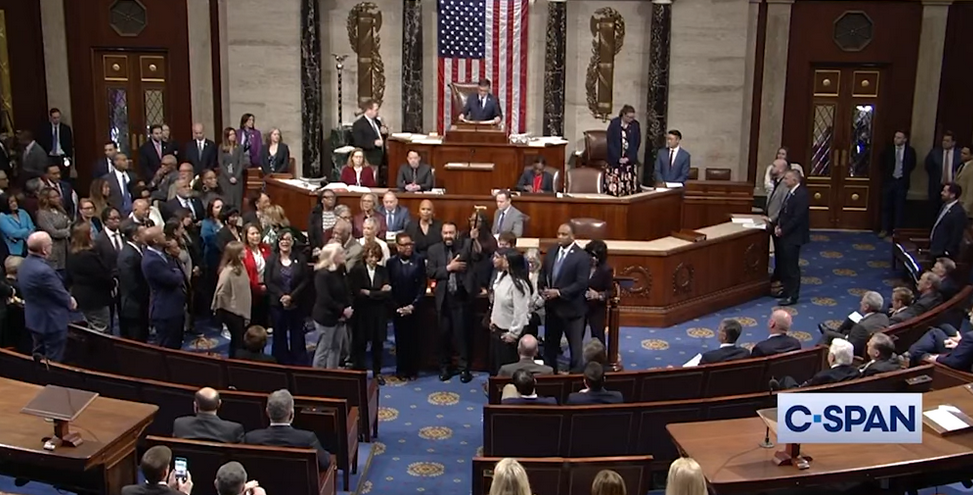
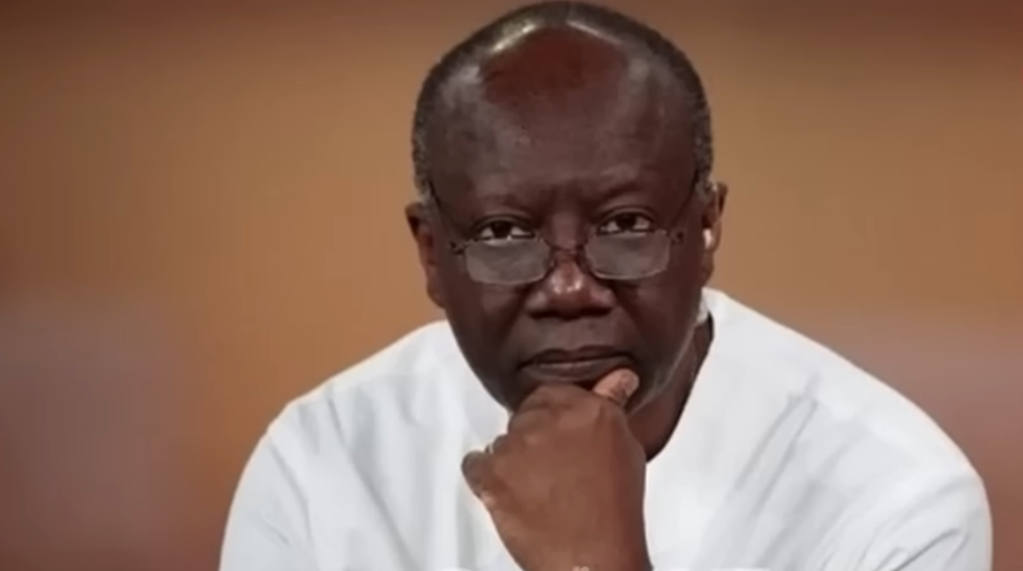
Commissioner Jett (above ) rejected conclusions of scathing review by state agency about MDE’s oversight failures.
Photos: YouTube Screenshots
By Milton Allimadi
Today’s column is about how the incompetence of some officials in the Minnesota Department of Education (MDE) led to the theft of hundreds of millions of federal dollars from a United States Department of Agriculture (USDA) program meant to support hungry people and then—with the help of the department of justice—shifted all the blame to one non-profit organization and the food distributors it sponsored from the ethnic Somali community.
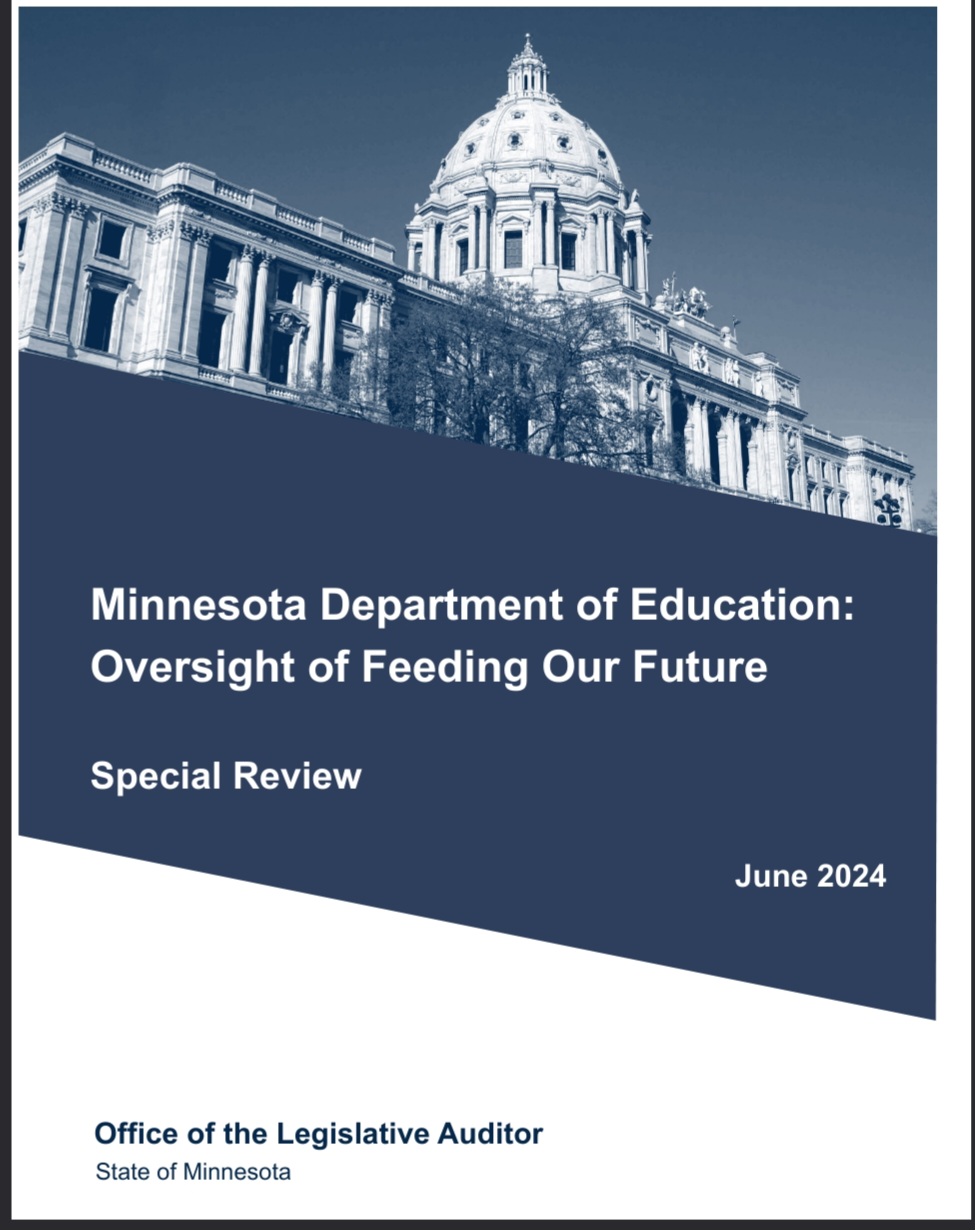
The OLA’s June 2024, special review.
Even after April 2021, when MDE said it reported suspected fraud by one of the sponsors involved in the food program to the FBI, from May 2021 to January 2022, the state agency still paid about $130 million in reimbursements to that sponsor, and over $135 million to a second sponsor who also was involved in similar alleged fraud.
First some philosophical musings before coming back to MDE.
The late Joseph Lelyveld, executive editor of the New York Times and one of the few corporate media journalists whom I respected, once told me how he practiced his craft when he was based in South Africa as a correspondent. “When journalists run in one direction chasing a story, I run in the opposite direction.”
Lelyveld said he avoided getting caught up in the “herd mentality” that afflicts many reporters. Many journalists relied on government sources, compared notes, and read each other’s stories, he said. “That’s why all the stories look the same. They use the same sources.”
Lelyveld shared his thoughts with me after he spoke to my class at the Graduate School of Journalism at Columbia many years ago.
Lelyveld’s stories always stood out from his colleagues. His well-researched book, Move Your Shadow, documenting the corrosiveness of apartheid, deservedly won the Pulitzer Prize in the General non-fiction category in 1986.
We developed a respectful professional relationship and correspondence over several years. I’d share my thoughts on how the Times could improve its African news coverage. When the legendary reporter and editor died on Jan. 5, 2024, I was one of several journalists contacted for a tribute quote in a respected media blog called journal-isms.
Lelyveld’s warning about how the “herd mentality” distorted stories and skewed narratives in a single direction came to mind many times last year when I started following the so-called “Feeding Our Future” federal food program fraud in Minnesota.
What most caught my attention, as I pointed out in my first column, was the remarkable similarity in the headlines of the news accounts in the Minnesota media and those of the government press releases from the U.S. Attorney’s Office for the District of Minnesota and the overplay of a few key words, including “Aimee Bock the alleged mastermind,” “Feeding Our Future scandal,” and “$250 Million fraud.”
Everyone I’ve interviewed so far—including people who worked with those in charge of food distribution locations, food vendors, and one of the sponsor organizations—told me there was indeed massive fraud in the federal nutritious food program.
The same people tell me the story was not as dry-cut as the government presented it and the way local media embraced it. They say MDE’s own oversight failures and incompetence—for example by continuing to cut large checks to the same organization, FOF, that it told the FBI was involved in fraud; and to another sponsor, Partners in Quality Care (PiQC)— were the main reasons for the massive fraud.
The misappropriated funds involved the United States Department of Agriculture’s (USDA’s) Food and Nutrition Service (FNS) program which is designed to improve access to nutritious meals and snacks for children. Its components include the Child and Adult Care Food Program (CACFP), the Summer Food Service Program (SFSP), and many others. The USDA partners with state agencies to oversee the program locally. In Minnesota that agency was MDE, which bears ultimate oversight responsibility.
MDE, in turn, worked with non-profits, such as Minneapolis-based Feeding Our Future (FOF) whose executive director was Aimee Bock, and the other major one, PiQC, under Kara Lomen.
The non-profits apply to MDE to become sponsors. Once accepted, they sponsor the actual food distribution sites by applying to MDE. Traditionally the sponsors worked with educational settings and after-school programs where the meals were served. During the pandemic, the USDA waived many of the restrictions and allowed for-profit entities, including restaurants, to participate. Since children couldn’t be served in school settings, some food distribution sites gave out the food to families in bulk form.
The food is distributed at the sites sponsored by the non-profits like FOF. These sites then send a tally of meal counts to the non-profits whose officials are supposed to verify the total meal counts and then submit claims for reimbursements to MDE. After performing its own verification, MDE then reimburses for the meals with checks to the sponsors. The sponsor is permitted to retain up to 15% as administrative fees before paying the sites or the vendors.
During the pandemic the number of food site locations increased because of the USDA’s waiver and increased demand for meals.
In summary, the government’s narrative—repeated by local Minnesota media ad infinitum—was that the main “villain”, or as the U.S. Attorney put it, the “mastermind” in the fraud scheme was Ms. Bock and her organization FOF. Prior to the pandemic, FOF disbursed about $3.4 million—in the form of reimbursements from MDE for meals served by the entities it sponsored. During the pandemic, FOF disbursed $200 million to the food providers it sponsored.
The government’s position was that even with the exponential increase in the number of food distribution sites due to the waivers, there’s no way that these locations could have served enough food that resulted in reimbursements amounting to $200 million by MDE to FOF.
Therefore, the government charged, Ms. Bock must have known that fraud was involved and that the sites were grossly inflating the number of meals they served. As I showed in my first column, Ms. Bock was eventually tried and convicted and is awaiting sentencing.
Here are two critical questions. If Ms. Bock should have known—and since the government called her the “mastermind” it claims she did know—that fraud was involved, what about the top officials at MDE?
Certainly what’s good—or bad—for the goose, must also be good—or bad—for the gander.
If MDE cut checks totaling $3.4 million to Ms. Bock prior to the pandemic, and they found themselves cutting checks totaling $200 million during the pandemic, should MDE officials not have been the first to ask questions? Were the checks being signed automatically by robots or by robotic individuals at MDE?
Isn’t the reason why the USDA partners with entities such as MDE to ensure that a local agency is better situated to keep close eyes on the federal dollars?
According to the indictment, PiQC was also reimbursed about $200 million by MDE. Yet its executive director, Ms. Lomen, and none of her co-workers have been indicted or tried. If being reimbursed $200 million is not a crime for Ms. Lomen and her organization, why is it a crime for Ms. Bock, her organization FOF, and the ethnic Somalis in charge of the food sites?
Did MDE and the federal government scapegoat Ms. Bock and FOF in order to deflect from the incompetence of some MDE officials?
If the ongoing trials in Minneapolis, conveniently dubbed the “Feeding Our Future Scandal”—when in fact PiQC was also involved—about holding accountable people who stole federal dollars, then how come MDE and the U.S. Attorney are willing to let Ms. Lomen and her PiQC co-workers get away with $200 million?
Many of the ethnic Somalis in charge of the food sites were sponsored by PiQC. They too have been prosecuted and scores are awaiting sentencing or already serving time in prison. Yet, Ms. Lomen and her co-workers have not been prosecuted. “It takes two to tango,” a Somali woman who worked at one of the food distribution sites told me. She notes that Somalis were demonized and even the ones who did nothing wrong were collectively criminalized.
Seventy-two out of 73 people who have been prosecuted were Black; 68 are ethnic Somalis. FOF also sponsored site operators who were Latino, those were not indicted.
Things don’t add up.
The U.S. Attorney let MDE and PiQC off the hook and went after Ms. Bock, her co-workers, and the ethnic Somalis.

Gov. Walz; (above) no action against MDE
There’s no question that MDE dropped the ball, as a review by a state agency revealed. Minnesota Gov. Tim Walz took no action against the MDE officials who were in charge of the program even after the scathing June 2024 review, Minnesota Department of Education: Oversight of Feeding Our Future by the state Office of Legislative Audit (OLA).
Here’s what the review said about how MDE was derelict in its duties.
“Federal regulations required MDE to monitor and enforce Feeding Our Future’s compliance with program requirements. MDE’s responsibilities under federal law ranged from providing guidance and training to Feeding Our Future staff, to terminating the organization’s participation in the programs if warranted. However, we found MDE’s oversight of Feeding Our Future to be inadequate,” so states the document.
The OLA’s review offered many examples of MDE’s oversight lapses. MDE failed “to act on warning signs known to the department prior to the onset of the covid-19 pandemic and prior to the start of the alleged fraud,” the review states. This means the OLA didn’t buy MDE’s argument that some of its guardrails were compromised due to the pandemic, since the agency’s woes predates the covid-19 crises.
One year before the pandemic, MDE found FOF “deficient” on some aspect of the program. However, MDE never checked to ensure that whatever problem it was had been cured, and continued doing business with the non-profit.
“MDE’s only administrative review of Feeding Our Future’s CACFP operations—conducted in 2018—resulted in serious findings that required follow-up but MDE never conducted follow-up review,” states the review. “MDE found Feeding Our Future seriously deficient on two occasions, but ultimately deferred all serious deficiencies without taking reasonable steps to ensure the organization implemented corrective actions.”
The review notes that MDE had the tools to address any concerns. “If MDE finds a sponsor noncompliant with federal law in its administration of CACFP or SFSP, it must declare the sponsor ‘seriously deficient,’” the review states. “The resulting process gives sponsors the opportunity to correct the deficiencies.” MDE didn’t follow its own procedures.
“Between June 2018 and December 2021, MDE received at least 30 complaints involving Feeding Our Future or its sites,” the review notes. “MDE did not investigate some complaints about Feeding Our Future, despite their frequency or seriousness,” the review states. “When MDE decided to investigate complaints about Feeding Our Future, the investigations were inadequate.”
MDE could have simply stopped working with FOF by not renewing its application. “Most notably MDE failed to address what it sees as limits to its authority years before the start of the covid-19 pandemic. And MDE approved Feeding Our Future’s program applications despite unaddressed concerns,” the review states.
“MDE’s inaction to strengthen and exercise its authority to deny applications put the CACFP and SFSP program’s integrity at risk,” the review adds.
“In fact,” the review states, essentially condemning MDE, “we believe MDE’s actions and inactions created opportunities for fraud…”
Why didn’t such a serious report garner more media coverage and headlines in Minnesota? Were the media totally wedded to the U.S. Attorney’s narrative that “evil” Aimee Bock was solely responsible?
Was scapegoating Ms. Bock a deliberate strategy to let MDE and PiQC off the hook?
I asked Katherine Theisen, the director of OLA’s special reviews division whether her office planned to produce a similar report on PiQC and all the other sponsors that MDE has worked with to provide a better picture of how federal dollars may have been abused, instead of only FOF, in an e-mail message.
“As stated in the introduction to the Office of the Legislative Auditor’s 2024 report, Minnesota Department of Education: Oversight of Feeding Our Future, the scope of the special review was driven by the federal criminal charges filed against Feeding Our Future’s executive director, staff, and associates,” Ms. Theisen responded. “At this time, OLA does not plan to review other sponsors.”
According to the OLA’s website, “State law gives OLA the authority to conduct special reviews. They are often triggered by concerns brought to OLA by legislators, other public officials, private individuals, or media reports.” This means OLA could indeed look into MDE’s work with all the other non-profits, including PiQC, depending on public interest.
MDE Commissioner Willie L. Jett II rejected the review’s conclusions and defended his agency. “MDE disputes the OLA’s characterization regarding the inadequacy of MDE’s oversight—MDE’s oversight of these programs met applicable standards and MDE made effective referrals to law enforcement,” Commissioner Jett wrote, in a June 7, 2024 letter to the OLA.
According to MDE, the agency referred its suspicion of possible fraud by FOF to the FBI in April 2021. Yet, between May 2021 and January 2022, after it contacted the FBI, MDE disbursed at least $129.9 million to FOF, and $135.2 million to PiQC. Hardly what one might call “effective referrals to law enforcement.”
Commissioner Jett also played the Aimee Bock and FOF cards in his June 7, 2024 letter. “What happened with Feeding Our Future was a travesty—a coordinated brazen abuse of nutrition programs that exist to ensure access to healthy meals for low-income children,” Mr. Jett wrote. “The responsibility for this flagrant fraud lies with the indicted and convicted fraudsters.”
The actual travesty was MDE paying at least $265.2 million to FOF and PiQC after it supposedly reported suspicion of fraud by FOF.
Was Commissioner Jett simply not aware of these facts when he wrote his June 7, 2024 letter?
This is one of the questions I posed in an e-mail message to the top MDE officials in charge of the USDA program in Minnesota—Daron Korte, Assistant Commissioner; and Emily Honer, Director of Nutrition Program.
Neither responded to my inquiry. MDE spokesperson Anna Kurth also didn’t respond.
After Gov. Walz told the media on Sept. 22, 2023 that MDE had tried to stop payments to FOF but that a district court judge, John H. Guthmann, had ordered payments to resume the court issued a statement that what the state agency and the governor said was “inaccurate” and “false.”
According to the court statement, MDE had suspended payments on March 30, 2021 after it issued a “serious deficiencies” letter to FOF which then filed a motion asking Judge Guthmann to order MDE to resume payments and to pay sanctions.
“Judge Guthmann never ordered the Department of Education to resume payments to FOF in April 2021, or at any other time,” the court statement read. “Thereafter, the Department of Education voluntarily resumed making payments to FOF. The Department of Education was not ordered by the court to do so. After the Department resumed voluntary payments, counsel for the Department of Education wrote the court asking that FOF’s motion for sanctions based on non-payment be denied as moot because the Department voluntarily resumed payments.”
Even if, as MDE falsely claimed, Judge Guthmann had ordered it to resume payments to FOF, what about the $135.3 million reimbursements to PiQC after it reported FOF to the FBI? PiQC was engaged in the same type of conduct as FOF, according to the U.S. indictment as I detailed in my last column.
Between June 2020 and January 2022, FOF and PiQC were reimbursed a total of about $437 million by MDE.
How much of it went to reimburse for meals served? Where does the $250 million figure the U.S. Attorney keeps referring to in the press releases as the amount of money stolen come from? Has there been an accounting of how much food was actually served and at what cost?
In an e-mail message to Claire Lancaster, the communications director for Gov. Walz, I asked if the governor had full confidence in MDE continuing to administer the USDA program.
The spokesperson didn’t respond.
A spokesperson for Secretary of Agriculture Brooke Rollins also didn’t respond to an e-mail message inquiring as to whether Sec. Rollins had confidence in MDE administering the program.
This columnist can be reached via [email protected] with any exclusive tips.
Topics in upcoming columns include: Interview with Ms. Bock’s lawyer Kenneth Udoibok, discussion over the length of sentences imposed by the judge presiding over the cases, and inner workings of MDE.
To Support our independent investigative journalism contributions are welcome via Cashapp to: $BlackStarNews
Also support Black Star News by buying merch from our brand new Black Star Store!