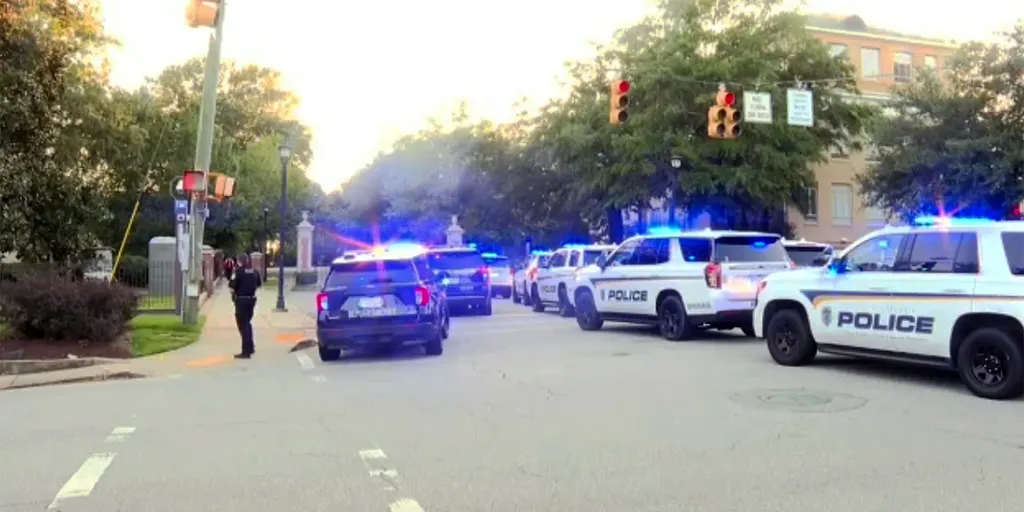
The University of South Carolina had an eerie incident on August 24, 2025. There was word about a possible gunman near Thomas Cooper Library, which saw law enforcement and administrators move into immediate action. The university had sent a Carolina Alert at 6:45 p.m., ordering students to shelter in place.
Campus police were quickly at the scene and initiated a room-by-room search of the library. Officers went floor by floor, searching every area for threats. Within an hour, they confirmed no shots were fired. No gunman was found.
The campus was in shock and relief. False reports confused, but the quick police response reassured many. Officials emphasized the importance of fast communication even when reports aren’t confirmed. The university said public safety always trumps hesitation.
Confusion Caused by False Reports
Investigators found the alarm came from unverified reports from students near the library. A viral video showed a man with an umbrella. Viewers thought he was holding a weapon. Panic spread across social media in minutes. Some students ran from the library. Others barricaded themselves in classrooms.
Rumors spread online. Many thought a gunman was in the library. Students texted family members while waiting for updates. Anxiety grew fast, even though no shots were fired.
University spokesman Jeff Stensland said officials issued the alert because initial reports were serious enough to warrant action. He said delaying the alert could have put lives at risk. He described the search as thorough and necessary, even though the threat was false.
The library was closed for the evening. Administrators ordered a sweep before reopening the building. Safety officials said they would review communication protocols. They promised to look into how misinformation spread so fast across campus networks.
Lessons for Universities Nationwide
University officials across the country are studying these false alarms closely. They’re looking for ways to reduce confusion and improve communication. Experts suggest clearer language in alerts to prevent panic. For example, using “unconfirmed reports” may reduce exaggerated fears.
Training is also key. Students and staff need to know how to respond during lockdowns. Regular drills reinforce safe behaviors. Clear instructions reduce chaos during real or false emergencies.
Social media monitoring is another tool. Universities are tracking trending posts to catch misinformation fast. Immediate correction prevents rumors from spiraling into mass panic. But that requires investment in staff and technology.
Collaboration between campus police and city agencies also helps. In Colombia, local police supported USC officers during the sweep. Their presence reassured many students and parents. That should be a standard practice.
Looking Ahead for the University of South Carolina
In the weeks to come, the University of South Carolina will review its alert system. Officials said they will be transparent during the investigation. They want to know how rumors spread and how communication affected the response.
Students want change. Many demand more precise alerts. Others want better coordination with the city police. Some want investment in mental health resources. Administrators say they will act.
The university community knows the stakes. Students want to feel safe in libraries and classrooms. Parents want clear communication during crises. Faculty want to know that safety protocols protect their teaching environment.
South Carolina leaders have to show that alerts matter. They have to reassure the campus that future warnings will be accurate and timely. Restoring trust will take work and honesty.
Broader Lessons for Higher Education
Every university can learn from the Columbia scare. Institutions have to take communication as seriously as policing. Students deserve alerts that inform without alarming. Faculty deserve training that prepares them for chaos.
False alarms will continue. Technology spreads misinformation faster than ever. Universities have to adapt. They have to adopt strategies that filter rumors and emphasize truth. They have to make sure that when an alert sounds, students know it’s real.
The cost of inaction could be deadly. If we get complacent, real threats will be ignored. If we panic without reason, injuries will rise even without violence. Safety is trust, preparation and clear communication.
Conclusion: Safety and Trust Go Hand in Hand
USC handled a scary night with urgency and transparency. Police swept the library. Administrators sent out alerts and then lifted them when it was safe. No shots fired, but fear spread fast.
The incident highlights the dual challenge facing all campuses. Universities must respond quickly to threats while protecting mental health. They must combat misinformation while maintaining trust. They must adapt to a world where false information travels fast.
USC showed how fast action can save lives. But the scare also exposed weaknesses. Students want clarity, accuracy and compassion. Universities must deliver all three.
False threats may pass, but their impact lingers. The lesson is simple: prepare thoroughly, act quickly and communicate honestly. Then campuses can be both safe and supportive.