By Pass Blue:
In October 2024, the family of Diego Edison Hernández Benavides, a retired Colombian army corporal, received a call from a company that had recruited him to work in Africa. He had died, the family was told, “in an accident.”
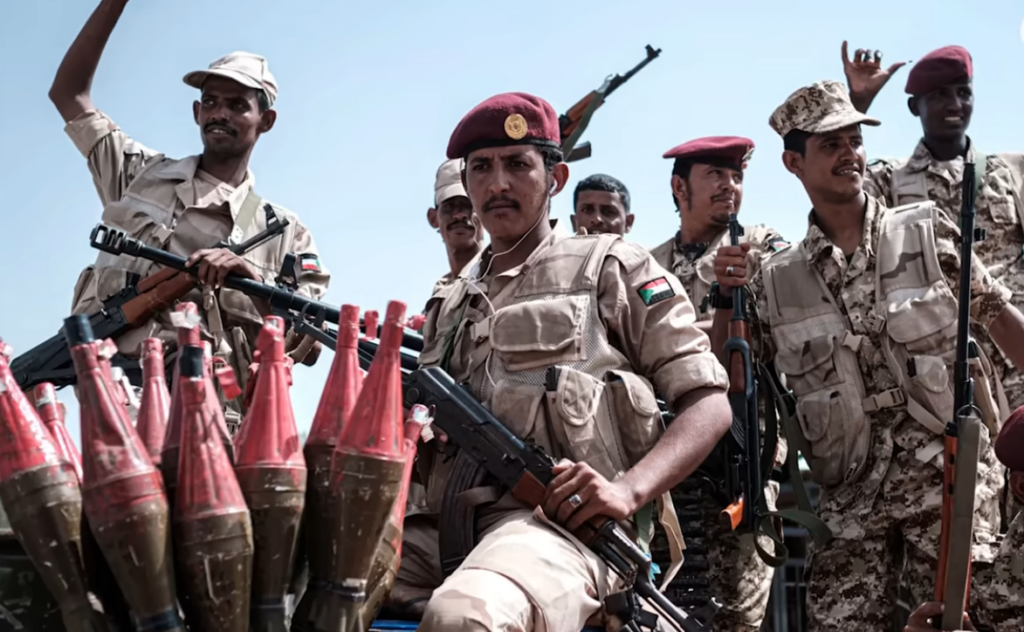
The company offered few details, but Hernández had told his relatives before he left Colombia that he was going to work as a drone operator in Sudan, which has been immersed in a civil war — and a related humanitarian disaster — since April 2023.
Further to Hernández’s death, there was a reported attempt to claim that he had been killed in a gas explosion in the semiautonomous region of Puntland of Somalia, and a death certificate was issued to that effect.
Two former mercenaries, however, confirmed that he was killed in action operating drones in Sudan, according to a 2026 report by the independent panel of experts that monitors United Nations sanctions on Sudan for the Security Council.
Hernández was one of many Colombian mercenaries the panel says was recruited by a Bogotá agency and employed by Global Security Services Group, or GSSG, a private security company based in the United Arab Emirates with ties to the Emirati presidency.
In the confidential report submitted in October by the panel of experts to the Security Council’s Sudan sanctions committee and seen by PassBlue, it says that Hernández and other Colombian mercenaries were hired to fight alongside the Rapid Support Forces (RSF), the paramilitary group opposing the government-controlled Sudanese Armed Forces (SAF) in the war in Sudan.
The mercenaries played a “significant role in RSF military operations in Darfur, particularly in the siege and capture of El Fasher” last year, the experts said.
But in a letter to the UN panel, dated July 2026, the UAE government denied reports that it had recruited and deployed Colombian mercenaries, saying that it “rejects any allegations of wrongdoing in relation to the Sudan conflict [. . . .]”
The UN Human Rights Office has documented that more than 6,000 people were killed from Oct. 25 to 27, 2025, when the RSF seized El Fasher. At least 4,400 people were killed inside the North Darfur capital and at least 1,600 others were killed while trying to flee for their lives, totaling about 2.3 percent of the city’s estimated 260,000 inhabitants at the time.
Tens of thousands of Sudanese are still encamped in the largest camp displacement site, called Tawila, in North Darfur, as the war rages on.
The UAE candidate
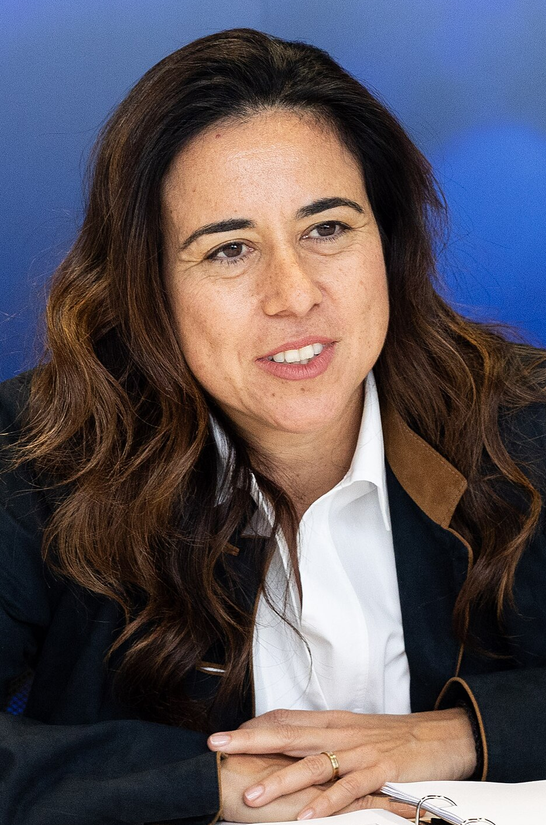
The role of the UAE in the Sudan war has been scrutinized by UN experts, media and civil society groups since the war began, but public attention to the Emirates’ involvement has been burst into view again as the UAE promotes the candidacy of Lana Nusseibeh, a top official in the country’s foreign ministry, as the next UN secretary-general. (She is also a former UAE ambassador to the UN, including when the country was a Security Council member, from 2022 to 2023.)
Her nomination for UN boss was announced by the Emirates on Oct. 21, and since then, she has been campaigning globally by using public and private funds, according to her nomination paperwork, which provides no details. Like the other candidates, her campaign has included private meetings with the Security Council, traveling to capitals and taking part in public dialogues with the General Assembly. She said she has temporarily stepped down from her government post as she runs in the UN race.
In her foreign ministry job, Nusseibeh consistently rejected accusations that her government supported the RSF through arms supplies, drones, mercenaries, thus violating a UN arms embargo. In an April 2024 letter to the Security Council, as a UAE official, she dismissed allegations of military, logistical, financial or political support for “any Sudanese faction as spurious, unfounded.”
Since she became an official UN candidate, she has directed questions about her country’s involvement in Sudan to her foreign ministry. That includes queries from member states and civil society members during the General Assembly dialogue she participated in on Oct. 27, during which she presented her candidacy publicly.
“In order to run for this office and be mindful of the obligations of independence that this office entails, I have taken a leave of absence from my post as a minister of the UAE, and I refer any questions about the UAE to the UAE representation,” Nusseibeh told the General Assembly.
She repeated the same response when the deputy permanent representative from Sudan, Ammar Mohammed, asked a similar question during the dialogue, noting that some of the atrocities carried out by the RSF included “mass raping of women and girls.”
Nusseibeh said to Mohammed: “I have left my office as minister in my own government and will refer any questions regarding that to my own government.”
The Security Council is expected to hold an informal ballot assessing the eight candidates running for UN secretary-general as part of a series of secret votes the Council has carried out since late July. The results of straw poll votes for Nusseibeh, who jumped late into the race, have been middling in the two most-previous balloting, on Oct. 30 and Nov. 5.
Another poll is planned for Nov. 19, and the voting could show whether Nusseibeh’s campaigning in the last few weeks has boosted her chances in the race. Rebeca Grynspan of Costa Rica has led in the straw polls, but it is unclear whether she faces a veto from any of the permanent members (Britain, China, France, US and Russia).
This week, 66 British MPs called on their government to use its veto to stop Nusseibeh’s candidacy.
The term for the next UN secretary-general begins on Jan. 1, 2027.
Denials and rebuttals
The UAE repeatedly denies the panel of experts’ allegations, findings and conclusions contained in the reports. The government provides a lengthy rebuttal reflecting knowledge of UN rules, mechanisms and procedures to primarily criticize the panel’s methodologies and other “technical flaws.” The rebuttal may be an attempt by the Emirates to distract attention from the panel’s work or discredit it, as one analyst familiar with the Sudan crisis put it.
The UAE says, for example, that the “deviation” by the experts of the standards set out by the Security Council “undermines the legitimacy of the work of the Panel.” Yet, the denial also states that the work by panels and other bodies established by the Council are considered “authoritative.”
The October report contains new material as well as information from the panel’s report in July, which was reportedly suppressed by Bahrain, a rare move by a Security Council sanctions committee member but a close ally of the UAE, so the report has no official UN document symbol and public status yet it still exists.
The annex also contends that the UN experts’ conclusion that the Emirati government hired Colombia mercenaries to fight with the RSF is incorrect.
“These allegations, and the implication of UAE wrongdoing, are unsubstantiated and flatly wrong,” Ghasaq Shaheen, the UAE’s deputy permanent representative to the UN, wrote, using UAE letterhead and annexed to the report. “The UAE firmly rejects the allegation that any of its military bases in the UAE were used as training facilities for Colombian mercenaries.”
Yet the panel reports that two military bases in Abu Dhabi — Ghayathi and Al Wathba — were used to train Colombian hires that helped the RSF to capture El Fasher in 2025. The UAE said, however, that the panel had offered no evidence that its government recruited the men or commissioned and financed their deployment.
The Emirates also say that its Interior Ministry had met with officials of the GSSG and confirmed that the firm is registered and licensed in the country to operate “security-related services to persons and sites,” but that the GSSG is “not involved in any mercenary activity in Sudan, does not have any links to individuals reported to be mercenaries in Sudan, and is committed to full compliance with UAE laws and regulations and international law.”
Nevertheless, the UN experts noted that “neither documentation regarding the UAE’s authorities investigations” into alleged wrongdoing by the GSSG nor “an explanation for its absence” was provided by the UAE.
The UAE blamed allegations against its government on “misidentifications and misinterpretations circulated” by the Sudanese authorities “to deflect responsibility for their actions in the conflict,” but offer no proof. It asked the UN panel to delete the findings against the UAE “until it has been properly heard, or revise them and withdraw the claim of ‘full conformity’ with the Standards.”
The panel’s mandate runs only to Jan. 11, 2027, although it could be extended.