By Black Star News
Photos: YouTube Screenshots|Wikimedia Commons
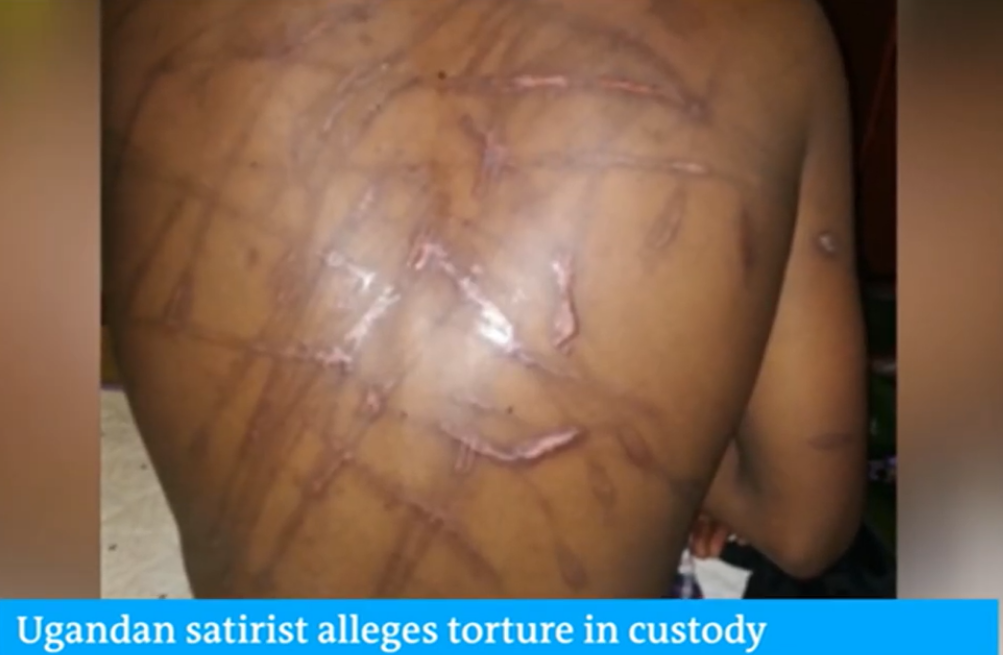
In what now points to a ‘limping’ government working at cross-purposes in a disconnect, Gen Yoweri Museveni has blamed his security forces for torture which currently persists in the country; leaving citizens to speak in hashed tones for fear of being picked up, held incommunicado and tortured.
Museveni heads the State, leads government and as Commands-In-Chief of the national armed forces, he arrow-heads the disciplined forces in the country. He also chairs the National Security Council which brings to his attention the daily security situation in the country by the heads of the army, police, intelligence agencies and prisons.
But in an August 3 missive, Museveni sounds like a Commander-In-Chief who is not in-charge of the security apparatus in the country. “[Stephen] Nuwagaba is a young man in his mid-twenties who came to me as a fugitive, a victim of torture and maiming, whom some elements in the Security Services were trying to silence, including threatening with death,” Museveni said of only one among very many victims of alleged torture by the security forces in the country.
“He has actually been a patient on account of torture and maiming and trauma because of the torture, for many of the months he has been under my care! I had to send him to the hospitals in Uganda and abroad to save his life. He seems to have improved, but some of the maiming is still there,” Museveni writes, in an apparent exoneration of himself from the torture cries in the country: “The torture and the maiming are allegedly by elements in the Security Forces, some of whom are now facing charges in courts. The terrible thing is that these alleged torturers and maimers were belonging to our security forces. Is this what we and the people of Uganda fought for? Do you know how much we, and all the people of Uganda, sacrificed to get freedom from killers, torturers and dictators?”
After trailing in the December 10, 1980 general elections to Uganda People’s Congress’ Dr Apollo Milton Obote, Museveni the presidential candidate declared publicly that he would go to the bush to fight against rigged elections, human rights abuses, rule of law and constitutional disorders, among others. He then launched a five-year protracted guerilla warfare that ushered him into power on January 26, 1986. For the past 40 years he has been in power, however, allegations of human rights abuse by his security forces with torture taking the top seat in recent times, have washed away his reasons for waging war against a democratically-elected government. Allegations that history is repeating itself when he accuses his predecessors—Idi Amin and Obote— of human rights abuse, are automatically diluted by the adverse record of his security forces from whom he now appears to refract himself.
On January 26, 2013, Museveni claimed that he did not know that his soldiers had roasted 69 civilians in a metallic train wagon in Mukura of present-day Ngora District in Eastern Uganda way back in July 1989. It is said soldiers ordered the victims to gather firewood which was piled beneath the wagons, victims ordered to file up inside the wagons and doors were closed following which fire was lit on the firewood. Deprived of oxygen coupled with heated wagon metal surfaces, victims were suffocated to death.
“After the abduction of Sam Mugumya on August 25th 2025 by the military, our amazing human rights lawyers filed a habeas corpus application. In the affidavit in reply, a one Lt. Col Edgar Musasizi stated, under oath, that ‘the applicant is not and his never been in their custody’. The then army Spokesperson said, on one of the TV shows, that Sam Mugumya is in the habit of disappearing. Over a month after his enforced disappearance, @AgoraCFR brought his matter to the attention of the UN Working Group on Enforced and Involuntary Disappearance. The WG wrote to the Government of Uganda calling for appropriate investigations into the matter to clarify the fate and whereabouts of Sam Mugumya and to ensure that his rights are protected,” says human rights lawyer Agather Atuhaire of the human rights watchdog, Agora Centre for Research.
Mugumya, an opposition activist, disappeared when it became clear that he would most likely contest for a parliamentary seat and win in the January 15 general elections. His whereabouts have been opaque to the public until days ago when a leaked video showed an emaciated tall man whose bones can barely support his now skeletal body to stand upright. “For almost a year now, the same Government supposed to ensure the right of Sam Mugumya and all its citizens are protected,” asserts Atuhaire, “have instead kept him in incommunicado detention, tortured and maimed him. We call upon all Ugandans and all other global citizens and global authorities to join us demand for the release of Sam Mugumya.”
Fears are rife that Museveni has abdicated the command and control of the armed forces to his no-nonsense bile-hearted son, Gen Muhoozi Kainerugaba; he who heads the military. The tweeting Gen Muhoozi severally publicly bragged in his tweets of having abducted citizens in “his basement”, euphemism for a torture dungeon.
Museveni missive also collided with exiled Uganda Law Society President Isaac Ssemakadde’s letter to security minister, lawyers Gen Jim Muhwezi and his Gender, Labour counterpart, Gen Henry Tumukunde “demanding action over Mugumya’s disappearance”.
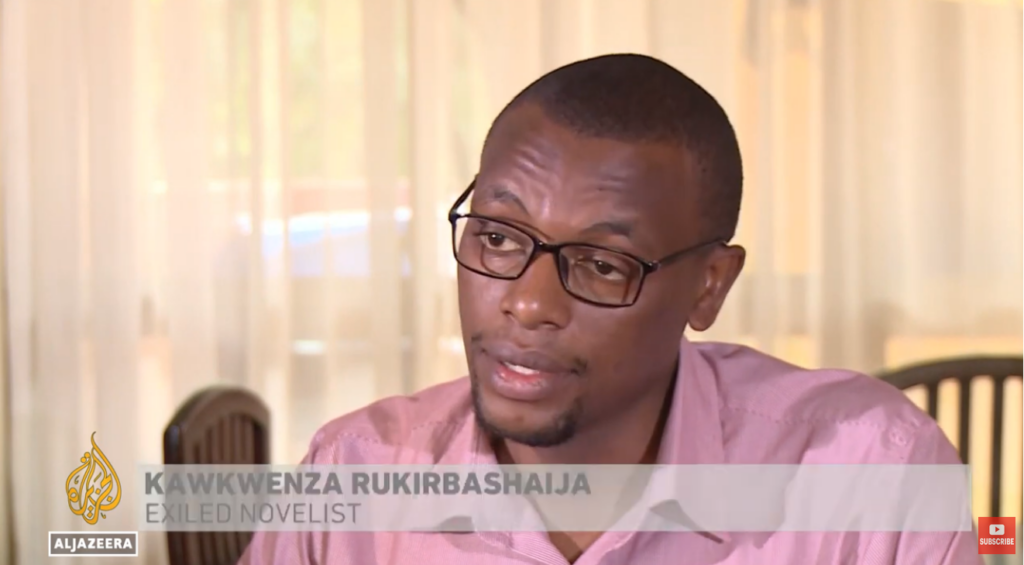
“We have evidence of the torture we have endured under your command!” says lawyer and writer Kakwenza Rukirabaisaja, himself an alleged security torture victim for his critical writing against Museveni and his family. Kakwenza now lives in exile following his surviving the alleged tortures he experienced in the hands of Museveni’s security forces.
“Mr President,” cartoonist and philosophy teacher Jim Spire Ssentongo tells Museveni on X, “I have read with interest the part where you write: ‘Coming back to torture, let alone maiming, these are immoral, counter-revolutionary, not strategic and not necessary for we the freedom fighters. In the last 56 years I have been fighting, I have never tortured, or ordered anybody to torture, an opponent, because of the reasons mentioned above’.”
According to Museveni, the reality on the ground is that the main problem of Uganda is not Nuwagaba seizing State House and the Security Forces, but the criminals, including some in the Security Forces and other organs, that have been blocking the flow of information about the criminals, covering them up and ensuring information does not reach leaders like the President, so that they can continue with their criminality.
“Yes,” states Museveni, “when we took power, some People joined the Intelligence Departments of the Government: ISO [spy agency Internal Security Organization], ESO [External Security Organization], CMI [Chieftaincy of Military Intelligence] and also the [Uganda] Police Force and UPDF [Uganda People’s Defence Forces]. They got trained in Intelligence Schools here and abroad and some did technical courses such as signint. Especially the technical courses, such as signint, have helped a lot…”
“However,” he hastens to regret, “some security personnel have become corrupt, or have been compromised by the enemy. This is actually the main problem of the country: corrupt or compromised Security Personnel…”
Museveni then attempts to polish the image of his security manpower, but quickly reverts: “Nevertheless, the UPDF and the other security forces, in fighting impunity, they should not commit their own crimes, such as torture, extra-judicial killings, etc.”
In a May 15, 2017 self-extricating letter he addressed to the Chief of Defense Forces, Inspector-General of Police and the Director-General of the Intelligence Services, Museveni elaborately says “evidence through torture is not reliable”.
Museveni told the security chiefs: “This is in order to enlighten you about the use of torture on suspected criminals in the fight against crime. In our traditional societies, torture was commonly used and it was not only accepted but, actually, encouraged…. It is, therefore, clear that torture in order to extract confessions has three possible mistakes that may even interfere with the fight against crime.”
“Number one,” so wrote the Commander-In-Chief, “you may torture the wrong person, somebody who is totally innocent. This is very unfair. Secondly, somebody may admit guilt when he is innocent in order to be spared being tortured. This will make the real criminal escape in order to commit more crimes later.
“Thirdly, confessions by the criminals are not necessary. Even if the suspects do not admit their guilt, if the investigators do their work well (finger-prints, photographs, DNA tests, eye-witnesses, the use of other scientific methods, the use of dogs etc), the criminals can get convicted. Therefore, the use of torture is unnecessary and wrong and must not be used again if it was being used as I see some groups claiming in the media.”
Seemingly holier-than-thou and innocent in the 2017 letter as, too, in the 2026 missive, Museveni went on: “Our annoyance with these criminals should not make us opt for defective short-cuts… However, we shall get them using patient means of evidence but not through torture because evidence through torture is not reliable.”
Meanwhile, pressed by the Leader of the Opposition in Parliament, Joel Ssenyonyi, on August 4 regarding the fate of Mugumya, government promised to look into the matter. Mugumya disappeared in August last year.
“The other day I was on another program, and they brought up the issue of people who have been imprisoned. I said that we are bigger than that. Give those people [police] bond and let them go home and later come to court,” former minister and Museveni’s senior party member, Flt Capt Francis Babu, told Kampala’s television station, Nile Broadcasting Service on August 3.
Museveni’s letters yet make an illative reading of too much of the alleged tortures by his security forces appear to have been done on automatic pilot.