By Black Star
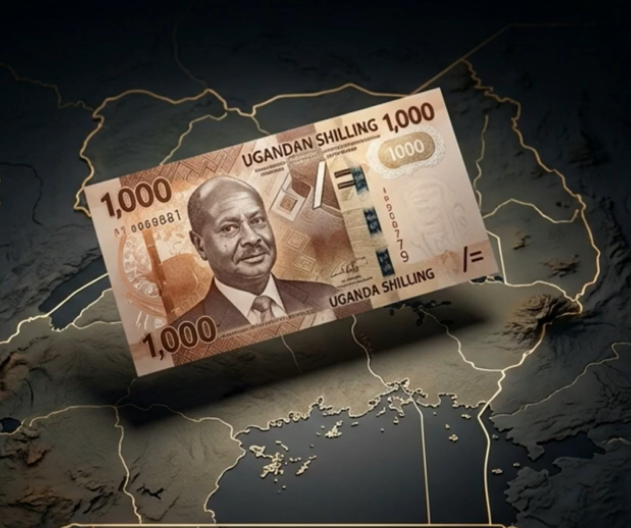
The Ugandan Shilling (UGX) “is Africa’s worst-performing currency and has weakened nearly 16% so far this year,” according to Bloomberg on October 22. At some point as of October 23, UGX is feared to have depreciated by 25% or lost 850 to each US Dollar (USD) and ended the week touching 4,500 against a USD.
Gen. Yoweri Museveni’s explicit opposition to using Uganda’s foreign-exchange reserves to defend the shilling is so far one of the political limits blamed for the local currency’s downward spiral, among other political arguments in place. “The performance of UGX vs other currencies in Africa shows that ours is the third-worst performing currency.
“The big question [is]: Apart from the known global issues like fuel prices, coffee prices and Ebola, what are the other contributing factors to the deteriorating currency? Fiscal indiscipline, breakdown of rule of law (making Uganda a politically risky country to invest in), human rights violations (abductions, torture and illegal shutdown of NGOs, etc,” constitutional lawyer and NGO head, Dr. Sarah Bireete claims on October 25, and asks: “Can we have a national conversation characterized by truth-telling?”
Uganda has suspended NGOs and frozen their bank accounts. Foreign inflows to NGOs in the country used to stabilize the Shilling. The government also stands accused of meting out torture and other human rights abuses against citizens which is said to have scared away some investors from pitching their investments in Uganda.
“A strong shilling needs dollar inflows, but investors also look at the rule of law, political risks and a country’s reputation. Can Uganda attract investment without strong institutions and a reliable justice system?” asks John Kakungulu Walugembe on Kampala, Uganda-housed Capital Radio’s talk show The Capital Gang on October 24. Walugembe chairs the Association of Small-to-Medium Enterprises in Uganda. “The state of the economy,” he said, “is sometimes a symptom of underlying issues.”
Violent torture videos going viral pose political and investment risk to investors. “[These are] self-created problems, [for example], torturing people. Markets are very sensitive; they don’t want to put their money in a country with political risk,” said Walugembe who had to ask; “Who reaps dividends from human rights abuses? Uganda is earning more negativity from human rights abuses to the extent that it even affects the Shilling.”
Walugembe adds: “Tourism is a low-lying fruit that helps us shore up our shilling.” The Shilling continues being battered anyway; losing up to 16% and touching 4,500 against the USD as of October 24.
Appearing on the same talk show, Senior lawyer and sworn-out MP, Abdu Katuntu, said “Torturing is not correct”.
“Human rights abuses hurt democracy, damage Uganda’s reputation and can scare away investors. As the country reflects on its history, who really benefits when human rights are abused?” Katuntu asked.
It is said Uganda’s foreign exchange reserves stand at $6.9 billion but can cover less than four months of imports against a target of 4.5 months. The reserves provide a safety net for essential imports, including medicines and must be used sparingly. “In reserve terms, Uganda has enough buffers—$6.9 billion as of October 23, but you don’t just throw away the reserves,” Bank of Uganda (BoU)’s Director of Research, Dr. Adam Mugume, said on October 24.
The reasons why the shilling fell, according to some economic analysts, range from heavy, unlimited reliance on imported fuel and a ballooning oil bill; to capital flight as offshore investors bail out, reckless fiscal choices on reserve deployment and run-away public spending, structural import dependence that turns every global shock into a domestic catastrophe.

Economists claim the dollar’s crash is not personal; but it is rather structural and therefore consumers are advised to lock down on fixed rates by whoever has pending dollar obligations in loans, imports or school fees. And those who can build a small hard-currency buffer are advised to do so as well as also cut-out on non-essential dollar-linked spending.
The Finance Ministry’s Permanent Secretary and Secretary to the Treasury, Dr. Ramathan Ggoobi has advised on substituting the import currency—which is the USD—and told Ugandans to “swim with the tide”.
“You have to lose some level of happiness or enjoyment to survive,” he said on October 24 on Kampala’s KFM’s VPN talk show. Ggoobi said Ugandans should learn to substitute imported household staples and buy more locally-produced goods using the shilling clarifying that the prices may not rise as much as compared to imported items which are bought in dollars.
He wondered why Ugandans should eat spaghetti which is not grown here but imported. “We don’t grow spaghetti. Why are you eating spaghetti at a time when inflation is rising and the exchange rate is high? Uganda has potatoes, cassava and matooke which are more affordable even when prices change due to fuel prices. If you have a car and you are used to buying fuel full tank and dropping random people home, this is the time you drop yourself home,” Ggoobi advised. “If you have been frying things to the extent of frying even water, reduce on the frying to cut costs on imported cooking oil.”
On October 14, BoU raised the Central Bank Rate (CBR) from 9.75% to a whopping 12%. The CBR is a crucial tool used by central banks to regulate monetary policy and influence interest rates across the economy. According to Ggoobi, “CBR means this is not the time for borrowing; it is time for tightening belts. Interest rates increase tells every economic agent that if you intended to borrow money for a wedding; postpone the wedding. If you were to buy a new car, phone, etc wait. This is time for austerity measures. Spend only on very important things like food…”
Ggoobi said half of the budget for fuel has been released for Quarter 2 Financial Year 2026/2027 and explained that less money has been released for consumptive items, while the growth drivers including ATMS— Agro-Industrialization, Tourism, Manufacturing, and Science, Technology and Innovation—have been protected.