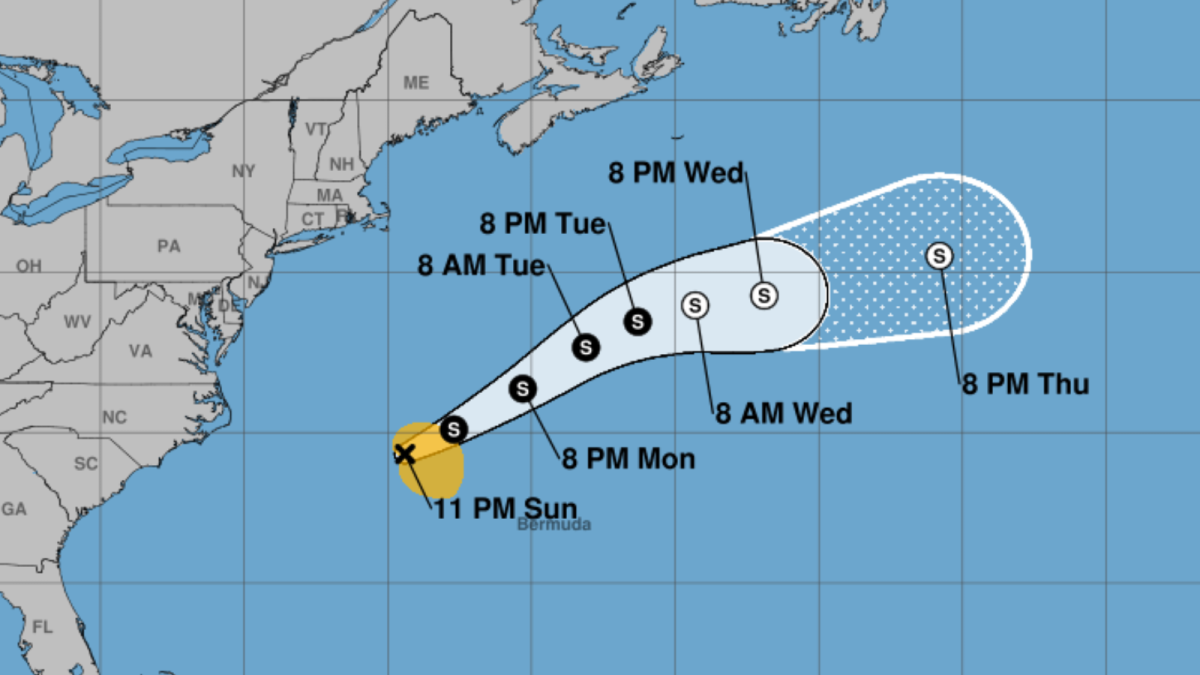
Tropical Storm Dexter formed in the Atlantic on August 3, 2025. Meteorologists confirmed formation after thunderstorms persisted near a stalled front off North Carolina. The system developed about 250 to 275 miles northwest of Bermuda. Forecasters named Dexter as the 4th named storm of the 2025 Atlantic hurricane season. It came from a low-pressure area that broke off from the old front and became a troTropical Storm Dexter quickly.
Dexter is moving northeast at 12 to 15 mph over open water. Forecasters have it with 45 mph sustained winds, sometimes gusting up to 50 mph. The National Hurricane Center expects the winds to peak at 50 mph with the help of the current before upper-level wind shear increases. High wind shear and dry air will prevent Dexter from strengthening much.
Other Atlantic Activity
Forecasters are monitoring 2 other Atlantic disturbances beyond Dexter. One is off the SE U.S. coast, near the Carolinas, Georgia and Florida. That one may become a Tropical Storm Dexter depression later in the week and produce heavy rain and flash flooding. It could reach the Caribbean late in the week. This is the peak of hurricane season, which runs from August to early September.
Also read: Sha’Carri Richardson Arrested at Seattle Airport
Seasonal Context and NOAA Outlook
The fourth named storm of the Atlantic hurricane season of 2025 is apparently disfigured and going by the actuarial name Dexter. I was told by NOAA to expect named storms in the range of 13 to 19 this year, with 6 to 10 hurricanes and 3 to 5 major hurricanes. Activity spiked in late June and early July and then paused before Dexter formed. Eric Berger said the lull was over as Dexter formed, and 2 more popped up. He noted this is the time of year. African waves and the U.S. southeast offshore front are the sources for the next systems.
Officials say no storm watches or warnings are needed at this time. Weather.com calls it good for the US since Dexter is moving fast. They expect wind shear to tear Dexter apart soon. Weather.com advises surfers and beachgoers along the East Coast to expect dangerous rip currents from Dexter’s outer bands. Strong surf will hit shorelines without landfall.
Predicted Lifecycle and Dissipation
The National Hurricane Center says Dexter will weaken by mid-week and turn post-tropical by August 6. It should dissipate by August 9. Moisture and shear will eat away at the storm quickly.
Forecasters expect max sustained winds to drop as shear increases above 30 knots later in the week. Dry air will also kill convection and prevent strengthening.
Summary and Outlook
Tropical Storm Dexter is a distant, ocean-based system with no land threat. It formed quickly off North Carolina, moved past Bermuda and is now heading northeast across open water. Experts expect only slight strengthening before Dexter becomes a post-tropical cyclone by mid-week and fades by August 9.
Authorities are monitoring two other Atlantic disturbances. One is off the SE US coast and may produce flash flooding. Another Tropical Storm Dexter wave off Africa has medium development potential. Meteorologists say this is typical for peak hurricane season.
Invested parties, recreational mariners and coastal residents should follow the National Hurricane Center. Rip current risk is still present along East Coast beaches even if there’s no landfall. Conditions could change if the offshore disturbance strengthens. But for now, Dexter is a marine storm with no land impact.
Dexter’s Track and Wind Pattern Across the Atlantic
Tropical Storm Dexter was moving in a northeasterly direction from its formation point in the western Atlantic. Meteorologists saw it move somewhere between 12 and 15 mph. It had 45 mph sustained winds with brief gusts. It was centered well off the U.S. coast. Weather officials said it would stay north of Bermuda. Officials said Dexter would not make landfall in the U.S.
The National Hurricane Center said no warnings were needed. They said it would weaken before it got to any coast. As Dexter moved farther northeast, wind shear increased. That upper-level wind disrupted the storm and weakened it. Experts said it would be a marine concern. Boaters in its projected path would see large swells and rough seas. Coastal areas would see rip currents even though there was no direct storm threat. Dexter’s track and position allowed forecasters to rule out major U.S. impacts.
Also read: Deion Sanders Cancer Comeback Inspires Colorado Team
Season Outlook and NOAA Predictions
The National Oceanic and Atmospheric Administration was expecting 13 to 19 named storms. 10 of those could become hurricanes. 3 to 5 of those could become major hurricanes. It followed several weeks of quiet weather in the Atlantic. Meteorologists noted activity picked up in early August. Another disturbance near the Southeast U.S. coast was closer to land. That one was bringing heavy rain and flash flood concerns. The National Hurricane Center was monitoring both. While Dexter was moving away from land, those two needed more attention. Forecasters told the public to prepare early during this peak period. They advised coastal communities to stay alert even though Dexter was no threat. The peak months of the season bring rapid changes. Meteorologists are watching for new Tropical Storm Dexter formations daily.