By Amnesty International
Photos: YouTube Screenshots
In eastern Democratic Republic of the Congo (DRC), across a vast swathe of mountainous terrain, a conflict is raging that the world has forgotten.

The Allied Democratic Forces, an Islamic State-linked armed group commonly called the ADF, are abducting and killing civilians with alarming frequency, and abusing women and girls as sexual slaves in North Kivu and Ituri provinces. The vast majority of these incidents barely make news headlines.
As a researcher with Amnesty International’s team tasked with investigating war crimes and abuses in crises, I visited North Kivu last month to document the abuses committed by the ADF. Even as I was traveling from one city to another to speak to witnesses of recent attacks, new hit-and-run incursions were taking place in real time.
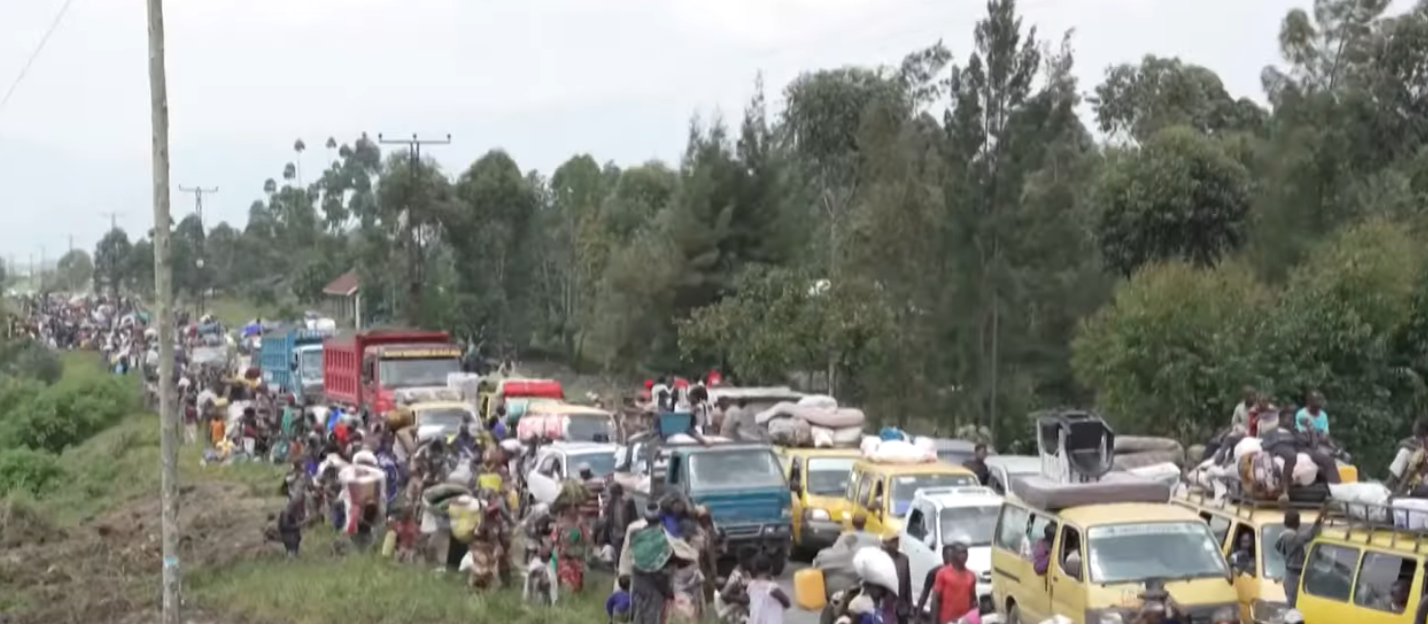
Men, women and children told me how they ran for their lives as fighters armed with blades and guns descended on their villages. Several shared horror stories about watching loved ones being killed and abducted. Released hostages talked of agonizing spells – sometimes months and years – spent in captivity, practically starved and forced to do various tasks in ADF camps scattered in the region’s thick forests.
However, global media coverage about these attacks has been minimal. While I was in eastern Congo, the steady stream of headlines about DRC focused mostly on the US and Qatari-mediated peace processes in relation to the conflict with the Rwanda-backed March 23 Movement (M23). Meanwhile, the territory of Lubero in North Kivu was experiencing a week-long assault during which ADF fighters went from village to village, hacking people to death with machetes and burning down homes and vital facilities.
ADF attacks on civilians
ADF, which originated in Uganda, has been targeting Congolese civilians since the early 2000s when it moved to eastern DRC. In 2019, the group pledged allegiance to the Islamic State, officially becoming part of an international enterprise. The DRC’s armed forces (FARDC) and their Ugandan counterpart (UPDF) have been engaged in a joint operation against the group since 2021. The UN mission, MONUSCO, has provided support to various Congolese state bodies over the years, though its direct involvement in facing off with the group has had its limitations.
With international and domestic attention shifting to M23’s advances in early 2025, the ADF has seized on the diversion of troops and focus. ADF’s signature ruthlessness expanded both in intensity and geographic reach, further accelerating since August, with civilians rather than security forces primarily being on the receiving end.
I started my investigation in Beni city, the now de facto capital of North Kivu province that has long suffered from ADF violence. Given the group’s deeper push into Lubero Territory, I also traveled to the city of Butembo to speak with survivors who witnessed one of ADF’s bloodiest attacks this year, the 8 September massacre in Ntoyo village.
In that attack, fighters killed more than 60 people, many of whom were attending a funeral wake. Witnesses told me how ADF members had discretely mingled among mourners for hours, before suddenly starting to strike people’s heads with hammers. Throngs of other camouflage-clad fighters soon joined, burning homes and killing more civilians in the village with machetes and guns.
On the way to Butembo, I started receiving messages from sources about a new attack in Lubero’s Byambwe village. We reached out to community leaders and human rights defenders to help connect us to witnesses to gather their testimony.
Witnesses told me that, as they had in Ntoyo, ADF fighters initially arrived as a nondescript group that included women and children, this time asking for directions to the local hospital. Then suddenly gunshots rang out at the medical facility. An older person, who managed to escape from the hospital alongside a grandchild, described crawling out of the facility: “You couldn’t stand; they shot at anything that moved.” In total, the fighters killed more than 30 people, including 17 at the health facility.
The fighters did not stop at Byambwe; their rampage continued for days. We held our interviews in Butembo at a medical facility and bodies of ADF victims kept arriving at its morgue during our visit. At one point, we saw relatives packing a body bag into a casket to take it for burial. Grief engulfed not only the mourners, but also the hospital staff who told me of their horror at the string of killings. One said: “Tell everyone we are being massacred.”
The sense of helplessness was clear in the hospital worker’s tone. It echoed the sentiments of scores of victims with whom I spoke. One group that particularly felt abandoned were the girls and women abducted by the group and forced into “marriages” with ADF fighters. I spoke to six survivors – the “choice”, they were told, was to accept or be killed.
Most escaped from a life of sexual slavery and domestic servitude after operations by FARDC and UPDF that targeted their camps. But they remained shackled by suspicious looks and whispers from their neighbors in their villages, they said.
Those who came home with children described how their own families have rejected the little ones. One woman said pressure by family members to kill her own child almost drove her to taking her own life. These testimonies highlighted the prolonged impact of the group’s violence and the hidden struggle of thousands of victims who need significant and multifaceted support and do not have it.
Civilians must be protected
The international community must step up efforts to support the Congolese authorities to assist survivors, protect civilians and investigate and prosecute ADF’s pervasive war crimes. Despite shortcomings, MONUSCO’s support to Congolese authorities should continue – something the UN Security Council, led by France as the penholder on this file, must bear in mind when the mission’s mandate is up for renewal this month.
In UN hallways, there are whispers that not much shocks anymore when it comes to DRC. But civilians being systematically abducted and murdered with such frequency should not be seen as just another day in eastern DRC.
A comprehensive approach to security, justice and accountability is needed. The world cannot continue to ignore the brutality being meted out by the ADF in eastern DRC. As one survivor told me: “How much more must we suffer before this ends?”