As Sierra Leone assumed the Presidency of the United Nations Security Council this week for the second time in its two-year term, Sierra Leone President Julius Maada Bio presided over two meetings, November 17 and 18.
Sierra Leone is one of ten “non-permanent” members (governments who are member states of the UN) currently elected to the Security Council (SC) for two-year terms, adding to the five permanent members (the U.S., U.K., France, China, and the Russian Federation). Each country assumes a month-long Presidency of the Council, setting their agenda of priority issues.
The topic of President Bio’s first session addressed the nexus between food security and conflict.
Food security is a high priority in his national agenda, called the “Big Five Game-Changers”, with “Feed Salone” as the first pillar. Feed Salone is aimed at boosting agricultural productivity to ensure food security, inclusive economic growth and social stability.
The Minister of Agriculture and Food Security Dr. Henry Musa Kpaka was acknowledged for his contributions to this effort.
The “Big Five Game Changers” are outlined in President Bio’s Sierra Leone People’s Party manifesto entitled “The New Direction: Consolidating the Gains and Accelerating Transformation,” launched in 2023. These “Big Five Game Changers” detail the areas to achieve national progress for the country.
The other four game-changers are: Human Capital Development, Youth Employment, Technology and Infrastructure, and Transforming Public Service.
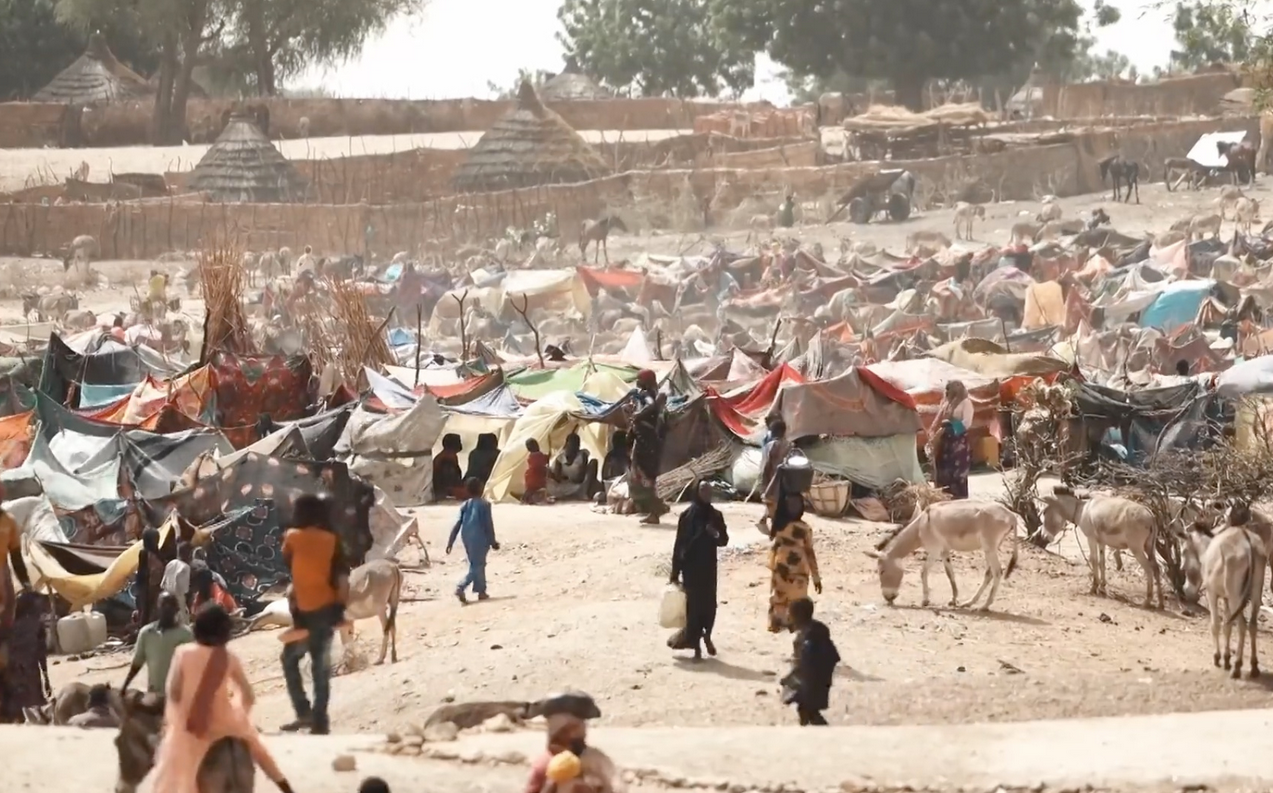
The issue of food security is of current global concern, given the increasing attention to the deleterious impact of the lack of access to food in conflict areas, including Gaza, Sudan, and Haiti, causing serious humanitarian crises.
Eradicating hunger is also on the UN Agenda, as Goal #2 (after Eradicating Poverty), in the 17-goal framework of the UN 2030 Agenda for Sustainable Development, agreed upon by the 193 member states of the UN in the year 2015, to achieve by the year 2030.
As is usual in SC meetings, experts or high-level diplomats are invited to give briefings on the topic.
On this morning, a briefing was delivered by UN Deputy Secretary-General Amina J. Mohammed who underscored that starvation cannot be a method of warfare.
The meeting ensued with President Bio calling upon members in pre-determined order to deliver their statements, then speaking in his national capacity, to deliver the following statement about food security as a human right and key to peace.
Sowing Seeds for Peace: Why the World Must Treat Hunger as a Global Security Threat
By H.E. Julius Maada Bio, President of the Republic of Sierra Leone

When the world discusses global security, we often focus on armed conflict, terrorism, or nuclear tensions. Yet for hundreds of millions of people, the greatest and most immediate threat to their survival is far more fundamental: hunger. Today, food insecurity is driving instability, fueling grievances, and deepening fragility in ways that demand urgent global attention.

It is for this reason that, as Sierra Leone assumed the presidency of the United Nations Security Council this November, I chose to place food security at the heart of the global peace and security agenda. On November 17, I presided over a high-level open debate on “Framing the Global Dialogue: Addressing Food Insecurity as a Driver of Conflict and Ensuring Food Security for Sustainable Peace.” Across our world, from Sudan to Gaza, from the Sahel to Haiti, food insecurity has become both a product of conflict and a trigger of further violence. The Food and Agriculture Organization and the World Food Programme estimate that most of the acutely food-insecure people live in countries affected by conflict. War destroys farms and markets, disrupts supply chains, displaces families, and obstructs humanitarian access. At the same time, geopolitical tensions are driving global food price volatility that hits low-income countries the hardest.

When people cannot feed their families, desperation takes root. Hunger fuels unrest. It erodes social cohesion and undermines democratic stability. In recent decades, food price spikes have contributed to riots, instability, and even the collapse of governments. This is a global pattern, and one the international community can no longer ignore.

We must act together to break this cycle.

The Security Council has taken important steps, including Resolution 2417 (2018), which rightly condemns the use of starvation as a method of warfare. But the continued weaponization of hunger and the widespread destruction of food systems in conflict zones make clear that more must be done. We need greater accountability, guaranteed humanitarian access, and stronger protection for food systems as civilian infrastructure.

We must also look beyond emergency assistance. Sustainable peace requires resilient, inclusive, and climate-smart food systems. This means investing in agriculture as a foundation for stability, creating jobs for young people, empowering women, and revitalizing rural economies.

Africa is showing ambition. The Kampala CAADP Declaration lays out a bold pathway for transforming food systems by 2035: increasing production, tripling intra-African agrifood trade, reducing malnutrition, and cutting extreme poverty in half. These goals, when achieved, will not only drive economic growth but will also strengthen peace across the continent.

Sierra Leone brings its own experience to this global discussion.

As a nation that endured a brutal civil war, we understand intimately how hunger, exclusion, and hopelessness can ignite conflict. This is why Sierra Leone is choosing a different path. One where food systems become engines of peace and national resilience. A country once associated with the tragedy of blood diamonds is now demonstrating how food and agricultural transformation can help build a peaceful, stable, and prosperous nation.

But no country can do this alone. Hunger is a global threat that requires global action.

My message to the international community is simple: food security is human security. We cannot achieve lasting peace while millions remain hungry. The world must recognize the right to food not only as a moral imperative, but as a strategic investment in global stability.

The seeds of peace must be sown in the soil of human dignity. Addressing hunger everywhere is not only the right thing to do, but also the surest path to a more prosperous and peaceful world.
After delivering this statement in his national capacity, President Bio resumed his role as chair, calling upon each Council member to deliver their statement.
All members acknowledged the President for bringing this critical issue to light. Many emphasized urgency to stop using hunger as a weapon of war, and called for upholding humanitarian law and holding perpetrators to account.
That evening, Sierra Leone hosted a reception in honor of the President’s presence and the country’s Security Council term. Held in the exclusive Delegates Dining Room in the UN headquarters, overlooking the East River, with a Sierra Leonean band playing, delegates mingled until the short program. Minister of Foreign Affairs and International Cooperation Alhaji Timothy Musa Kabba offered greetings followed by the Permanent Representative of the Mission of Sierra Leone to the United Nations, Ambassador Michael Imran Kanu who noted the once-in-a-lifetime experience of such an important role as well as appreciation for the leadership of President Bio. Taking the microphone in his dignified and ever-so-gracious way, President Bio expressed his gratitude to all for making the experience of this Security Council term so meaningful.
The next day, President Bio again took the chair in the Security Council chamber, this time presiding over the agenda item highlighting the crisis on the Sahel as a center of violent extremism.
As with the previous session which was graced by the briefing of such a high-level individual as the Deputy Secretary-General, the briefing this session was delivered by the UN Secretary-General (SG) himself, H.E. António Guterres.
The SG and council members emphasized the need to strengthen regional counter-terrorism cooperation in West Africa and the Sahel, and to address the immediate crises as well as underlying drivers of instability, including poverty, economic limitations, climate crises and weak governance.
Following the UNSG, another briefing was delivered by Omar Alieu Touray, President of the Commission of ECOWAS (the Economic Community of West African States).
The topic was “Enhancing Regional Counter-Terrorism Cooperation in West Africa and the Sahel”, under the agenda item “Peace consolidation in West Africa”. Concerns exist following the withdrawal of three Sahel states, Mali, Niger and Burkina Faso, from the regional bloc of ECOWAS due to security challenges and sanctions after recent coups, resulting in a geopolitical shift in West Africa.
In this session, President Maada Bio, who currently serves as Chairperson of ECOWAS, delivered a statement in his national capacity, and then resumed formally presiding over the meeting.
In their statements, Council members expressed appreciation for Sierra Leone calling attention to this critical issue for the region and the international body.