By Martins Agbonlahor
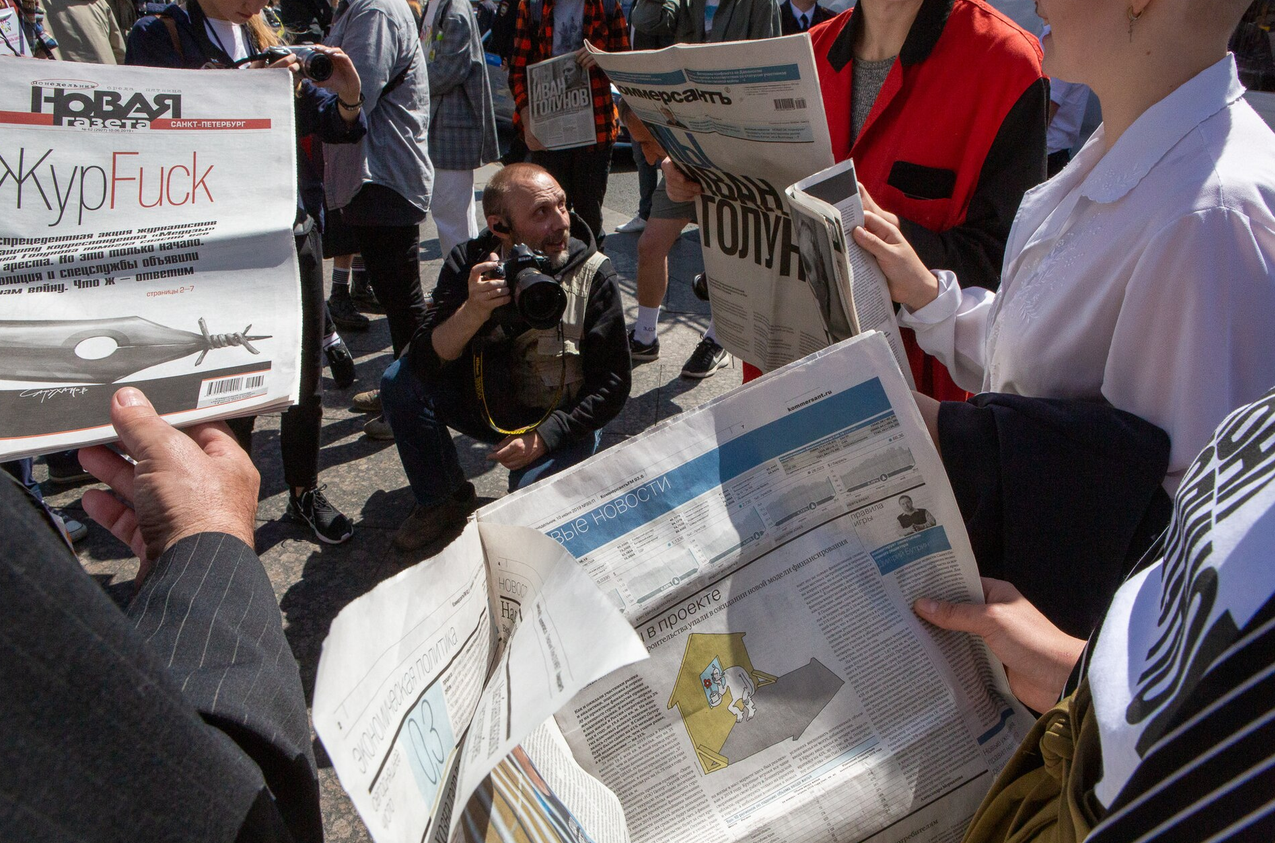
For more than thirty years, Russia’s Novaya Gazeta was a force to be reckoned with in investigative journalism – a household name that garnered glittering professional prizes worldwide, including the Nobel Peace Prize for its Editor-in-Chief. Today, however, the relentless machinery of the Russian state has finally dealt a fatal blow, forcing one of the country’s last bastions of press freedom to shut its doors permanently.
But these vibrant editors may have actually or instinctively felt the Kremlin’s ploy to starve their mouthpiece of oxygen judging by the constant harassment, the cunning invitations for a “chat”, the labelling, and not least, the gruesome unsolved assassinations of their journalists.
The editorial board spelt it all out before the public recently, when it announced that their closure had been forced by the Russian authorities who banned readers from subscribing financially to the newspaper amid constant threats by the Russian secret service, the FSB. The blood-curdling murder of six of their journalists, including renowned writer, Anna Politkovskaya shot in 2006 had adversely affected the newspaper. It was also revealed that their unbiased reporting on the Russia-Ukraine war had ruffled feathers in high places. Russia law prohibits journalists from calling the war by its actual name, requiring them instead to use the moniker “special military operation.”
The last straw that seemed to hasten the closure of the newspaper was the “foreign agent” tag the Kremlin placed on some of its journalists – a convenient designation used to railroad them into perpetual imprisonment, torture, or worse, death.
For the Editor-in-Chief and his team to pack up this way is heart-rending to those of us who are adherents to their journalistic style in the assemblage of intellectually-stimulating essays and reports that pull no punches. But while our hearts weep, we should consider the climate under which this newspaper operated, especially when it concerned real threats to the right to life, which is the most fundamental of all rights: dead men do not practise journalism. Do they?
Article 29, Section 1 of the Russian Constitution guarantees freedom of speech and ideas – and that the freedom of the mass media shall be guaranteed. And curiously, too, it goes further in Section 5, to state explicitly that “censorship shall be prohibited” – a point contested by the newspaper’s founder and former editor-in-chief, the Nobel laureate Dmitry Muratov, who, in an interview, logically reasoned that even though relevant sections of the constitution prohibits censorship, all free and independent media in Russia have been destroyed.
In the face of the constant harassment of media houses and Kremlin-sponsored killing of investigative journalists in the country, these constitutional guarantees seem to me, mere window dressing – a Potemkin façade to fool and bamboozle the unwary. But these journalists must not rest on their oars – and should in fact, use this dead letter law to hold the Russian government accountable to its citizens in line with the watchdog role attributed to it as the Fourth Estate. This must not be shirked.
Enemies of press freedom in Russia might bang the cymbals and revel in the “defeat” of the idealistic journalists who ran Novaya Gazeta for over three decades. However, a battle where the seemingly defeated side springs up and empties its arsenal at the aggressor is better described as a tactical withdrawal. While normal operations have closed, these vibrant journalists must now employ subterfuge – using alternative strategies and guerilla journalism to get their message across to the people. In fact, this is what other lesser-known independent media must adopt, too. If the Kremlin tolerates you today, it doesn’t mean you will not be asphyxiated tomorrow.
Talking about alternative forms of disseminating information, we, Nigerians, had a taste of the bitter pill of insurgent – or as you would say – guerilla journalism. This was between 1993 and 1998, when we had a stone-age dictator – General Sani Abacha, who hated writers, journalists, and others in the creative world with passion. Put succinctly, he held these professionals by the jugular even as he bared his bloody fangs. With journalists constantly harassed, railroaded into jails, disappearing mysteriously, and murdered in cold blood in the streets, the brave ones decided to go for broke, and thus employed subversive journalism, producing honest-to-God articles, editorials and content that troubled the dictator and haunted him in his swift descent into hell.
With the office of the Novaya Gazeta shuttered forever, her highly-acclaimed journalists must not let the voice of truth be stifled. Employing what their Nigerian counterparts adopted (above) will be a welcome development. You guys are currently in our hearts – and all the darkness in the world cannot extinguish the light you brought to the majority of oppressed Russians, no matter the scheming, gaslighting, manoeuvres, and barefaced lies spun by those in authority. The people know the truth.
Vladimir Putin and his sanguinary henchmen may appear the ultimate victors with the current state-of-affairs – but they also remain empty shells awaiting the bulldozers of history.
Only time will tell.
Martins Agbonlahor is an essayist, journalist, author, and criminologist. He resides in Greater Manchester, The United Kingdom. (https://www.martinsagbonlahor.com)