By Milton Allimadi
Photos: YouTube Screenshots\Wikimedia Commons
In his White House meeting with President Donald Trump Wednesday May 21, South Africa’s President Cyril Ramaphosa got to say “we’ve got to deal with the history” but never got a chance to elaborate on the legacies of apartheid.
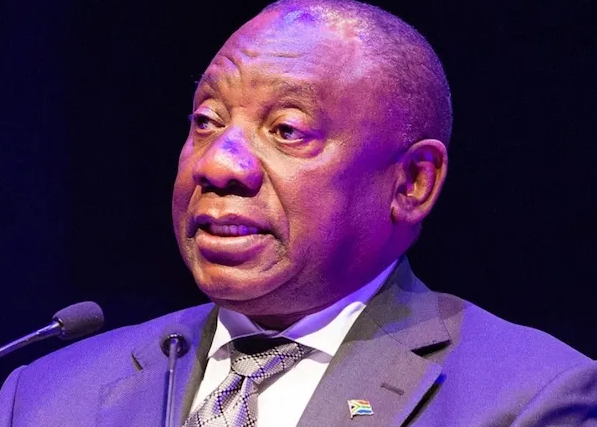
At moments like those one misses the brilliance of a Nelson Mandela, Steve Biko, or Robert Sobukwe; all would have been able to properly put Trump in his place. Only Mandela, out of these great leaders, became president.
It’s doubtful that Trump even knows that today, 31 years after apartheid formally ended in South Africa, the Whites who make up 8% of the population own 72% of the land.
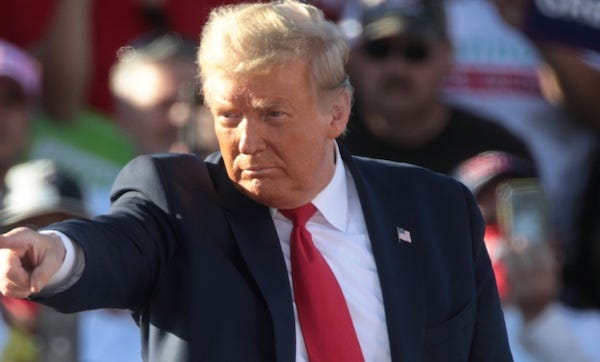
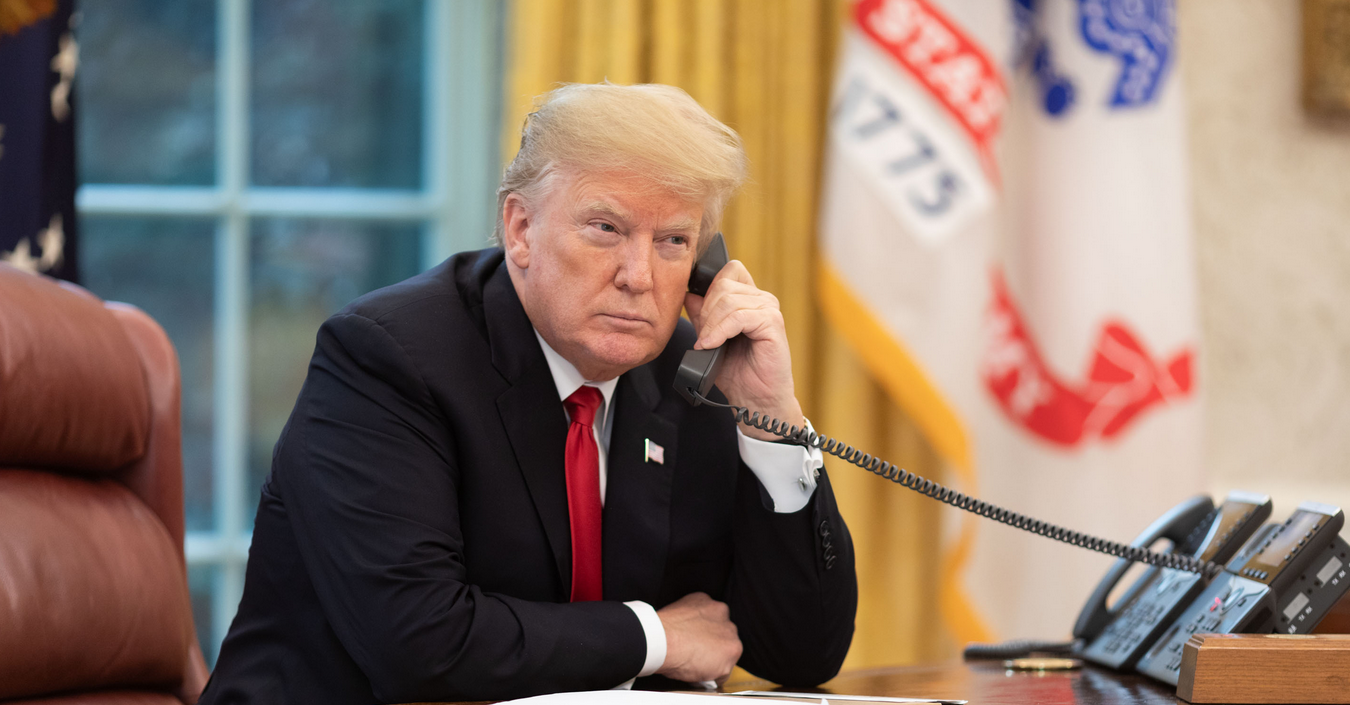
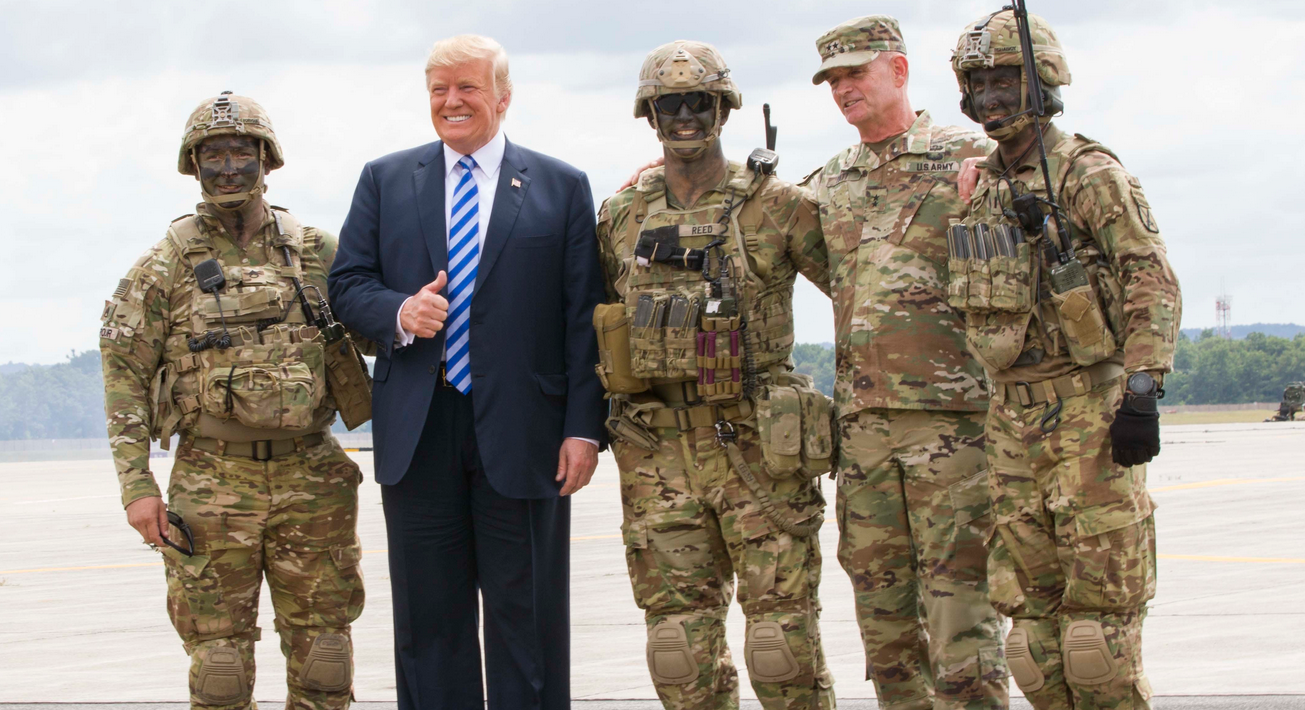
President Trump.
European South Africans have it good. White unemployment is about 8%; Black unemployment is almost 40%. European South Africans have a per capita income higher than that of White Americans. They have accumulated wealth for centuries—by stealing land and livestock from Africans; and by dispossessing Africans from their means of agricultural livelihood and forcing them to work as cheap wage laborers in the mines, generating even more wealth for Europeans in South Africa.
White South Africans enjoy some of the highest standards of living in the world, while Black people endure the genocidal legacies of the country’s “Native Land Act,” of 1913, and official racist segregation policy—apartheid—from 1948.
The allegations that Whites, Afrikaners especially, are enduring “genocide” is a ruse to deflect from the fact that more than 30 years after Nelson Mandela was elected president, South Africa has yet to effectively deal with the land, wealth, and income inequality that is skewed solidly in favor of Whites.
These were the injustices that caused leaders like Sobukwe, who led the Pan Africanist Congress, to organize the pass laws protests—at a time when the African National Congress (ANC) was reluctant. The Akrikaner regime responded with the Sharpeville massacre, killing 69 unarmed people and injuring 180. Sobukwe was destroyed after years of incarceration and died in 1978.
Steve Biko, a brilliant young South African was only 30 when he was murdered by the Afrikaner regime. In a 1977 interview before he was killed, Biko warned that Whites enjoyed so much wealth and economic dominance that “any form of political freedom which shall not touch on the proper distribution of wealth would be meaningless.”
Steve Biko Speaks on The Black Consciousness Movement
If post-apartheid South Africa meant just a “change of face of those in governance position what is likely to happen is that Black people will continue to be poor and you will get a few Blacks filtering into the so-called bourgeoisie and our society will be run as almost of yesterday,” Biko warned.
Biko, a revolutionary leader of the Black Consciousness Movement, was prescient. The European dominant economic class has allowed a Black elite to emerge in post-apartheid South Africa to shield it from the impoverished Black majority. President Ramaphosa, himself part of the Black bourgeoisie, is a billionaire, in U.S. dollars.
Some readers may remember how a few years ago he survived a money scandal that he should not have, when it turned out he’d stitched $4 million in a couch in his farmhouse. This became public knowledge because a maid schemed with thieves to steal the money.
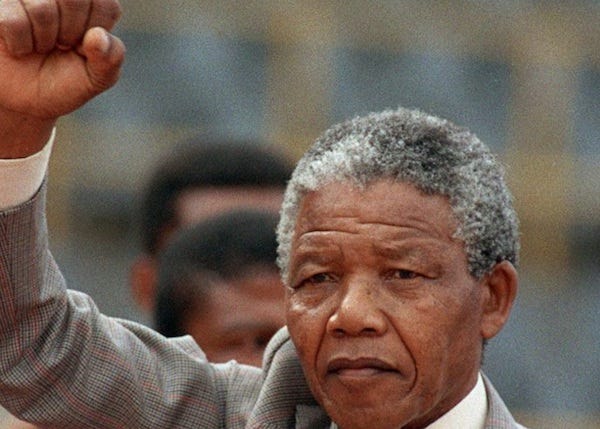
President Mandela.
Once a dedicated union leader during the struggle against apartheid, he became anti-union and was co-opted by appointment to the boards of several multinational corporations. He even played a role in allowing police to storm striking miners demanding better pay and working conditions. Thirty-four miners were killed in the “Marikana massacre” of August 16, 2012.
Biko, in the interview, had envisioned a post-apartheid era that involved “judicious blending of private enterprise which is highly diminished and state participation in industry and commerce, especially industries like mining gold, diamonds, asbestos…” He also called for “complete ownership of the land” by the government.
It’s only now that Ramaphosa’s party, the African National Congress (ANC) is beginning to deal with South Africa’s land and economic inequity because it feels pressure from Julius Malema’s Economic Freedom Fighters (EFF) party. But Ramaphosa is part of the obstacle that Biko warned off; the super wealthy new Black elite.
The Afrikaners, shedding fake tears of oppression, don’t deserve much sympathy. They believe it’s fine for 8% of the population to control 72% of the land. Besides, the leadership of their main political party, the National Party, including some who became prime minister, were historically, not only anti-Black but they were Nazi sympathizers—including Barry Hertzog, prime minister from 1924 to 1939, and D.F. Malan, prime minister from 1948 to 1954.
When the Trump administration welcomed 49 Afrikaner “refugees” into the country on May 12, Christopher Landau reportedly told them, “My own father was born in Europe and had to leave his country when Hitler came in…” If only he knew that the Afrikaner prime minster of South Africa, Hertzog, had wanted his country to fight on the Fuhrer’s side during World War II. Perhaps Elon Musk didn’t fully brief the administration on the Afrikaners’ sordid history.
The Afrikaners did suffer genocide in South Africa. But not at the hands of Africans; it was carried out by the British, fellow Europeans. After the discoveries of gold and diamonds, these two European imperialist forces fought over control of the resources that belonged to Africans in two so-called “Boer Wars.” They had already been fighting each other, and against Africans, over land for decades.
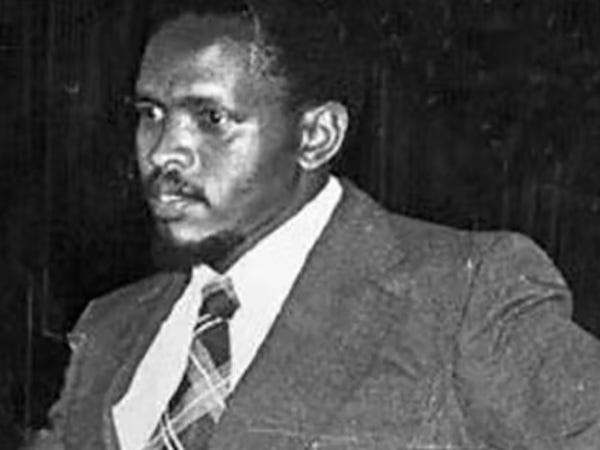
Steve Biko.
When the British defeated the Afrikaners in the Second Boer War in 1902, tens of thousands of civilian captives were confined in concentration camps where an estimated 27,000 died of starvation and diseases. This was European-on-European genocide. Africans are not committed and have not committed genocide against Afrikaners.
Owing to their bitter legacies with the British, many of the Afrikaners became pro-Nazis; the enemy of their enemy—Hitler— was their friend. Since the Afrikaners couldn’t punish the British for the genocide, they took revenge on Africans.
The British controlled Natal and Cape colony in South Africa, while the Afrikaners controlled Orange Free State. The British allowed propertied Africans or those with a certain income level, to vote. When the British colonies joined with Orange to form the Union of South Africa in 1910, the Afrikaners denied Africans the franchise. Then in 1913, the Afrikaners enacted the genocidal “Native Land Act.” There’s a brilliant account of this tragedy—which is comparable to the Palestinian “nakba”—in Solomon Plaatje’s classic book, Native Life in South Africa (1913). Even though Africans made up about 70% of the population at the time and Whites 21%—the rest were Indian and mixed races—Africans were allotted 5.5% of the most barren land.
Africans were shot and killed, and their herds stolen, after eviction from land where many had leased from Afrikaner farmers for generations. Africans produced all the food and shared the harvest 50/50 at the end of the year with White landlords.
Dispossessed of land, with no ability to sustain themselves independently, Africans were forced to work under dangerous conditions in the gold and diamond mines, abandoning their families to live in hostels near the mines, and dying in record numbers. The system destroyed African families and promoted crime and prostitution, crimes that remain endemic to this day.
Plaatje, a brilliant African journalist who later toured the U.S. and whose book was reprinted in The Crisis by W.E.B. Du Bois, described some of the scenes he witnessed. One African farming couple had an ailing baby when they were evicted by their Afrikaner landlords. The illness worsened as they traveled on ox-wagon and the child died. “This young wandering family decided to dig a grave under cover of the darkness of that night, when no one was looking, and in that crude manner the dead child was interred—and interred amid fear and trembling, as well as the throbs of a torturing anguish, in a stolen grave, lest the proprietor of the spot, or any of his servants, should surprise them in the act,” Plaatje wrote.
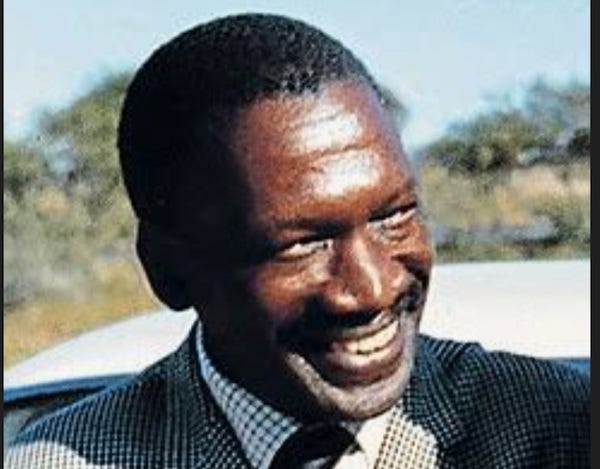
Robert Sobukwe.
Another evicted family included a man described in contemporaneous newspaper accounts as being 119 years old; his wife who was 98, and his son 80. The wife was carried aboard the train that took them away while the old men walked on their own.
Another eviction described by Plaatje involved an illiterate old man, who worked on the Afrikaner’s farm with his two daughters, while his two sons worked in the mines in Johannesburg. The landlord gave the man two choices: he and his family, including the sons, could stay on as his servants—not tenants—or leave. He was given a week. It took him two days to find someone willing to write him a letter to his sons. On the seventh day, no word from the son and the man and his daughters chased from their home and the Afrikaner burned down their house. “It was a sad sight to see the feeble old man, his aged wife and his daughters driven in this way from a place which they had regarded as their home,” Plaatje wrote.
Official apartheid did not end until 1994, when Mandela became president after years of resistance—tens of thousands of Africans were killed by the Afrikaners during the struggle. There was also much considerable support, including divestment campaigns on college campuses in the U.S., somewhat similar to those in denunciation of the Israeli genocide in Gaza by students today.
Actual apartheid remains strong as witnessed by the dressing-down of President Ramaphosa by President Trump. The shame is that if South Africa today had a president of Mandela’s, or Sobukwe’s, or Biko’s brilliance and caliber, Trump would have heard some of the histories and legacies outlined above; not that he would have cared much.
Milton Allimadi publishes blackstarnews.com He is a PhD student in the History Department at Howard. He can be reached via [email protected] Follow him @allimadi via X