Photos: YouTube Screenshots
PRINCETON, NJ – Following recent reports of boat strikes in the Caribbean involving the United States, faculty from the Princeton School of Public and International Affairs (Princeton SPIA) are sharing expert perspectives to provide context and clarity, and potential implications of the situation.
Eduardo Bhatia,John L. Weinberg/Goldman Sachs & Co. Visiting Professor and Visiting Lecturer in Public and International Affairs:
“Recent Caribbean boat strikes continue to make headlines, and my policy and legal conclusion is unequivocal: these interventions are illegal. They violate established maritime law requiring interdiction and arrest before the use of lethal force, and they represent a grossly disproportionate response by the U.S. Deploying an aircraft carrier and U.S. Southern Command assets to destroy small yolas and wooden boats is not only unlawful, it is an absurd escalation that undermines regional security and diplomatic stability.”
Deborah Pearlstein,Director, Program in Law and Public Policy and Charles and Marie Robertson Visiting Professor in Law and Public Affairs:
“Military operations lawyers, international law experts, national security legal scholars – I haven’t found one who views the strikes reported as anything other than a textbook violation of law. But they’re also a symptom of the much deeper problem created by the purging of career lawyers on the front end, and the tacit promise of presidential pardons on the back end: the rule of law loses its deterrent effect.”
Kenneth Roth, Charles and Marie Robertson Visiting Professor and Visiting Lecturer:
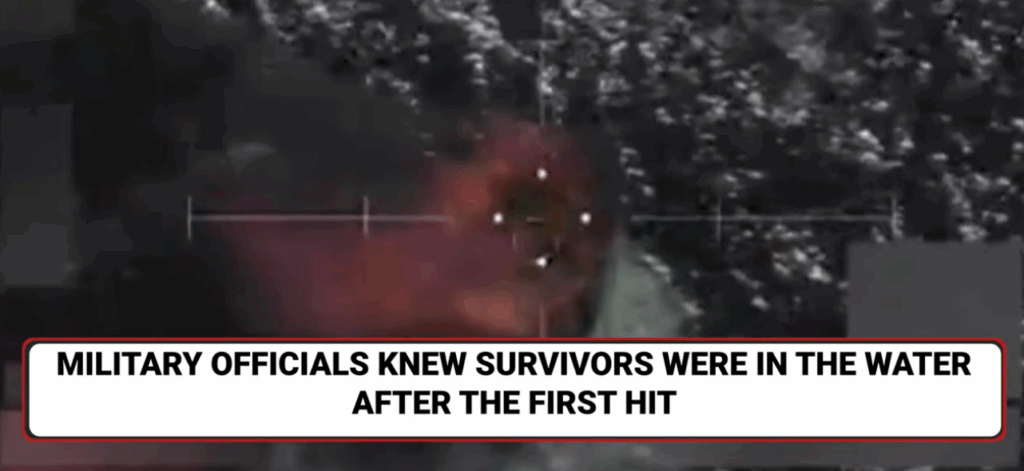
“If the U.S. were in an ‘armed conflict’ with the drug cartels, as President Donald Trump declares, the Sept. 2 double-tap killing of two shipwrecked men would be a war crime. But there can be no war crime without a war, and there is no war, despite Trump’s declaration, because a war requires a level of sustained hostilities between two organized forces that is not present with the drug cartels. However, these killings are still murders, as are the killing of the other 85 men in the 22 attacks to date. Drug trafficking is a serious crime, but the appropriate response is to interdict the boats and arrest the occupants for prosecution. The rules governing law enforcement prohibit lethal force except as a last resort to stop an imminent threat of death or serious bodily injury, which the boats do not present.”
Jacob N. Shapiro, John Foster Dulles Professor of International Affairs:
“One criteria for a war to be just is that it have a reasonable probability of success. In 1986, President Ronald Reagan announced the ‘War on Drugs,’ which included using the Coast Guard and military to essentially shut down shipment through the Caribbean. The goal was to reduce supply, raise prices, and thereby lower use. Cocaine prices in the U.S. dropped precipitously from 1986 through 1989, and then dropped slowly through 2006. Traffickers moved from air and sea to land routes. That policy did not work, it’s unclear why this time will be different.”

Keep up to date with Princeton SPIA, including news, upcoming speakers and events, at: spia.princeton.edu and on X, Instagram, and LinkedIn.