Photos: YouTube Screenshot\Wikimedia Commons
The economic policy upheavals that have characterized Nigerian President Bola Tinubu’s two years in power and sparked a deepening cost-of-living crisis are giving way to a less disruptive approach ahead of his likely reelection bid in 2027.
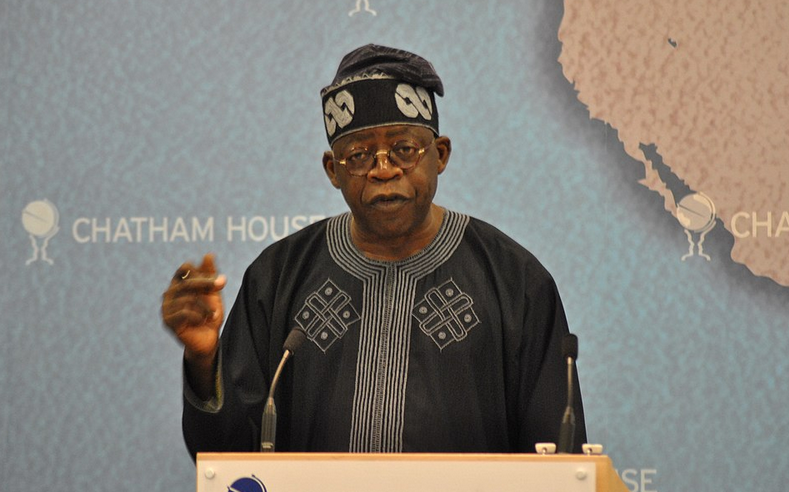
Tinubuended costly fuel subsidies and floated the naira currency upon taking office in an attempt to revive one of Africa’s largest economies. But it prompted a five-fold surge in petrol prices that drove a cost-of-living crisis. The shock therapy has slowed. Inflation, calculated with a new formula since January, has steadied and the central bank, reshaped by Tinubu, has generally held the benchmark interest rate, after multiple hikes last year. But Tinubu’s economic push remains intact — he recently asked parliament to approve a $24 billion foreign borrowing plan.
Tinubu’s ruling All Progressives Congress party last week declared the president their sole candidate for the polls, ahead of the second anniversary of his inauguration on May 29. Campaign posters for the 73-year-old hang on street lights in cities alongside massive billboards canvassing “door-to-door” support ahead of elections that are two years away. And two opposition governors from large, oil-rich southern states defected to the ruling party in recent weeks.
Read on for details of Tinubu’s new approach to policymaking. →