By Black Star News
Photos: YouTube Screenshots
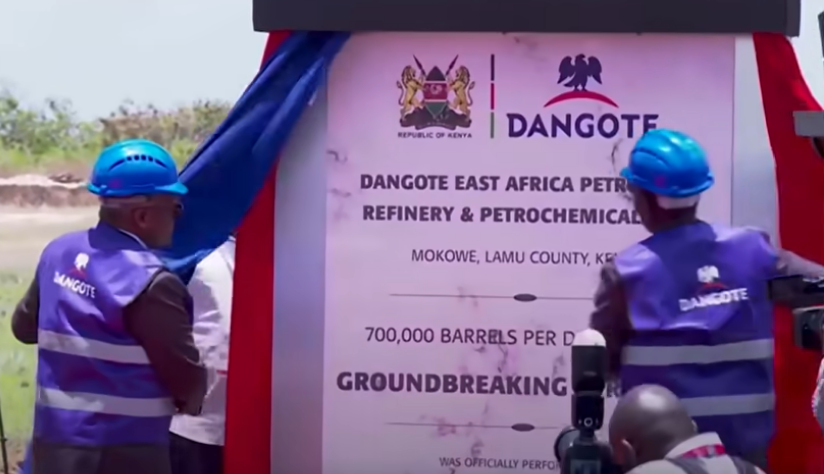
As East Africa’s regional leaders and their counterparts from West Africa convened in Mokowe, Lamu County in coastal Kenya, Ethiopia’s Prime Minister, Lt-Col (Rtd) Abiy Ahmed, urged industry captains, investors and entrepreneurs to invest in Africa. The ground-breaking of the Lamu Refinery, Abiy said, “serves as a reminder that moments of this kind mark a step towards enhancing Africa’s industrial capacity, creating opportunities and establishing the foundations for greater economic and industrial sovereignty throughout East Africa”.
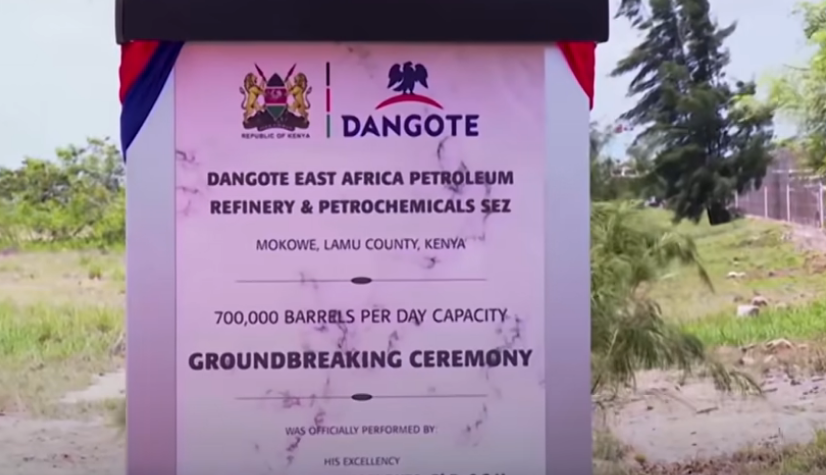
The East African Mega Refinery whose ground-breaking ceremony took place on September 30 in Kenya, is a $16 billion 700,000 barrels per day (bpd) project arrow-headed by Africa’s richest man, Aliko Dangote. Dangote has promised to complete the project by 2030.
“You,” Abiy singled out on September 30 in Lamu, “the industrial captains, investors and entrepreneurs throughout the continent, must invest in Africa, have faith in our potential and construct the transformative projects which will determine our common continental future. The future of Africa is something that we shall have to build together.”
The establishment of the Lamu refinery is a turning point, “demonstrating our resolve to reimagine Africa’s industrial future, turn our ambitions into action and tap the continent’s massive potential,” host Kenya’s President William Ruto forecast at the ground-breaking ceremony.
Nigerian national Aliko Dangote is the only African billionaire that has walked the talk, South Sudanese structural engineer, Akech Andrew recalled on September 30. “Two huge refineries that will total up to $36 billion invested in Nigeria and East Africa. Combined total 1.3 billion bpd once Lamu Refinery is completed. Over 100,000 jobs already created in Nigeria and 60,000 to be created in Kenya,” Akech says, further explaining: “Generation of up to 1,000MW of power added into Kenyan national power grid. Kenya, Ethiopia, South Sudan, Uganda, Rwanda, Togo and Benin about to find now market for their crude oil.”
At the ground-breaking ceremony in Lamu, meanwhile, Uganda’s Gen Yoweri Museveni insisted that Uganda will go ahead building its own refinery in western Uganda’s Hoima District expected to spew out well over 60,000-120,000 bpd to supply Uganda and the rest of the African interior. “We can’t change that,” Museveni said adding that Uganda will not invest in Lamu yet as he looks ahead to the future of another refinery planned for the Indian Ocean Tanga Port in Tanzania between Uganda and Tanzania with the backing of the United Arab Emirates’ Vitol Bahrain.
When Dangote traversed the East African region in May 2026 bidding for his refinery plans in the region, he met Museveni in Kampala on May 17. Museveni supported the mega refinery plans in East Africa and even promised Uganda would buy shares in the Dangote refinery; only to somersault at the ground-breaking ceremony on September 30.
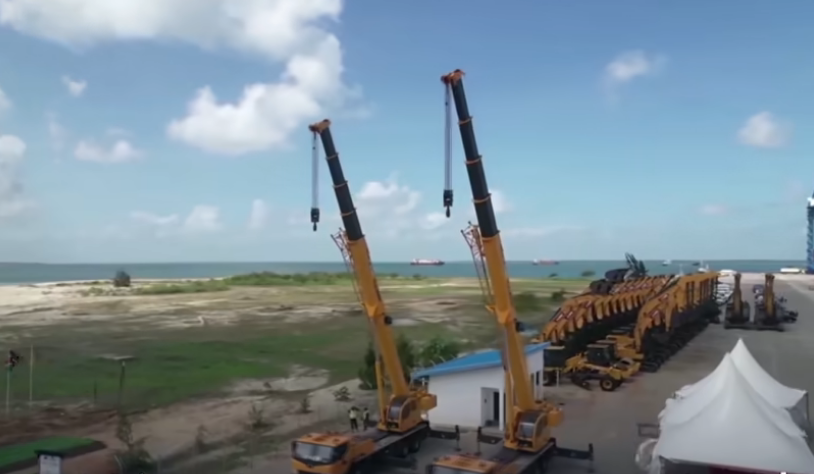
Dangote floated 30% of the Lamu Refinery stake to East African countries of which Kenya quickly pinched 10% of the shares.
It is estimated Kenya alone consumes about 116,000 bpd and yet Lamu refinery is slated to churn out 700,000 bpd against East Africa’s cumulative daily demand and consumption of approximately 450,000 bpd; thus leaving lingering questions about the surplus fuel expected from Lamu. Turkana in Kenya is also expected to produce 20,000 bpd, before shooting upwards 50,000 bpd; 7% of what Lamu needs. Ethiopia has already done ground excavations to build yet another oil refinery in Gode.
“Uganda’s refinery will be built and our cooperation with Tanzania on Tanga stands. There is no harm in having more refineries in the region. What Africa needs is value addition, industrialisation and bigger integrated markets. East Africa political integration must ultimately be treated as a matter of strategic survival,” Museveni said at the September 30 event.
It is argued that Uganda’s refinery in Hoima and cooperation with Tanzania can complement each other while advancing regional energy security as integrated markets expand opportunities for the region’s people and businesses. The industrial future of East Africa is pursuant on value addition which essentially means jobs, skills, technology and stronger local supply chains. Bigger integrated markets and regional cooperation can create greater opportunities for trade, investment and development.
“Africa needs value addition and big integrated markets and more refineries means more opportunities for Africa,” argues a one Wilson Musinga.
“East Africa should think beyond national borders. Our combined market gives African businesses greater room to produce, trade and compete globally,” according to Nkunzi Sonia.