Photos: Facebook\Wikimedia Commons
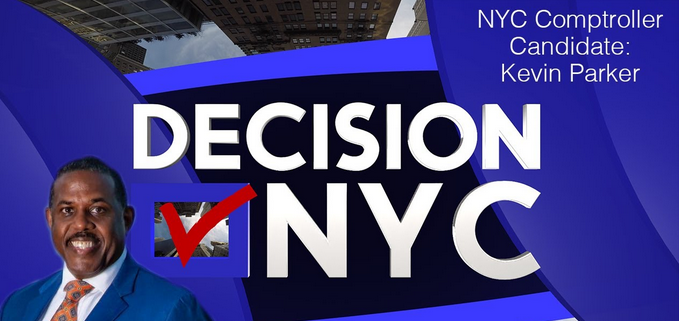
I’ve represented Central Brooklyn in the New York State Senate for over two decades. I’ve chaired powerful committees, passed major legislation, and taught public policy at CUNY and SUNY. Now, I’m running to serve as New York City Comptroller — a role that oversees the city’s pension funds, audits its agencies, and has enormous influence over how billions in taxpayer dollars are spent.

But if you’re a Black New Yorker, there’s a good chance you haven’t heard about my campaign. And that’s not by accident. That’s by design.
Despite my qualifications and record, I’ve been excluded from the sanctioned debates. I haven’t hit the city’s fundraising thresholds — a barrier that rewards candidates with wealthy donors and high-profile endorsements, not those rooted in working-class neighborhoods like Flatbush, East Flatbush, and Brownsville.
These rules are presented as neutral, but they aren’t experienced that way. In practice, they cut out candidates like me — and by extension, the voters who look like me. This is about more than just a campaign. It’s about visibility, fairness, and whether our democracy is big enough to include voices that don’t already have a seat at the table.
Shirley Chisholm, who broke barriers as the first Black woman elected to Congress — and who represented many of the same Brooklyn neighborhoods I do — once said, “If they don’t give you a seat at the table, bring a folding chair.” I’ve brought that chair time and time again. But too often, the door to the room is locked.
What does it mean when a qualified Black candidate for citywide office can’t get on the debate stage, can’t get covered in the major press, and can’t break through the noise of politics as usual?
It means our communities are denied the chance to evaluate all their choices. It means our children see fewer examples of themselves in leadership. And it means we’re forced to accept a system where viability is measured not by service or experience, but by access to big checks and party machinery.
I’ve never been the favorite of political insiders. I’ve been the candidate who knocks on doors, who shows up at tenant meetings, who fights for utility justice, small business relief, and college affordability. My donors aren’t hedge fund managers. They’re home health aides, retired teachers, and people who know what it means to live on the margins in this city.
That’s who I want to represent — and that’s who I need to reach. But I can’t do that if the press ignores my campaign, if the debates exclude me, and if the system keeps operating under the assumption that only the loudest, best-funded voices matter.
Adam Clayton Powell Jr., one of our city’s most iconic Black leaders, once warned that when you don’t demand inclusion, “they will count you out before you can count yourself in.” I’m not willing to let that happen — not in this city, and not in 2025.
The office of Comptroller may not get the attention of a mayor’s race, but it touches every New Yorker’s life. It determines whether city dollars are spent efficiently and equitably. It shapes our schools, our transportation system, our housing infrastructure. If we want a city that truly works for everyone — not just the well-connected — then we need to be in the room where those decisions are made.
And no one in this race is more qualified to take on that responsibility than I am. I’ve worked in the State Comptroller’s Office, and spent my career managing public dollars at the legislative level. My background in economics and my hands-on experience give me the tools to be the first Black Comptroller of New York City — and to do the job with excellence from day one.
My candidacy offers a different voice. Not just a different résumé, but a different worldview. One that understands what it’s like to grow up in a working-class Black household in New York City public schools. One that sees policy through the lens of the neighborhoods that most elected officials only drive through on their way to the airport.
I’m not asking for special treatment. I’m asking for a fair shot. I’m asking for the opportunity to speak directly to the people, and to trust that when Black New Yorkers hear what I stand for — when they see a candidate who has lived their experience and fought their fights — they’ll show up.
But that won’t happen if they never hear my name. And that won’t happen if the press and public forums decide for them who deserves to be taken seriously.
This campaign isn’t just about me. It’s about what kind of city we want to be. Do we believe in broad participation, or just polished packaging? Do we want real representation, or the appearance of diversity without the substance?
I’m Kevin Parker. I’m running for New York City Comptroller. And I believe Black New York deserves to know that.