By Lawrence S. Wittner
Photos: YouTube Screenshots\Wikimedia Commons
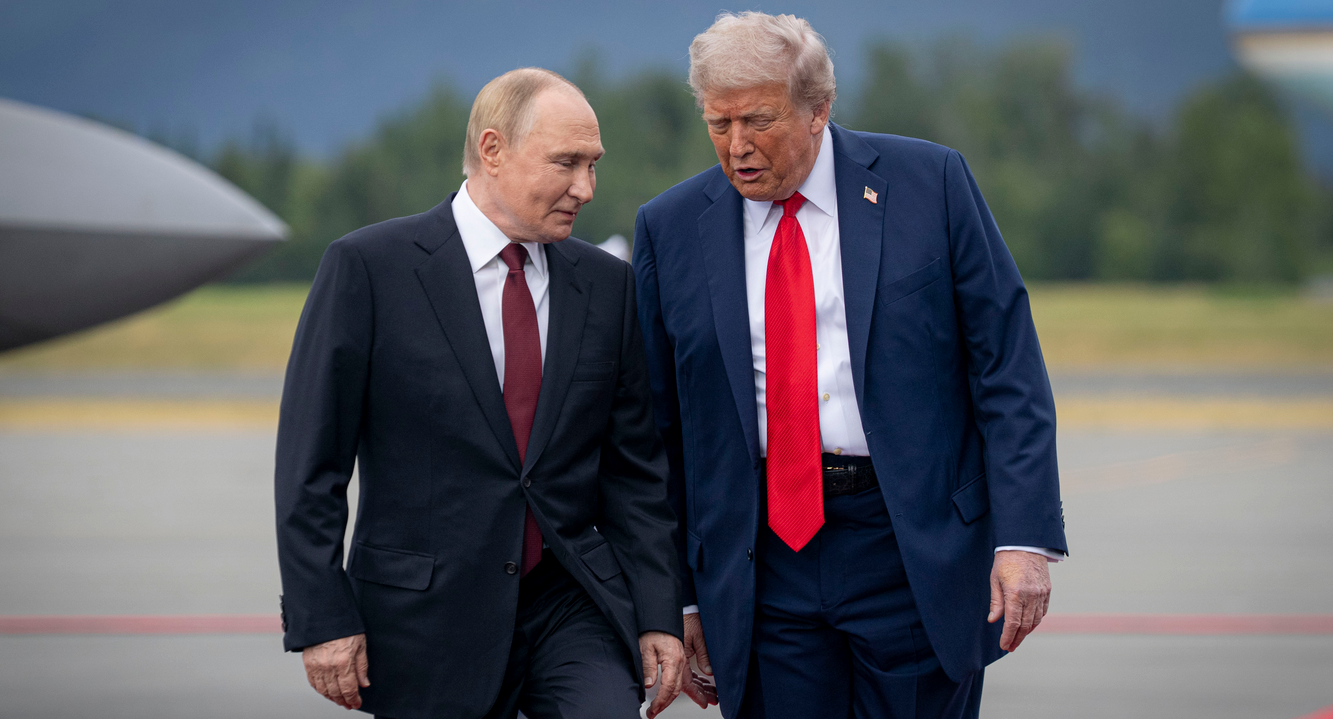
Pundits frequently remark on the warm and friendly relationship between Vladimir Putin and Donald Trump. In explanation, some suggest that Putin possesses compromising material on Trump. Others point to their autocratic style and their rightwing agendas.
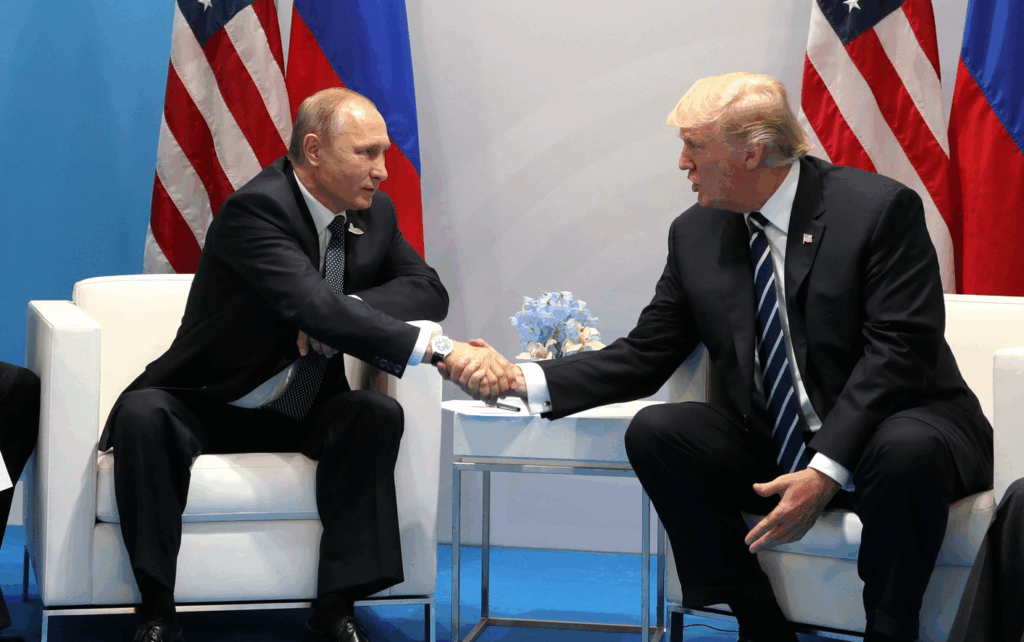
But another factor plays a role in the Putin-Trump bromance: their embrace of great power imperialism.
For example, their aggressive policies toward Ukraine and Venezuela are remarkably similar. Putin began his takeover of Ukraine by charging that its government was controlled by “fascists” and, moreover, that its closer relations with Western Europe would irreparably damage Russian national security. Similarly, Trump has sought to overturn the Venezuelan government, arguing that it is controlled by drug traffickers and represents a significant menace to U.S. national security.
In fact, both national leaders seem to be driven by more traditional concerns. Before Ukraine’s recent independence, that land, for centuries, had been part of the Russian empire, and, through reconquest, Putin has sought to restore Russia’s imperial glory. As for Trump, the flimsiness of the drug trafficking charges and his obsession with military power and fossil fuels suggest that he is primarily concerned with using military power to oust a stubbornly independent regime and, thereby, gain control of Venezuela’s oil reserves, the largest in the world.
Both Putin and Trump began gradually with a display of vast military might, hoping to intimidate these smaller nations and secure their goals. When Ukraine resisted capitulation, a full-scale invasion ensued. The same pattern appears to be playing out in U.S. relations with Venezuela.
Meanwhile, like sophisticated mob bosses, Trump and Putin are attempting to avoid conflict with one another by staking out different territory.
In accord with this approach, the Trump administration’s official National Security Strategy, released on December 4, promotes an arrangement for the two great powers to focus on separate imperial spheres. Avoiding any suggestion that Russia is a threat to the United States, the document instead criticizes European officials for blocking U.S. efforts to end the Ukraine War on terms advanced by Putin. It also prioritizes reestablishing “strategic stability with Russia.” Europeans, it adds disparagingly, face “civilizational erasure” thanks to the immigration of non-white people, and should support Europe’s rightwing, “patriotic” parties, which follow the Russian line on European affairs.
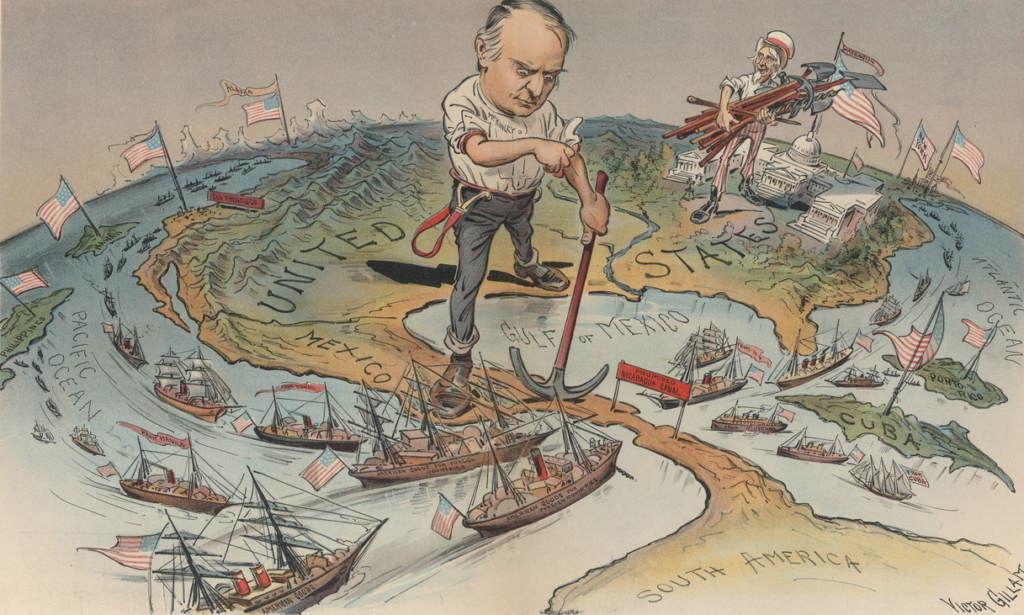
Having more or less abandoned Europe to the Russian imperium, the Trump National Security Strategy allocates Latin America to the United States. Invoking what it calls the “Trump Corollary” to the Monroe Doctrine, the document declares that “the United States must be preeminent in the Western Hemisphere as a condition of our security and prosperity―a condition that allows us to assert ourselves confidently where and when we need to in the region.” This assertion, the document explains, includes the use of “lethal force.”
Naturally, the Russian government is pleased by Trump’s new National Security Strategy. “The adjustments we’re seeing . . . are largely consistent with our vision,” declared the Russian regime’s official spokesperson, Dmitry Peskov. “We consider this a positive step.”
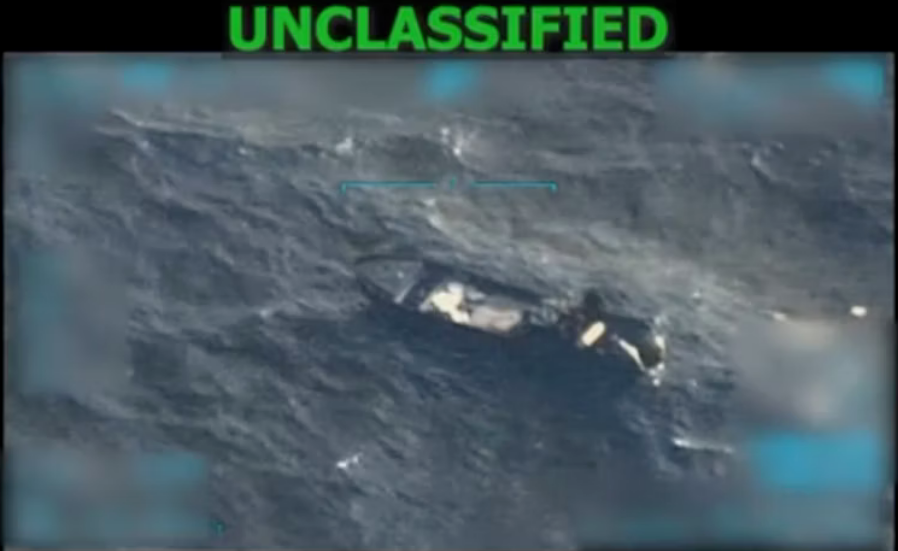

Thus far, the Venezuelan conflict, like its Ukrainian counterpart, is being managed within this collaborative framework. Although the Russian government has provided substantial military aid to the Maduro government in the past, it has rejected Maduro’s more recent and pressing request for military hardware to fend off a U.S. military invasion. Instead, Russian support for the embattled regime has been reduced to statements, by lower-level officials, expressing alarm and concern. “We hope that the Trump administration will refrain from further escalating the situation,” observed Russia’s Deputy Foreign Minister on December 7, and “we urge it to do so.”
The tepid nature of this support for Venezuela might reflect Russia’s preoccupation with the demands of its military invasion of Ukraine. But it might also result from Putin’s acceptance of the Trump administration’s proposal that, when it comes to empire, the Western Hemisphere belongs to the United States, while Europe belongs to Russia.
Of course, this relapse into the crude great power imperialism of the past comes as a shock to a world that has witnessed the gradual development of international law and attempts at its enforcement. Are we really condemned to live on a planet where military might makes right?
Not necessarily, for there is an alternative for coping with the stormy world of international relations: democratic global governance.
Nations have been working to develop a less violent, more equitable world for more than a century and, as a result, there are now international institutions in existence that have begun the slow, painstaking process of building it. These include the United Nations, the International Court of Justice, and the International Criminal Court (ICC).
Now, given the revival of retrograde behavior, it’s necessary to empower them further.
A key measure along these lines would be to break the disproportionate influence of the great powers in the UN Security Council. Article 109 of the UN Charter provides a procedure for amendments through convening a Charter Review Conference. This conference could democratize international security operations by ending or modifying the veto in the Security Council. Or it could simply abolish the Security Council and transfer its responsibilities to the General Assembly, where majority rule prevails.
Other reform measures include adding a UN Parliamentary Assembly, with representatives chosen by the people rather than by governments, and increasing the jurisdiction and use of the International Court of Justice.
Democratic global governance could also be enhanced by increasing the number of countries ratifying the Rome Statute of the ICC. At present, only 125 nations are parties to the ICC, with some of the most powerful, such as the United States, Russia, China, India, and Israel, remaining holdouts―one additional illustration of how the great powers manage to operate with impunity in the realm of international affairs.
Great power imperialism can be ended. But it will take a major effort on the part of people and nations.
Dr. Lawrence Wittner, syndicated by PeaceVoice, is Professor of History emeritus at SUNY/Albany and the author of Confronting the Bomb (Stanford University Press).