
Photos: Book Cover\YouTube Screenshots
“Exploitation and Instability in Nigeria: The Orkar Coup in Perspective” is a book written by Sowaribi Tolofari. The book is a treatise on the Orkar Coup attempt that took place in Nigeria in 1990. The author provides a detailed account of the coup and its aftermath, as well as an analysis of the underlying causes of the coup. The book is a must-read for anyone interested in the history of Nigeria and the political instability that has plagued the country.
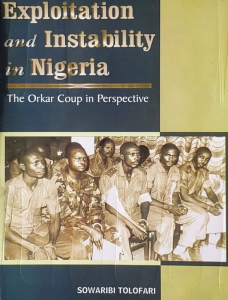
The book is divided into six chapters, each of which provides a unique perspective on the coup. The first chapter provides an overview of the coup and its aftermath, while the second chapter delves into the historical context that led to the coup. The third chapter analyzes the role of the military in Nigerian politics, while the fourth chapter examines the economic factors that contributed to the coup. The fifth chapter focuses on the ethnic and religious tensions that were present in Nigeria at the time, while the final chapter provides an analysis of the coup’s impact on Nigerian politics and society.
One of the strengths of the book is its detailed analysis of the underlying causes of the coup. The author provides a nuanced perspective on the coup, arguing that it was not simply the result of military ambition, but rather a response to the political and economic instability that was present in Nigeria at the time. The book also provides a detailed account of the coup itself, including the events leading up to it and the aftermath.
Another strength of the book is its clear and concise writing style. The author presents complex ideas in a way that is easy to understand, making the book accessible to a wide range of readers. The book is also well-researched, with extensive footnotes and a comprehensive bibliography.
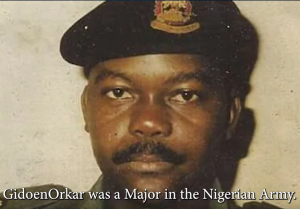
However, the book is not without its weaknesses. One of the main criticisms of the book is that it is somewhat one-sided. The author is sympathetic to the coup plotters and their motivations, and does not provide a balanced perspective on the events. Additionally, the book is somewhat dated, having been published in 1995. While the analysis of the coup is still relevant today, the book does not take into account more recent developments in Nigerian politics.
In conclusion, “Exploitation and Instability in Nigeria: The Orkar Coup in Perspective” is a well-written and informative book that provides a detailed analysis of the Orkar Coup. The book is a must-read for anyone interested in the history of Nigeria and the political instability that has plagued the country. While the book is not without its weaknesses, it remains an important contribution to the field of Nigerian studies.
You can grab a copy at Sunshine Bookseller