
By Economic Policy Institute
Photos: Wikimedia Commons
Worker interest in unions is at historic highs, and nearly 70% of the public approves of unions. Yet most of the 56 million workers who say they want a union contract can’t get one because of weak federal labor law and the spread of state anti-union “right-to-work” (RTW) laws.
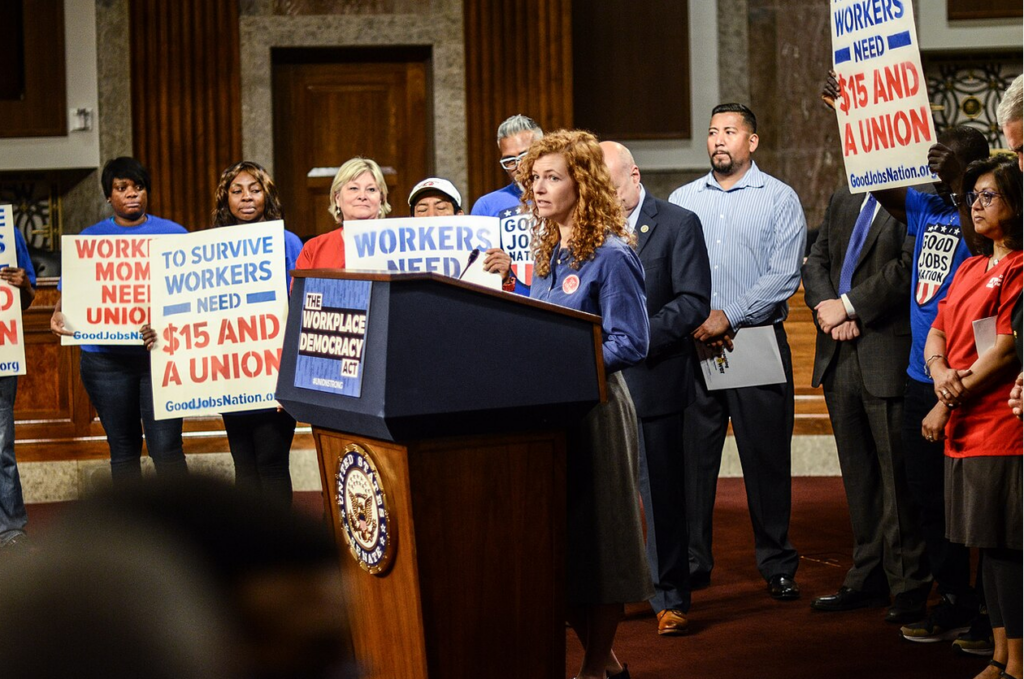
Suppression of union membership has in turn lowered workers’ wages and benefits while inequality has skyrocketed.
This FAQ examines the meaning, origins, and impact of anti-union RTW laws, and the importance of restoring workers’ collective bargaining power by removing RTW laws and other obstacles to unionization.
Key takeaways
- The label “right to work” is intentionally misleading. RTW laws provide no job protections. What they do is make it harder for workers to form and sustain strong unions.
- RTW laws are intended to weaken unions. They are linked to lower unionization rates, lower wages and benefits, and worse safety outcomes for all workers.
- RTW laws have racist, anti-union origins dating to the 1940s. For decades, big business and white supremacist groups promoted RTW laws to diminish workers’ collective bargaining rights and block multiracial organizing.
- RTW laws don’t boost job growth but do erode job quality and increase inequality.
- Trends on RTW are reversing. No state has adopted a new RTW law since 2017, and multiple states have repealed or rejected RTW.