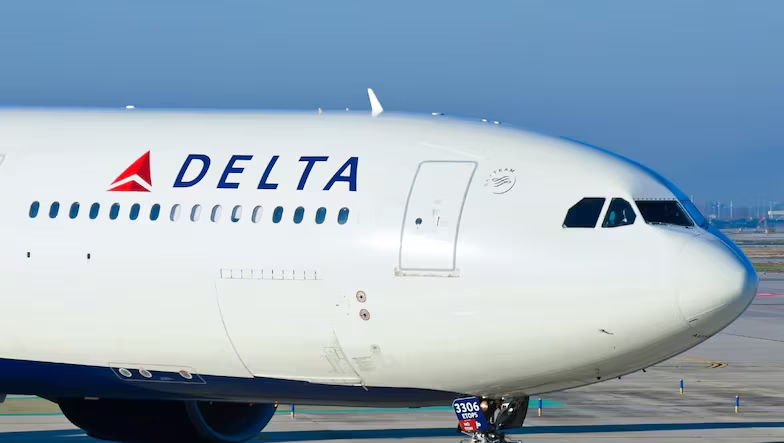
Delta Airlines: Delta confirmed a big network change this week. The airline will permanently drop flights at several airports by November 2025. The biggest news is they’re leaving Midland International Air and Space Port in Texas. For months, we’ve been speculating about changes; now it’s clear. The company is focusing on profitable markets.
Midland officials are disappointed. They invested big in airport upgrades, hoping to get long-term deals. Delta’s exit is a blow to regional travelers who relied on easy access to Austin. The daily Austin Midland service lasted less than 2 years before being cut. Flights started in April 2024 but rarely filled beyond 60% capacity. Delta looked at the numbers and decided the route was a resource drain. It fits into the bigger corporate plan of resilience and margin growth.
Texas Market Under Review
The cancellation affects passengers who relied on that Austin to Midland connection. Business travelers from the Permian Basin lose a convenient way to get to Austin directly. They now have to rely mostly on Southwest, which still has one daily Midland flight. This reduces competition and forces passengers into limited schedules. Delta will officially close Midland operations after November 9, 2025. That’s a complete withdrawal, no staff or flights in that location.
Austin, however, is a big hub for Delta. Instead of cutting back, they’re doubling down in the Texas capital. They announced new flights from Austin to Denver, Kansas City and Columbus. Seasonal international flights to Cancun and Cabo San Lucas start December 20, 2025. They also confirmed a permanent flight attendant base in Austin by October. These are the kinds of moves Delta makes when it subtracts in some places and adds in others. Austin’s growing economy and strong passenger demand make it an attractive growth point.
Also read: Cardi B Trial 2025 – Fashion, Memes & The Fight for Justice
California Routes Also Cut
The network shift doesn’t stop in Texas. California routes are also feeling the impact. Service between Las Vegas and Sacramento will disappear from the schedules. Flights between Las Vegas and San José will too. These are the same demand problems they faced in Texas. Flights couldn’t reach profitability despite trying to attract more passengers. Instead of continuing to absorb losses, Delta is freeing up resources. California travelers need options. Other airlines have strong networks in Sacramento and San José. Delta’s exit may give those competitors room to add more flights. California travelers to Las Vegas have many other options from other airlines. Delta is putting its energy into airports where the market is steady rather than temporary.
Why Delta Dropped Midland
Airline analysts studied Delta’s exit from Midland closely. The Austin–Midland route never reached healthy load factors. Flights ran with many empty seats, making costs per passenger higher. Numbers were below 60% and far from the 80% most airlines aim for. Executives deemed the route not worth developing. Keeping the flights would mean ongoing financial strain. They chose to pull resources rather than let inefficiency continue.
Midland leaders were frustrated. They had expected Delta to stay after years of planning and negotiation. Terminal projects and service improvements cost millions, but results fell short. Airport managers now hope to attract new partnerships with other carriers. Energy executives still need to travel, and that demand may attract another airline. For now, Southwest is the only one serving the Austin Midland route.
Travelers Feel the Impact
Travelers see both gains and losses. Midland residents lose easy access to Austin with Delta. Now they must fly Southwest or drive further. Business travelers have less flexibility and higher costs. California passengers lose some options to get to Las Vegas directly. They can still fly with other carriers, but Delta loyalists lose convenience. On the other hand, Austin travelers get more options. Delta’s Austin strategy is all about growth in Central Texas. Investments in staff bases and infrastructure prove the city is getting bigger. Passengers win even if smaller cities lose.
Also read: Typhoon Kajiki causes Flooding and Evacuations in Vietnam
Closing Thoughts on Delta’s Strategy
Delta is reshaping its network with big decisions. Leaders are canceling routes that don’t meet standards and investing in strong markets. Travelers in Midland and California are inconvenienced but gain perspective on the industry. Austin, Indianapolis and San Francisco are getting new attention and service. The strategy boils down to one thing: efficiency is the only metric that matters. Airlines can’t afford nostalgia or sentiment. Numbers alone decide route survival.
Passengers may be inconvenienced in some places, but they see broader connectivity gains. Midland hopes for new partnerships; Austin is growing fast. Industry observers expect more of this across carriers in the next few years. As demand evolves, airlines will adapt in real time. Delta’s decision shows how strategy and discipline equal success in aviation. The story of Midland reminds us that smaller markets face the biggest challenges. Meanwhile, hubs like Austin will continue to thrive under focus.