By Ambassador Davisha L. Johnson
Photos: Facebook\Wikimedia Commons
When Ghana’s government announced a new alliance with China to reduce palm oil imports by $200 million, the headlines were glowing. Investor deal signed. Billions pledged. 250,000 jobs promised. But I have a few questions that the press release did not answer — and, based on my years of building actual agricultural supply chains across West Africa, I suspect they never will.
Who is going to train the people for those 250,000 jobs? Who will repair the machinery when it breaks down, in a country where TVET — Technical and Vocational Education and Training — is treated as a lesser path, chronically underfunded and socially stigmatized? Who will regulate humane working conditions and a fair minimum wage in Chinese-owned factories, which have a well-documented record of seven-day work weeks with no time off across the African continent?
And most importantly: where is the government’s understanding of capacity building along the entire agricultural value chain? Not the top of it. Not the export deal. The whole chain — from soil to shelf, from the smallholder farmer sweating in the field to the logistics driver crossing the border.
The Pipeline That Lives Only on Paper
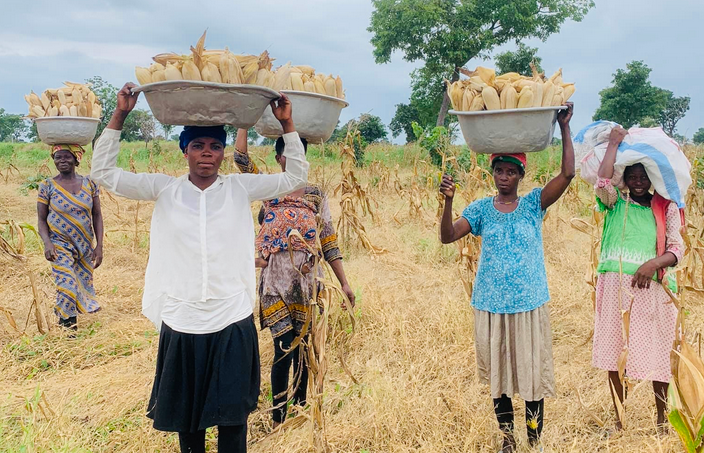
Ghana has talked about an agricultural education-to-employment pipeline for years. It remains largely conceptual — built on donor handouts and political photo opportunities, with no tangible, self-sustaining outcomes to show ordinary farmers. I know this not as an abstraction. I work directly with a pilot farm school in Kumasi. Every time another presidential agriculture initiative makes the news, I ask them: have you received anything from this program? Their answer, consistently and without exception, is no.
Getting an investor deal signed is not the same as creating jobs for Ghanaians. It is especially not the same as creating management and leadership roles for Ghanaians. Unless this agreement contains explicit, enforceable guarantees about who fills those 250,000 positions — their nationality, their wages, their rights — we are celebrating a number that does not yet exist for the people who need it most.
What One Person, Without Government Backing, Actually Built
I am a woman. I am not backed by any government — not Ghana’s, not any other. I work in a country that is not my own. And in three years, using my own money and relationships, I have built a functioning global agricultural supply chain rooted in West Africa.
In Liberia, we have developed an accredited organic farming program now running across five universities — a partnership that will be formally announced next month with the Vice President of Liberia. We have placed two Ghanaian educators into those Liberian university programs because Ghana’s own government declined the opportunity. Right now, my Ghanaian Rasta farm manager and I are in Ivory Coast finalizing a supply chain contract that will move cassava directly from Liberian smallholder farmers to Ivorian buyers, using a Ghanaian logistics company to bridge the corridor.
That is a Pan-African supply chain — real jobs, real income, real training, real cross-border trade — built by one person with no ministerial office, no sovereign wealth fund, and no ribbon-cutting ceremony. If I can do this, what exactly is Ghana’s government doing with the resources of an entire state?
The Farmer Is Not an Afterthought
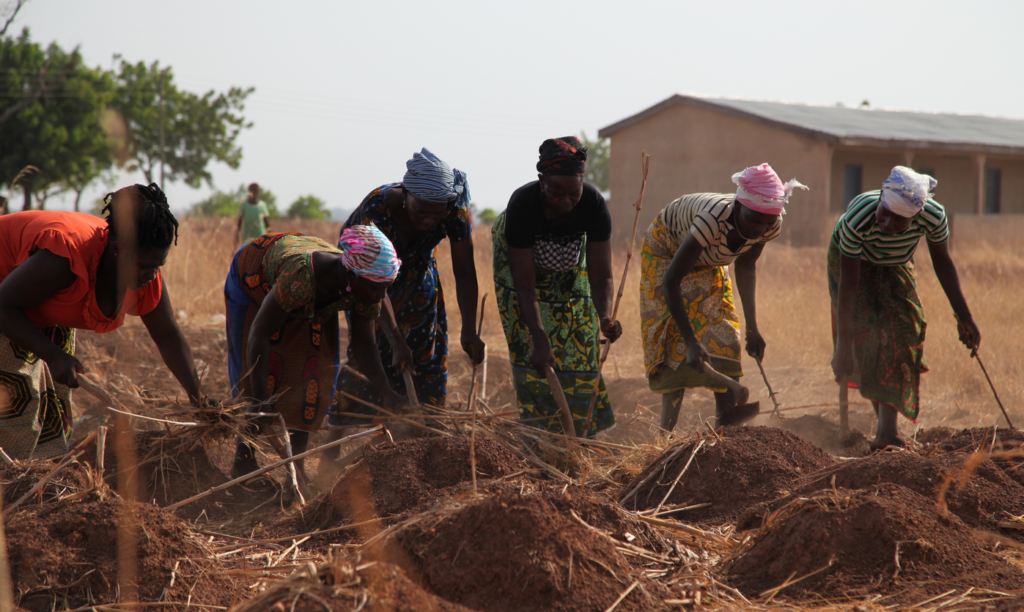
Most African leaders have not stood in a farm since primary school, when it was assigned as punishment or a village family duty. That distance shows. Agriculture is the sector that feeds a nation, employs its rural majority, and holds the greatest potential for wealth generation at the base of the economic pyramid. Yet it consistently receives the least investment in education, the least dignity in policy discourse, and the least scrutiny when deals are signed in air-conditioned offices far from the fields.
When you center the farmer himself — his training, his income, his market access, his tools and the people who can repair those tools — results follow. Tangible results. Not press releases.
I Have Traveled the Route. I Have Seen What Is Coming.
I am not writing this from a conference room. Since receiving my Ghanaian passport in January 2025 as a naturalized citizen, I have been traveling by road from Nigeria through to Liberia — retracing the very Trans-Africa Highway corridor that the African Development Bank has already identified, funded, and begun constructing. Road infrastructure is going in right now, stretching from the coast of Ghana straight into the Sahel through Burkina Faso. This is one of the most significant supply chain arteries on the continent. And Ghana is positioned at its heart.
That highway represents generational opportunity for Ghanaian traders, transporters, manufacturers, and farmers. The question is not whether the route will be built. It is who will control it, and who will be left only to labor on it.
Mandarin in Schools Today. Chinese MPs Tomorrow?
Ghana has now mandated Mandarin as part of its national education curriculum. I want every Ghanaian parent and policymaker to sit with what that means — not in five years, but in ten. When today’s Ghanaian children are fluent in Mandarin and raised in a system that treats Chinese investment as the default development model, who will they negotiate for? Whose interests will they naturally serve?
Aid comes in many forms. What is packaged as development is often a setup for future stabilized dependence on foreign investment. We have already seen Chinese nationals in Ghana becoming chiefs. The logical trajectory, if unchecked, leads to Chinese voices in parliament, Chinese ministers of mining, Chinese ministers of agriculture. This is not speculation. It is a pattern. We watched it unfold in Nigeria, where entire markets in major cities were built exclusively for Chinese nationals — no entry for Nigerians, no local jobs, no local goods, no English signage. Communities within a community, operating under entirely separate economic rules.
I have stood outside a Chinese food market in the heart of Osu, Accra — one of Ghana’s most prominent neighborhoods. There is not a single word of English or Twi on the building. Not one. That is not integration. That is occupation by another name. And Ghana’s government is greeting it with investment agreements and school curricula.
“Made in Ghana” — But Made by Whom?
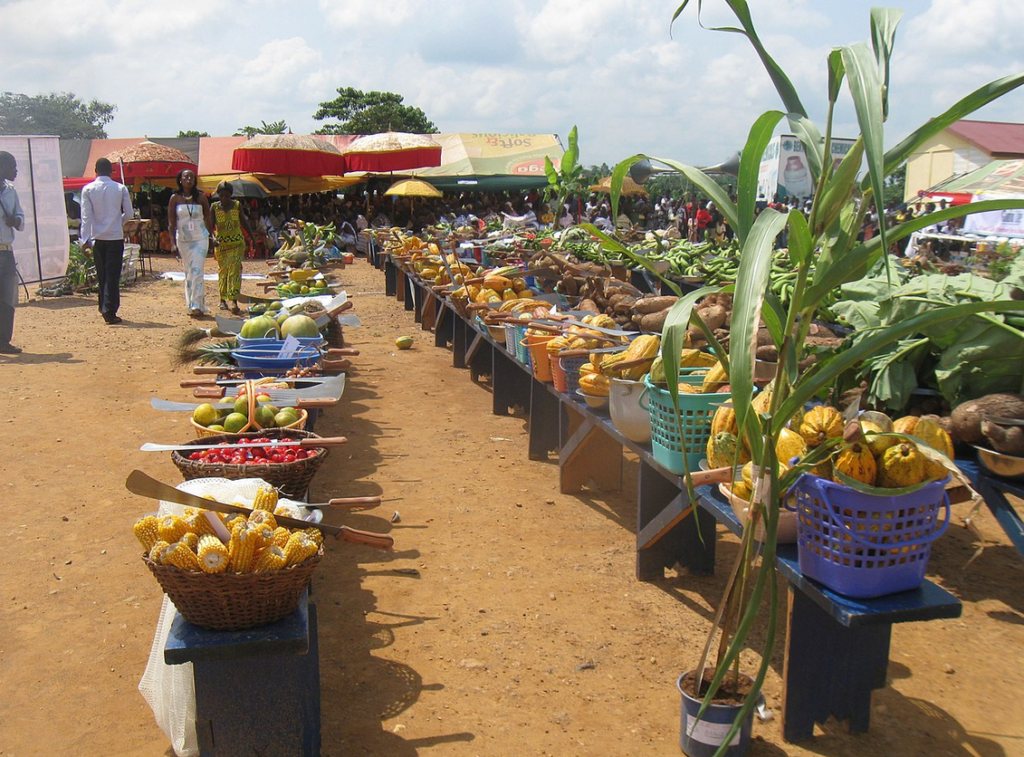
Ghana’s government promotes “Made in Ghana” with pride. But look closely at who is manufacturing, managing, and supervising inside Ghana’s own borders. Chinese communities in Ghana are the manufacturers. They are the managers. They own the supply chains. They control the distribution. The Ghanaian population, meanwhile, is in the field — working in the sun, six and seven days a week, for 45 cedis a day. Sometimes 500 cedis a month. That is not employment. That is modern servitude dressed in development language.
Economic colonization is a real and documented phenomenon, and some of us are watching it materialize in Ghana in real time. The mechanism is not flags and governors anymore. It is investment deals with no local hiring mandates, education systems reoriented toward foreign languages, and a deliberate absence of the capacity-building that would allow Ghanaians to own, manage, and lead their own industries.
Ghana is sitting on real opportunity — in its own soil, in its own youth, in its own strategic geography along one of Africa’s most important emerging trade corridors. But that opportunity requires investment in Ghanaians first: in TVET, in agricultural education, in local ownership, in fair wages and enforceable labor rights. A deal that puts Chinese factories on Ghanaian land, staffed by Chinese nationals, managed by Chinese supervisors, with Ghanaians in the field at subsistence wages, is not development. It is a rebranded extraction.
Press releases and conceptual frameworks are not feeding Ghana’s youth. They are not employing them. They are not training them. At best, they are distractions. At worst, they are cover for deals that enrich foreign investors while the Ghanaian farmer waits, again, for something that never arrives.
Ghana deserves a real agricultural strategy — one that starts with education, runs through TVET, protects workers, builds local capacity, and measures success not in billions announced but in farmers lifted and youth employed. Until then, we should ask harder questions every time a deal is signed.
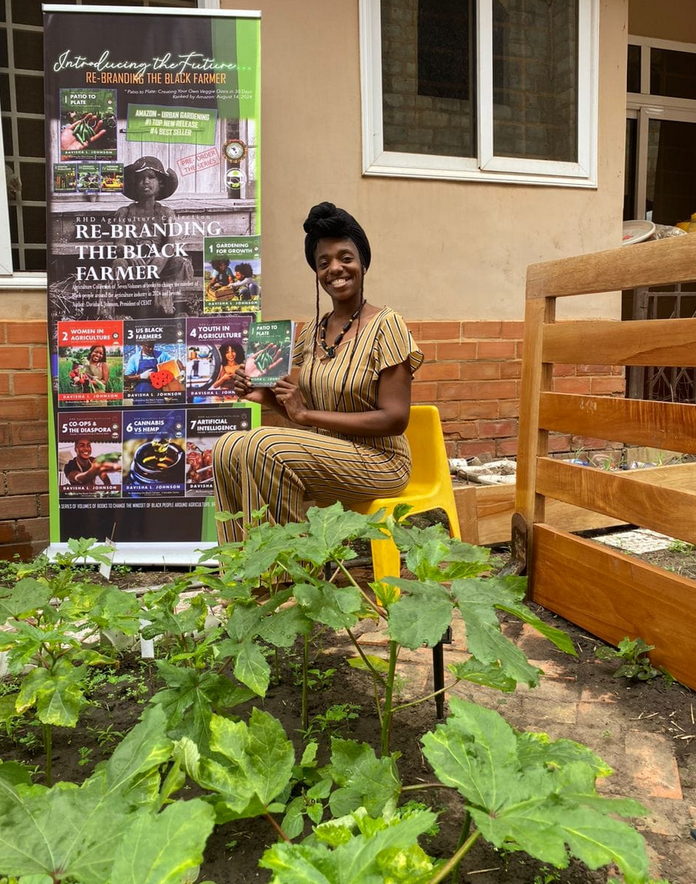
About the Author
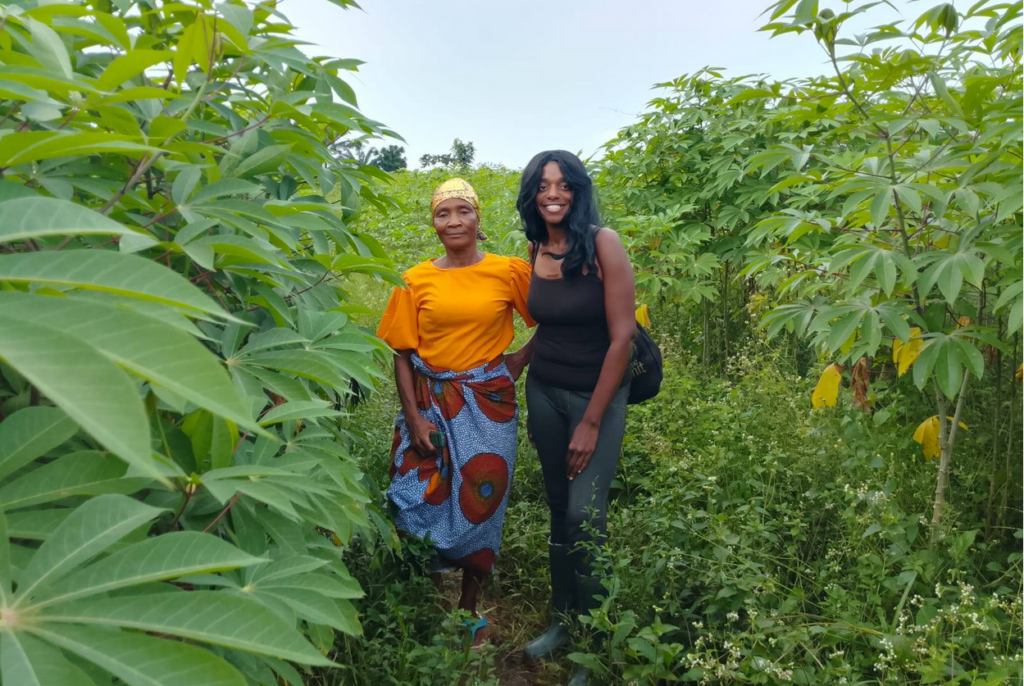
Ambassador Davisha L. Johnson (shown above) is the President of CEMT Global (Cooperative Executive Management Team), Goodwill Ambassador to the State of Georgia USA, and Ambassador to the African Diaspora Collective African Embassy. A naturalized Ghanaian citizen since January 2025, she has spent the past year traveling by road from Nigeria through to Liberia along the Trans-Africa Highway corridor. She has independently built an accredited organic farming and supply chain program across five Liberian universities and is currently finalizing a cassava trade corridor between Liberian smallholder farmers and Ivory Coast, using Ghanaian logistics. She operates without government funding or backing.