By Dr. Theogene Rudasingwa
Photos: YouTube Screenshots\Wikimedia Commons
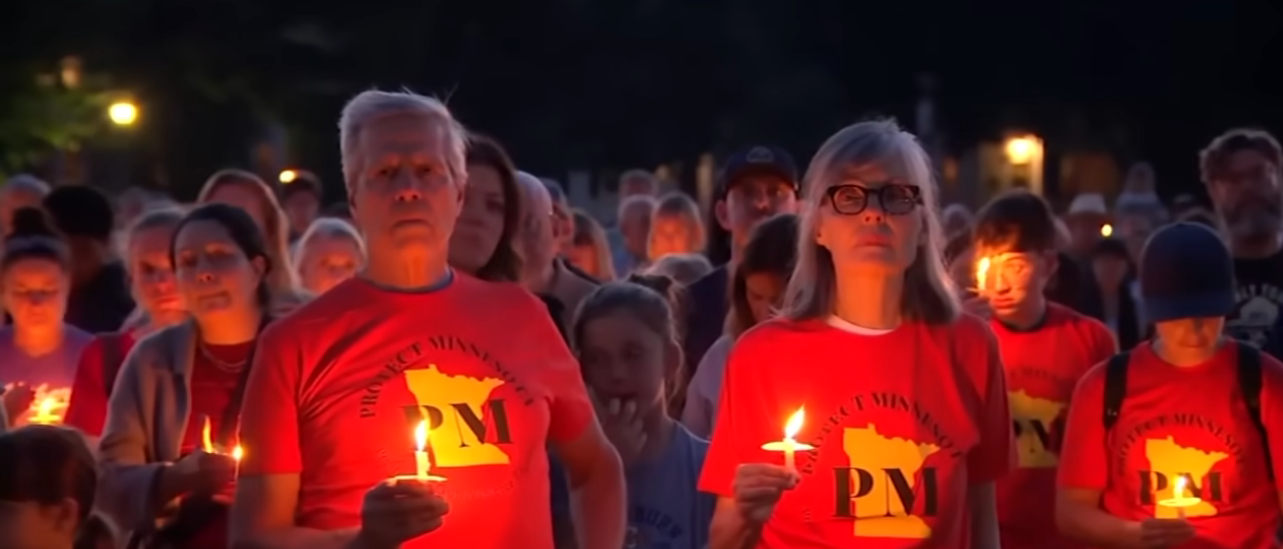
We fall to our knees. That was the instinct in Minneapolis, USA, when a gunman opened fire inside Annunciation Catholic Church during a school Mass on August 27, 2025, killing two children—8 and 10 years old—and wounding many others. A sanctuary became a battlefield; pews became triage lines. The mayor said, “These kids were literally praying.” Prayer is proper, lament is human. But children cannot live on our sorrow. Their survival depends on changing the conditions that keep killing them.

I know this instinct to mourn. I grew up as a refugee, fought in a civil war, and endured the horrors of genocide. I have watched children die, starve, drown, bleed, and break under the weight of trauma. I carry their faces with me.
Today, too many children around the world stand where I once stood—in danger, in despair, and in need of a world willing to act.
Across the globe, children face an epidemic of preventable death and suffering. In 2023, 4.8 million children under five died, most from causes we know how to prevent—complications at birth, pneumonia, diarrhea, malaria. Malnutrition, tied to poverty and inequity, is implicated in nearly half of these deaths. In the United States, the world’s most prosperous country, 12 children die and 32 are wounded every day from gun violence.
But beyond disease and violence lies a deeper political reality: how the world is governed determines who lives and who dies.
In Gaza, famine has now been declared, with tens of thousands of children killed or injured since October 2023. In Ukraine, child casualties have tripled in recent months, with schools and hospitals deliberately destroyed. In Sudan, siege conditions in Al-Fashir have pushed children into acute malnutrition at terrifying rates. In the Democratic Republic of Congo (DRC), decades of conflict over land, power, and minerals have displaced more than 6 million people, the majority of them children. In provinces like Ituri and North Kivu, children are massacred, forced into militias, and left without schools, food, or hope. Across Africa’s Sahel region, violence and climate shocks drive entire populations toward famine.
These tragedies are not isolated events. The UNICEF State of the World’s Children report warns that one billion children now live in areas at extreme risk from environmental hazards. Sixty-seven million routine vaccinations were missed during the pandemic. Three hundred thirty-three million children live in extreme poverty, and many are out of school entirely. The causes of suffering are deeply interconnected: conflict, inequality, climate change, economic exploitation, and political impunity.
And yet, at precisely the moment when humanity should rise to meet these emergencies, the wealthiest nations and global financial institutions have retreated from their promises. The financing gap to achieve the Sustainable Development Goals now stands at $4 trillion annually, but military spending has reached a historic high of $2.7 trillion a year. We pour unimaginable wealth into weapons while starving the budgets that could save children’s lives.
This is not inevitable. It is a choice and a betrayal of our children.
So where do we begin? The solutions are neither quick nor straightforward, but they require a profound shift in how nations and global institutions prioritize their goals. Three commitments can chart a path toward saving lives and helping children flourish.
First, we must stop the killing by preventing and ending wars. The deadliest weapon against children is conflict itself. In Gaza, Sudan, Ukraine, the Sahel, and the DRC, children are caught in the crossfire of battles they did not choose. A trauma-informed, child-centric diplomacy must replace the current global obsession with militarization. We need a Children-First Global Security Framework: preventive diplomacy must be funded as seriously as weapons, peace agreements must embed protections for children, and grave violations—killing, maiming, attacks on schools and hospitals—must automatically trigger arms embargoes, sanctions, and accountability measures. Above all, we must reverse the arms race and redirect even a fraction of global defense spending to mediation, demining, and rebuilding safe spaces where children can heal.

Second, we must ensure the basics are available everywhere. Children are dying not because we lack solutions but because systems fail to deliver them. A Global Child Survival Compact would ensure that every child has access to schooling, vaccines, primary healthcare, nutrition, clean water, and safe sanitation. This requires rechanneling financial resources—such as IMF Special Drawing Rights—into dedicated child-resilience funds, restructuring debts to protect social spending, and piloting an arms-to-children levy on global weapons sales. For a fraction of what the world spends on defense, we could end the silent emergencies of pneumonia, diarrhea, malaria, and wasting.
Third, we must rewrite the social contract to prioritize children. Every nation should enshrine children’s rights in its constitution, establish an independent Children’s Commissioner to ensure inclusion of children’s health in every policy, and publish transparent budgets showing what is truly spent on children’s health, education, and protection. Mental health and psychosocial support must be built into schools, communities, work places, and clinics—not as an afterthought but as a central strategy for breaking cycles of trauma and violence.
These steps are not charity; they are investments in our collective survival. A child protected from violence, fed, vaccinated, educated, and healed grows into an adult who builds peace rather than fuels war. The future stability of our nations and our world depends on whether we make this choice now.
The cries of children compel us to ask uncomfortable questions: Why do we accept a world where bullets, bombs, and blockades define childhood? Why is military spending surging while appeals for food and vaccines go unfunded? Why are nations like the DRC allowed to bleed while the minerals beneath their soil enrich the powerful?
The measure of our civilization will not be the eloquence of our prayers and the volume of our tears but the courage of our actions. We must choose a different path—a world where preventing wars matters more than preparing for them, where the basics of life are guaranteed rather than negotiated or ignored, and where every decision begins with a single question: What does this mean for the child?
We will still pray and lament. But beyond prayers and lament, we must act—to end violence, heal trauma, and give every child the right not only to survive but to flourish.

To Support our independent investigative journalism contributions are welcome via Cashapp to: $BlackStarNews
Also support Black Star News by buying merch from our brand new Black Star Store!