By Vernon Verdree
Photos: YouTube Screenshots\Facebook
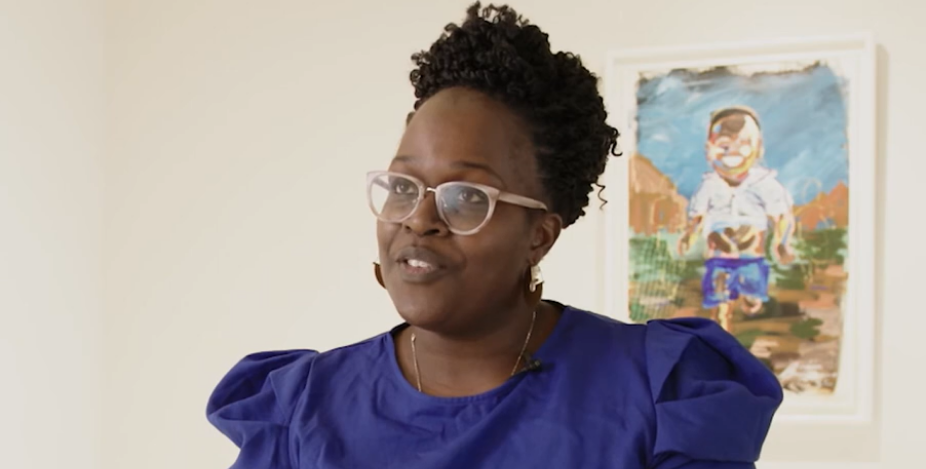
Recently Black Star News had the chance to speak with newly-appointed New York Equity Leader Afua Atta-Mensah inside City Hall.

Listen to audio version of interview.
BSN: Why do you think that The New York Times ran with the story that African-Americans don’t seem to have enough high level significant positions in the new administration?
AA-M: I would say as the Mayor has mentioned, he seeks to ensure that city government reflects what the city of New York looks like and I know ongoing hires are happening, and I know that the Mayor is committed to making sure that there is excellence in all levels of government and I believe he will continue to do so.
BSN: It is ironic that your appointment at a time when nationally the Trump administration has targeted every structure designed to implement equity(DEI). What are some concrete projects you and the administration have in mind and how would they compare to what the late mayors Marion Berry in Washington,D.C. and Maynard Jackson in Atlanta accomplished?
AA-M: I think I should take a step back and start with how this was created….in 2022 New Yorkers went to the ballot and overwhelmingly voted in support of a charter admendment so that there would be the creation of this office of equity and racial justice, with an understanding that we need to be able to have city government meet people where they are so that we are administrating services in the best way possible, and so New Yorkers have spoken. Mayor Mamdani has said that he wants to ensure that equity plans are out within the first 100 days and that will be a priority and I would say part of this is meeting the demands of New Yorkers who understand that having disparate treatment of people in different communities does not help make this city the amazing global city that it is..so we need to ensure that the power of government meets the moment and most importantly meets the obligation to help ensure that the day-to-day material conditions of people are in dignity.
BSN: Your background is that of of a community organizer, your work with Community Change and then the Urban Justice Center…what made you want to transition over to politics in general and the Mamdani administration in particular?
AA-M: Yes, I bring an organizer’s mindset into both politics and government, hearing people and what they are asking for and working together with others to move that forward, so I see “no” as a temporary pitstop on the way to “yes”.
BSN: How does your being a conscious Black woman, African woman, how have your experiences helped you to prepare for this position right now?

AA-M: So I think that it would be an evolution of meeting the moment, but i would say that I am lucky to be in deep friendship circles, as we call sister circles with dynamic women across the city who continue to support and lift me up in ways of saying we have to do this. I’m lucky to be part of an administration that has said that issues of equity, pay equity, gender equity, racial equity of justice are part of making sure that the affordability agenda is real and tangible.. My life experiences have been ones where I’m blessed to have to support of family, but understanding that so many things can move people into chaos, whether it be issues of inequity in housing, not being able to access healthcare. As a Black woman I know that there is a maternal health crisis, so all of these issues help to shape my world view, and also let me know that the first thing we have to do is hear directly from impacted people who will be very clear about the hurdles that are impacting their lives and this will allow us to show that those hurdles are not because of communities being less than, but rather that there are structural hurdles that the city has an obligation to move so that people can live in fullness of their ability.
BSN: Can you talk more about the preliminary Citywide Racial Equity Plan and how its formation and implementation will come about?
AA-M: First I would have to give credit to my predecessor Sideya Sherman and the team that worked really hard to get the ball rolling with the creation of this office in 2023, and at my appointment announcement the Mayor made within the first 100 days of his administration that the plan will be issued, and that’s just the first step…there’s the issuance of the plan, then there is feedback from communities, then a final plan…and I would say most importantly implementation, so that all of the wheels are moving forward to an affordability agenda to equity and to making sure that New Yorkers can move forward in dignity. So it is a process, its not going to be easy, but as the Mayor continues to say, we do big things because this is a great city, where it is expected of us.
BSN: Do you plan to have engagement with the community, doing the outreach, not only so the people can hear you and see you…but feel you?
AA-M: Absolutely! I see that as part of what my role will be, but also of CORE, which is an office that was also created by the charter amendment, part and parcel of what their mandate is to solicit the community for important feedback, but as I stated it has to be based on the information from directly impacted individuals and communities so that we are making sure that all of the amazing agencies in the city are meeting people where they are.
BSN: What advice do you have for young people, young people who want to be community organizers or get into politics, and young people in general?
AA-M: First I would have to quote my dad, “be in school, study”…all those good things, and most importantly do not hesitate to think big bold things….When the Mayor was first running he stayed true to his goals and visions and was clear about the issues that he knew were impacting people, even when some folks weren’t initial believers….so I would say continue to work hard, believe in yourself, stay grounded in what you know is true…respect yourself and read your history and know that anything is possible.
Listen to audio version of interview.