By Eisa Dafalla:
Mohammed Salman’s three children still call out for their father. They are 3, 5, and 7, and they believe he has only gone out on a work trip – that he will come home the way he always did after traveling for his metalworking shop outsideEl Fasher, the capital of Sudan’s North Darfur.
“The children ask constantly about their father,” their aunt, Moshira Salman, tells me. “They think he went somewhere and he’ll come back, like he used to.”
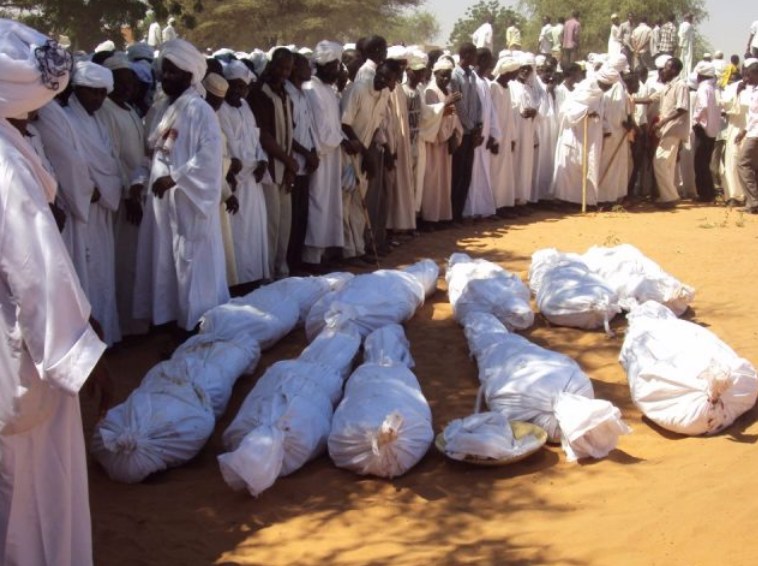
He won’t. In September 2025, 41-year-old Mohammed and four of his brothers – Omar, Munadil, al-Khair, and Ali – met at the family home in El Fasher’s Tambasi neighborhood to plan how to leave the city. Drone strikes and artillery shelling by the Rapid Support Forces (RSF), which had besieged the city, were escalating. Then a shell hit the house, killing all five of them.
The neighbors buried them in a hurry, in the garden in front of the house.
“Losing five brothers at once left a wound in our family that hasn’t healed to this day,” says Salman. “The war took their lives, their work, and our home.”
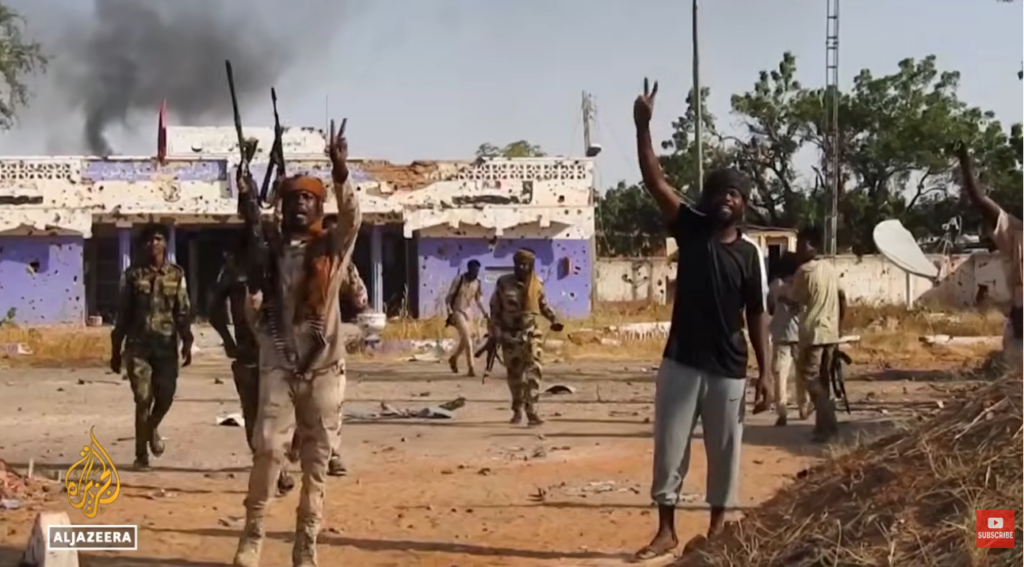
Salman’s brothers were killed in the final weeks of an 18-month siege by the RSF, which has been locked in a brutal battle with the Sudanese army since April 2023. A year ago, on Oct. 26, 2025, El Fasher fell to the group. What followed, according to an independent UN fact-finding mission, were mass killings, widespread rape and other forms of sexual violence, torture, arbitrary detention, and enforced disappearances, aimed above all at the city’s non-Arab communities, the Zaghawa and the Fur. Thousands were killed in the massacre.
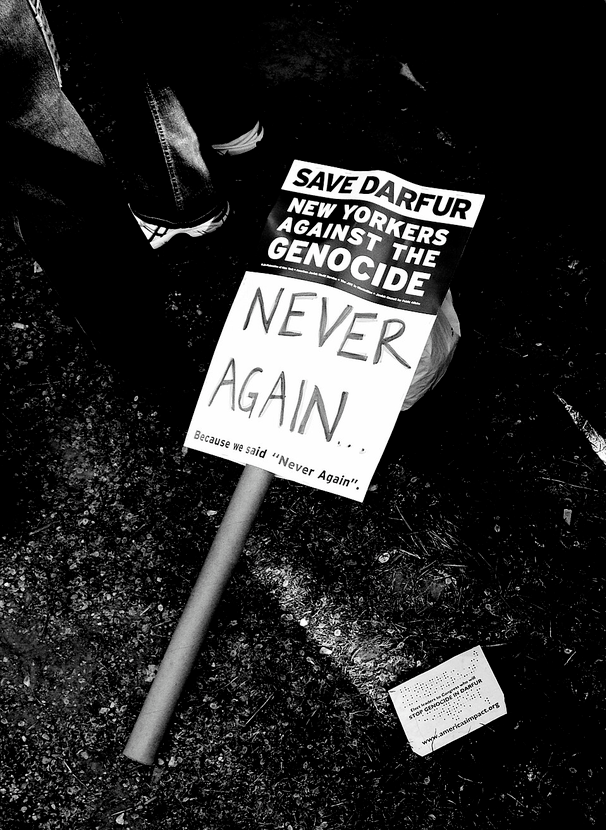
The mission found that during the siege the RSF had deliberately imposed conditions of life calculated to destroy those communities, and assessed the killings during the takeover as “indicators of a genocidal path.”
A year later, families are still searching for the missing; those who return find a city emptied of its people, and no one has been held to account.
“A year has passed since the massacre the RSF committed in El Fasher and the perpetrators are still free,” says Dirar Adam Dirar, chief executive of the Human Rights and Advocacy Network for Democracy, a Sudanese rights group.
‘A Voice Somewhere in the World Tells Me He’s Alive’
Suhair Jumaa has not seen her husband since the day El Fasher fell.
Al-Hadi Mohammed Ali sold electrical appliances from a shop in El Fasher’s main market. On April 15, 2023, the morning the war began, Jumaa was dressing their daughter Lamia and packing her a meal for kindergarten when gunfire broke out in the city center, home to the army’s military command. Their neighborhood, al-Masani’, sat close to the RSF’s main headquarters.
“From that day on, our family never knew peace again,” she tells me.
When El Fasher fell last year, they tried to flee, but Ali was stopped in Garni, a village northwest of the city that was then the only route open to civilians, along with more than 30 other men.
“They detained him in Garni, and he hasn’t appeared since,” Jumaa says.
With no other choice, she set out on foot with Lamia, now 8, and Lim, now 5, along the dirt road to Tawila, a town about 60 kilometers (38 miles) west of El Fasher, that is now home to over 600,000 displaced Sudanese.
“We saw mass death on that road – bodies scattered all along it, people fleeing, being tortured – and we were hungry and thirsty,” she says. “My daughters were traumatized by what they saw. A whole year later, they still sometimes scream at night.”
Tawila, already short of food and medicine, was overwhelmed. After about two weeks, and with disease spreading, Jumaa decided to move on to Chad. After 11 months, she went back to El Fasher at the end of September. The house she had rented in Daraja Oula had been stripped bare, and a family of RSF commanders was living in it, with armed guards outside. The family’s own house in another neighborhood had been destroyed.
“The neighborhood is deserted, with no trace of life,” she says, “except in the areas where the families of the RSF and the armed movements fighting alongside them live.”
She went back to look for her husband. Despite the bodies on the road to Tawila, and the RSF prisons she knows are full of people abducted from El Fasher, she is certain he is alive.
“A voice somewhere in the world tells me al-Hadi is alive and will come back one day,” she says. “His children are waiting for him.”
She has since returned to Chad.
“El Fasher is a ghost town,” she says. “It can’t be lived in until its people come back and breathe life into it again. The smell of death still hangs over its streets.”
‘Sugar Was 5,000 Pounds. Now It’s 8,000’
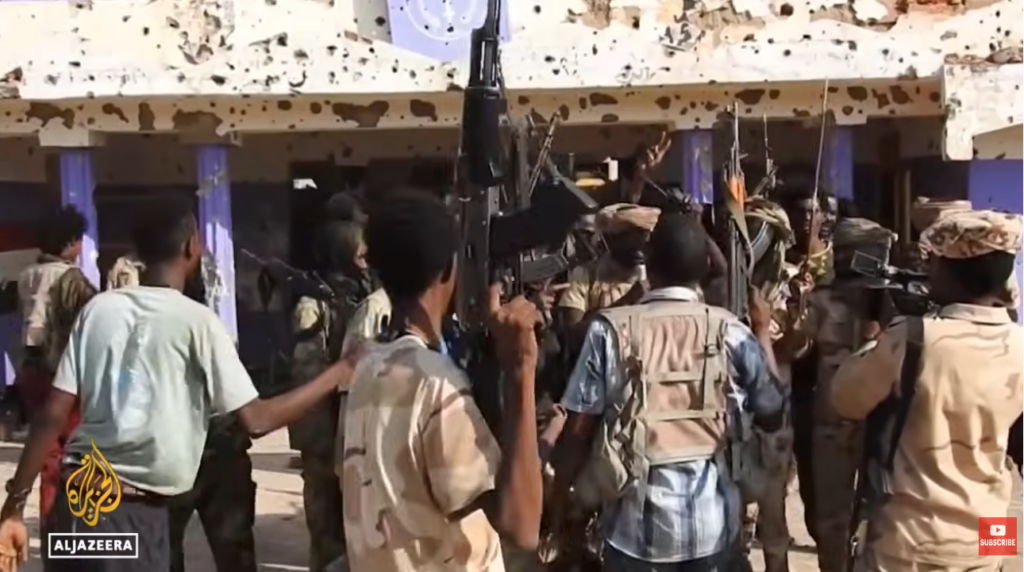
For those who have returned to El Fasher, life is difficult. In August, Iqbal Mahmoud, 64, left Daba Naira camp in Tawila, where her brother Abdallah, 70, still lives with his family, and returned to her home in Abu Shouk, in the north of El Fasher. She had fled it in August 2025, as the shelling intensified. When she came back, nothing inside was left.
“I got tired of being away from my home,” she says. “I wanted to spend the rest of my life in it.”
That life is expensive, and getting more so by the day. “A few days ago a kilo of sugar was 5,000 pounds. Now it’s 8,000,” she says. “Since I came back, I haven’t received any aid from anyone.”
What food does reach El Fasher depends on traders like Asim Ishaq, 38. He fled to Nyala, in South Darfur, with his family when fighting broke out in El Fasher and came back in January. His family stayed behind because Nyala has more services, and his own neighborhood, al-Wihda, in the city’s south, is still empty.
“I bring sugar, lentils, beans, biscuits, tea and coffee,” he tells me. “They come from South Sudan to Nyala, and then I bring them into El Fasher.”
Every leg of the journey costs money. “The RSF imposes fees at the crossing points, especially on goods,” he says. At the other end, few people can afford to buy. “Purchasing power in the market is weak, prices keep rising because the pound keeps falling against the dollar, and the people who come back are poor.” He is thinking of focusing his trade on Nyala instead.
Adam Rojal, spokesperson for General Coordination for Displaced Persons and Refugee Camps in Darfur, a local grassroots civilian monitoring and advocacy organization, says the cycle of people coming back and leaving again tells its own story.
“A number of displaced people have returned to El Fasher, but most of them were forced to go back to Tawila,” he says. “That is a clear indicator that the conditions for a safe and sustainable return have not been met.”
He describes a region facing drought, water shortages, a failed harvest, scarce food and medicine, and a war with no end in sight. “Everyone in El Fasher has been affected by the war,” he says. “Civilians in North Darfur feel the international community has abandoned them.”
The War Moves On, But the Displaced Can’t
The war itself has moved on. Its main battles are being fought in the Kordofan region of central Sudan, according to political analyst Mohammed Hussein Adam.
“In September and October, the army and its allies made advances and took strategic areas in North Kordofan, including Bara, Jabra al-Sheikh, Um Sayala, Sodari and al-Mazroub,” he says. What remains of the region, including Um Badr, Hamrat al-Sheikh and Abu Zaima, “could be a launch pad for the army to move toward West Kordofan and Darfur.”
In his assessment, the Sudanese army’s edge “comes from training, Turkish drones, air defenses and jamming, which outmatch the Chinese drones the RSF uses.” The army has carried out air strikes deep inside RSF-held Darfur and West Kordofan, “some of them far from the direct lines of fighting.”
The RSF’s drones, he says, have become less effective. “On Monday they targeted [the capital] Khartoum, but they didn’t hit military targets. They killed civilians.”
For El Fasher’s displaced, the war may have moved on, but they can’t. Returns, Adam says, happen on the RSF’s terms, and many who came back have left again.
A week after her brothers were killed, Moshira Salman fled with Mohammed’s wife, Zainab Khamis, and the three kids. They paid 60,000 Sudanese pounds – an exceptionally large sum for Sudanese citizens – to the RSF to leave.
“They let us pass,” Salman says. “Within three hours we were in Tawila.”
She briefly returned to El Fasher to see what was left in June.
“I found the family home completely burned, along with a number of the neighbors’ houses,” she says. “Several of our neighbors were also killed by shells.”
She returned to Tawila to wait – for security, and for her neighbors who survived to go home first. Her brothers lie buried in front of a house that has burned.
“I’ll go back when there is security,” she says, “and when the people of El Fasher come back.”
Eisa Dafallah is an independent Sudanese journalist with over a decade of experience in print and radio journalism, specializing in conflict reporting, human rights, and underreported crises. His work focuses on documenting the ongoing conflict in Darfur, with particular attention to violations against civilians and patterns of displacement.
This story has been produced in collaboration with Egab.