Photos:
It was 1974. The Bronx was burning. Abandoned cars littered the streets, and New York City teetered on the brink of bankruptcy. I’m still surprised my overprotective Holocaust-survivor parents let their preteen daughter ride the subway to school every day, but somehow they did.
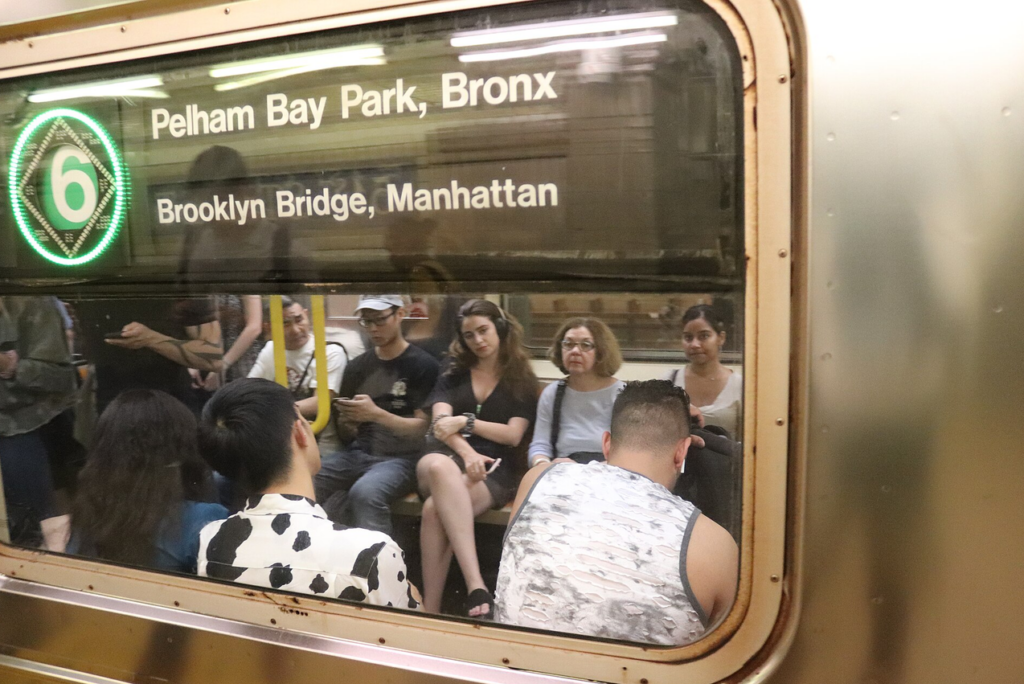
For five years—from eighth grade through high school—I took the Number 5 Dyre Avenue train from our apartment in the Pelham Parkway neighborhood of the Bronx to my Jewish day school on the Upper East Side of Manhattan. The commute was nearly an hour each way and always coincided with rush hour.
Mornings weren’t so bad; I lived near the beginning of the line and could usually get a seat. But heading home, the 86th Street platform was packed five to eight people deep.
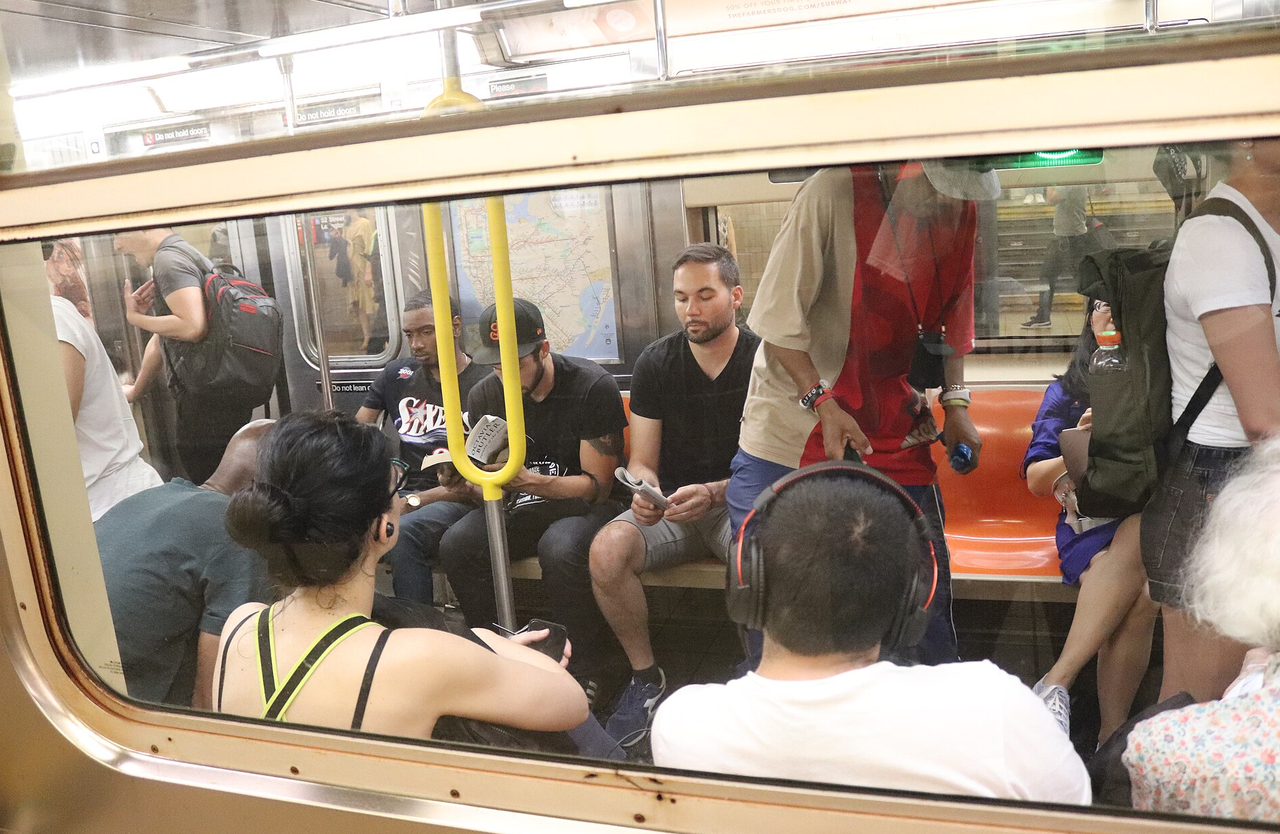
When it was my turn to board, I would throw my entire body weight onto the person in front of me, as the person behind me did the same. We all pushed forward together, forcing ourselves into an already crammed car, as more people tried to pack in behind us.
Once the doors closed, we stood packed together in a dense sea of bodies. When the train lurched, the entire crowd swayed as one. Usually, I breathed through my mouth to avoid the smell of sweat and bad breath. I tried to pull away from a hand on my behind that might have been accidental, but probably was not. I remember thinking I was too young for this.
At the time, I hated riding on the subway. But more than 50 years later, I’m grateful for that commute—for the way it forced a visceral reminder of our shared humanity.
Now, like three-quarters of Americans, I go everywhere by car. It’s faster and more convenient but I never see my fellow travelers—only their vehicles speeding past on the highway. And while I don’t miss the discomfort of the subway, I feel more cut off from other people’s lives.
When you don’t see people, you know them less. When entire groups remain unseen it becomes easier to turn them into abstraction—to fear them, dismiss them, or vilify them. It’s much harder to do that when you’ve stood shoulder to shoulder with someone, both of you grasping the pole as the train jolts you from side to side.
These were the days before smart phones or even portable music players. There was little to distract me from just looking and listening to the people around me. For two hours a day, I heard people speaking Spanish. I absorbed its rhythms long before I understood the words. Years later, when I finally learned the language, I picked it up quickly.
The subway exposed me to a depth of poverty I hadn’t seen in my own working-class Jewish neighborhood. I saw people asleep on the seats, curled around garbage bags that held everything they owned. There was a young man with no legs or lower torso who moved through the cars on a wheeled platform, collecting money. I watched him cross the treacherous gaps between cars as the train rattled and swayed.
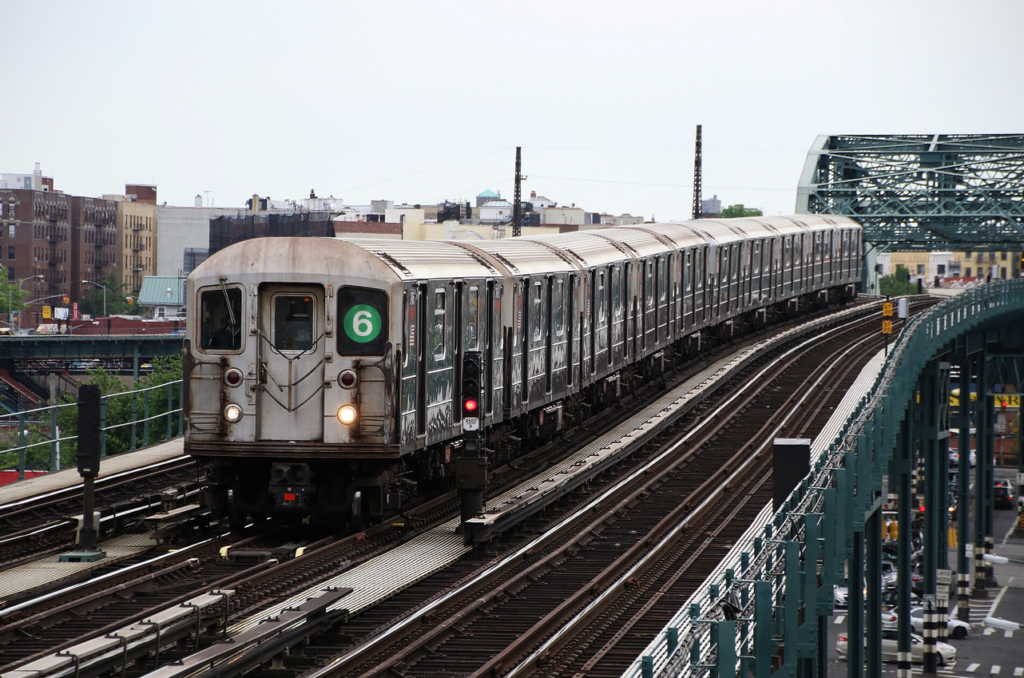
The subway also showed me where people lived. Unlike highways, which are designed to bypass neighborhoods, the elevated train trestle cuts straight through them.
The Number 5 ran through the South Bronx at a time when more than 80 percent of buildings had burned or been abandoned. On dark winter evenings, we passed through blocks of hollowed-out shells, with the occasional occupied apartment. From the train I could see into people’s living rooms, glowing blue from the television.
As a teenager, I didn’t know much about redlining, disinvestment, or the policies that had helped create those conditions. I only knew that children my age lived there and I wondered what it was like to grow up in what felt like a war zone.
There are, of course, other ways to encounter difference. My husband, a nurse in one of the poorest communities in Massachusetts, has cared for people from all walks of life. But that’s a different kind of interaction. People meet him when they’re sick, in pain, or in crisis. When you commute, you’re simply sharing space.
But not all forms of transportation create the same kind of shared space. Recently, riding the Amtrak train home from Philadelphia, I watched miles of rundown brick rowhouses slide past the window. Some were boarded up. Inside the train, however, the conversations I overheard were about road races in Cancun and the best spin classes in Manhattan. The passengers’ lives appeared far removed from the neighborhoods we were passing through.
Having last lived in a city decades ago, my rural life is now quieter, more controlled. I move from one place to another sealed inside a car. It’s comfortable and efficient. But it’s made my life smaller. It’s made it possible to live a life where one rarely sees anyone outside one’s own orbit.
How can that not affect one’s ability to empathize—if your neighbors, coworkers, and classmates all reflect some version of yourself? The more choices we have about how we travel or whether we go to private schools or fancy gyms, the easier it becomes to spend our lives among people much like ourselves.
Distance makes it easier to dehumanize.
Which is not to say that riding the #5 Dyre Avenue made me a kinder person. I still judge people; I could be nicer and more patient. But the commute gave shape and texture to lives I might otherwise reduce to stereotypes. Day after day, it reminded me that everyone, like me, was just trying to get home.
Sarena Neyman, syndicated by PeaceVoice, is a writer living in western Massachusetts whose essays have appeared in Huffington Post, Business Insider, Common Dreams, and Cabin Life.