By Black Star
Photos: YouTube Screenshots|Wikimedia Commons
Uganda’s statutory legal fraternal entity—Uganda Law Society (ULS)— has rather described the Protection of Sovereignty Bill, 2026 as “The Anti-Sovereignty Bill Is Not Protection—It is a Constitutional Coup” which “fails every international human-rights litmus test.”

The Bill is feared for targeting journalists, human rights groups, NGOs and CSOs involved in civic activities and strangling Ugandans from receiving diaspora money. Many Ugandan livelihoods depend on diaspora remittances which last year hit $2.5 billion. In addition, the Bill is said to be targeting Opposition parties, especially the main Opposition party in the country, the National Unity Platform, from receiving funds for its political activities from abroad. It also closes civic space as civil society groups championing democratic rights and good governance are targeted as well.
In an April 20 a scorching rebuttal posted on X, ULS Vice President, Anthony Asiimwe, said the ruling National Resistance Movement (NRM) Legal Director’s defence of the so-called National Sovereignty Bill, “in reality,” said Asiimwe, “the Anti-Sovereignty Bill” presents a familiar script: “the world is changing, foreign interference is real, Uganda must adapt.”
The NRM’s Legal Director, Enoch Barata, had defended the Bill in a 923-word article in the State-owned daily, New Vision, on April 20. “Since 6AM today [April 20], my phone has been inundated with calls from the Bar, the public and the press. They are furious at the 923-word article by Enoch Barata…defending the so-called Sovereignty Bill. They demand a scorching rebuttal.”
But by April 21, Barata was not yet done: “The Sovereignty Bill is a question of a question of transparency, so that the government can have full visibility of activities by foreigners and their agents so that they don’t take advantage of the country and negatively impact it,” Barata said on local NBS television’s Morning Breeze program on April 21.
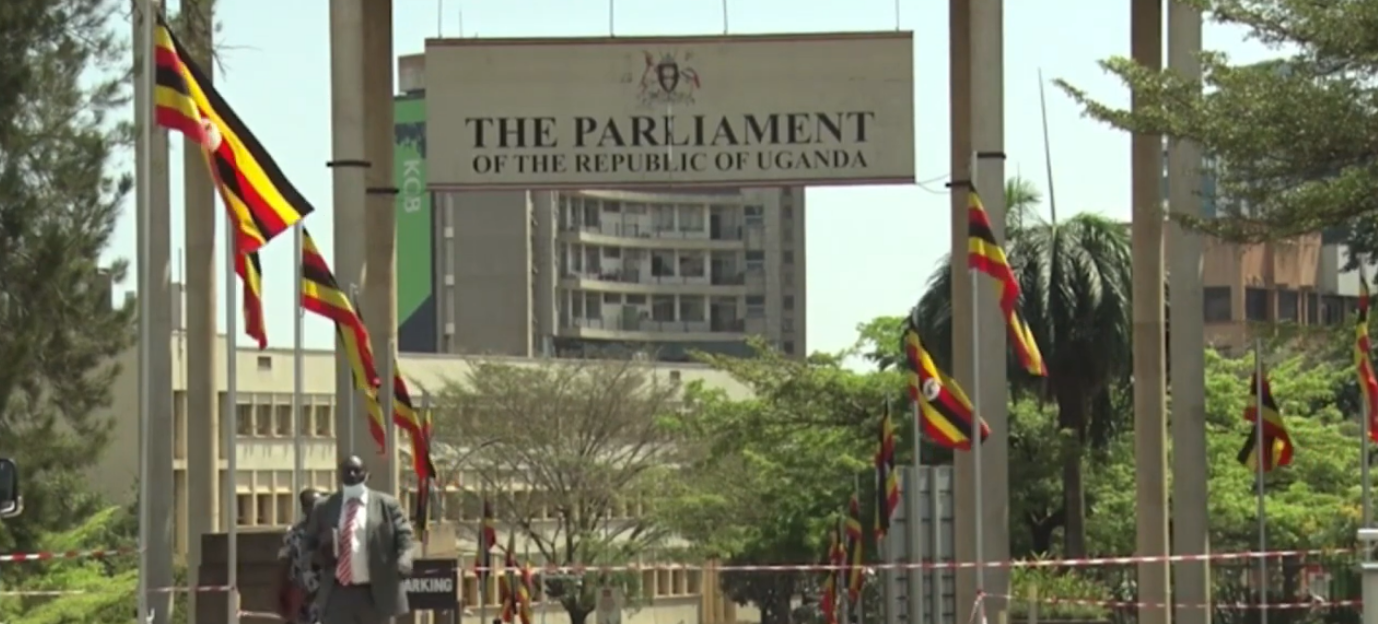
The Sovereignty Bill was tabled before Parliament on April 15. On April 20, consultations across the country returned red flags for the Bill in its entirety. Stakeholders have raised concerns that the Bill in its current form could infringe on privacy and economic rights of Ugandans. They say Uganda has existing laws which are sufficient and warn the Bill, once law, could affect citizens receiving money from abroad.
Religious and cultural leaders, elders and media practitioners reject the Bill saying it affects their operations.
“Sovereignty in Uganda belongs to the people, not the Government. But who are the people?” Asiimwe asks; and answers: “The people are the voters from whom NRM hid this Bill during the recent elections. The draconian Bill it is rushing to pass while Parliament is closing. The people are the millions of voters who will not get to read Barata’s good English in the government’s 20,000-circulation English language newspaper.” The term of the 11th Parliament (2021-2026) is ending on May 12 when Gen Yoweri Museveni is sworn in for the seventh consecutive term following the disputed January 15 presidential elections rejected by the opposition.

According to Asiimwe, the people are the multitudes of rural and urban poor victims of NRM’s 30-year failure to implement Article 4 of the 1995 Constitution: The State obligation to provide every citizen with a translated copy of the Constitution in their local language, plus a permanent program of civic education. Uganda’s current Constitution was promulgated on October 8, 1995.
Asiimwe says Article 1 of the Constitution is unambiguous: “All power belongs to the people who shall exercise their sovereignty through their will and consent. The Bill does not protect this sovereignty. It transfers it to the Executive…That is not safeguarding sovereignty—it is overthrowing it…Any law that alters the basic structure of the Constitution—especially the location of sovereignty itself—must be approved by the people in a national referendum under Article 260(2). This Bill makes exactly those changes without ever asking Ugandans to vote. It is therefore dead on arrival: unconstitutional, null and void. No amount of international comparison can cure that defect.”
“Every country faces foreign influence, only differing in how they manage it. Some countries tend to ban foreign influence operations outright, with severe penalties for those involved. Others take a narrower approach—prohibiting foreign funding in sensitive sectors like arms, security and elections,” writes Attorney-General, Kiryowa Kiwanuka in New Vision on April 21.
According to a “cautionary” statement signed by ULS President, Isaac Ssemakadde, and addressed to every Ugandan, to Parliament and to the whole world—investors, governments, multilateral institutions and friends of democracy everywhere; “The Anti-Sovereignty Bill signals the overthrow of the 1995 Constitution and Uganda’s exit from the democratic order.” The April 20 statement says due to overwhelming public demand and the impossibly short one-week deadline Parliament gave for comments on the so-called “Protection of Sovereignty Bill, 2026,” the Radical New Bar Governing Council of the Uganda Law Society issues this cautionary statement.
“We are renaming the Bill what it really is: The Anti-Sovereignty Bill. It does not protect Uganda’s sovereignty, it destroys the sovereignty—the people’s right to self-determination—that belongs to Ugandans under Article 1 of the Constitution and hands all power to the Executive instead.
“The Constitution is crystal clear: any law which tries to change the most basic rules of how Uganda is governed—especially who holds power and how the people’s rights are protected —- must be approved by the people in a national referendum. That is the mandatory requirement under Article 260(2)(b). Every citizen must be allowed to vote yes or no. This Bill completely ignores that rule. It makes massive changes to the foundation of our Constitution without ever asking the people. It wipes out the words ‘all power belongs to the people’ and replaces them with ‘all power belongs to government’,” Ssemakadde says.
Well, given the NRM’s numerical strength in the august House and lawmakers’ high affinity for money as known of them as usual, the likelihood of the Bill sailing through the Floor of Parliament is as clear as crystal.