By United Nations
Photos: Wikimedia Commons
Justice in Action: Confronting History, Advancing Dignity, Empowering Futures

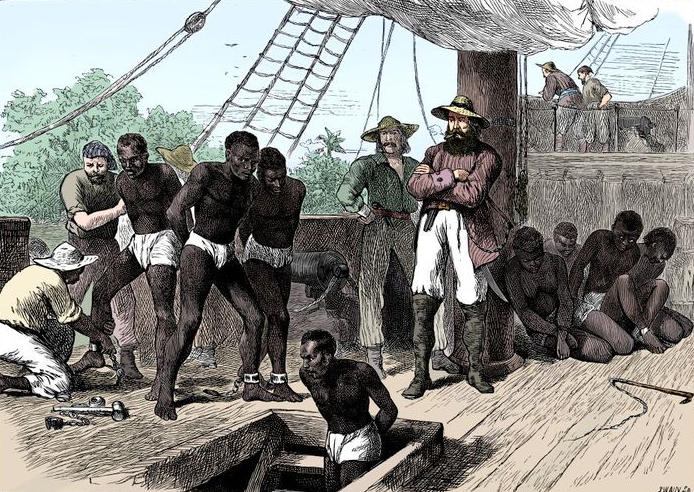
The transatlantic trade in enslaved Africans was one of the gravest crimes in history. Millions of men, women and children were violently taken from their homes, denied their humanity, and forced to endure generations of exploitation. The racist ideologies that justified this crime became embedded in institutions and societies, shaping inequalities that continue today.
This year’s theme, Justice in Action, calls on the global community to confront this history with honesty and to acknowledge its enduring impact. Advancing dignity requires transforming the systems that perpetuate discrimination and ensuring that the rights of Afro‑descendant communities are protected and upheld.
Empowering futures requires expanding opportunities, strengthening participation, and supporting measures that promote repair, inclusion and justice. By translating remembrance into action, we can help build a world where every person can live in equality, dignity and hope.
This day is about education
The International Day of Remembrance of the Victims of Slavery and the Transatlantic Slave Trade is a time for reflection. But it is also a time for education. Despite myths to the contrary, enslaved Africans enriched the Americas not just through their labour but also through a transfer of vital skills and knowledge. In addition, rather than accepting their fate, they engaged in powerful acts of resistance. The United Nations works to highlight such stories through its Outreach Programme on the Transatlantic Slave Trade and Slavery, which is managed by the Department of Global Communications, and the Routes of Enslaved Peoples Project, which is run by the United Nations Educational, Scientific and Cultural Organization (UNESCO).
How did this day come about?

In 2006, the United Nations General Assembly, through resolution 61/19, recognized that “the slave trade and slavery are among the worst violations of human rights in the history of humanity, bearing in mind particularly their scale and duration” and designated 25 March 2007 as the International Day for the Commemoration of the Two-hundredth Anniversary of the Abolition of the Transatlantic Slave Trade. The following year, through resolution 62/122, it designated 25 March as an annual International Day of Remembrance of the Victims of Slavery and the Transatlantic Slave Trade, beginning in 2008.
Why 25 March?
The Abolition of the Slave Trade Act was passed in the United Kingdom on 25 March 1807. From that day on, “all manner of dealing and reading in the purchase, sale, barter, or transfer of slaves or of persons intending to be sold, transferred, used, or dealt with as slaves, practiced or carried in, at, or from any part of the coast or countries of Africa shall be abolished, prohibited and declared to be unlawful”. However, while the act abolished the transatlantic trade in enslaved Africans, it did not abolish slavery, which still continued for decades. The abolition followed powerful and sustained acts of resistance by enslaved Africans, including the Haitian revolution, which led to the establishment in 1804 of the Republic of Haiti – the first nation to become independent as a result of the struggle of enslaved women and men.
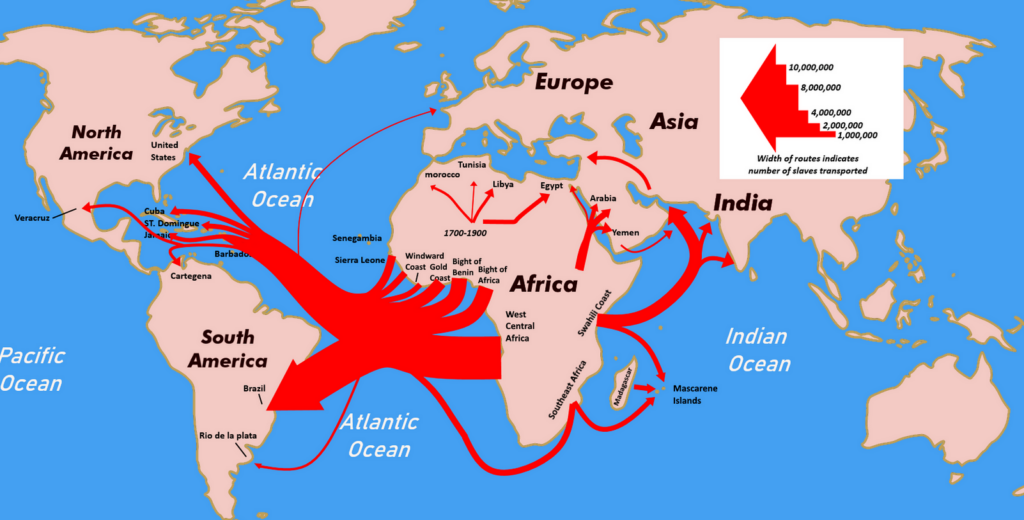
Slave trade out of Africa, 1500–1900