Photos: YouTube Screenshots
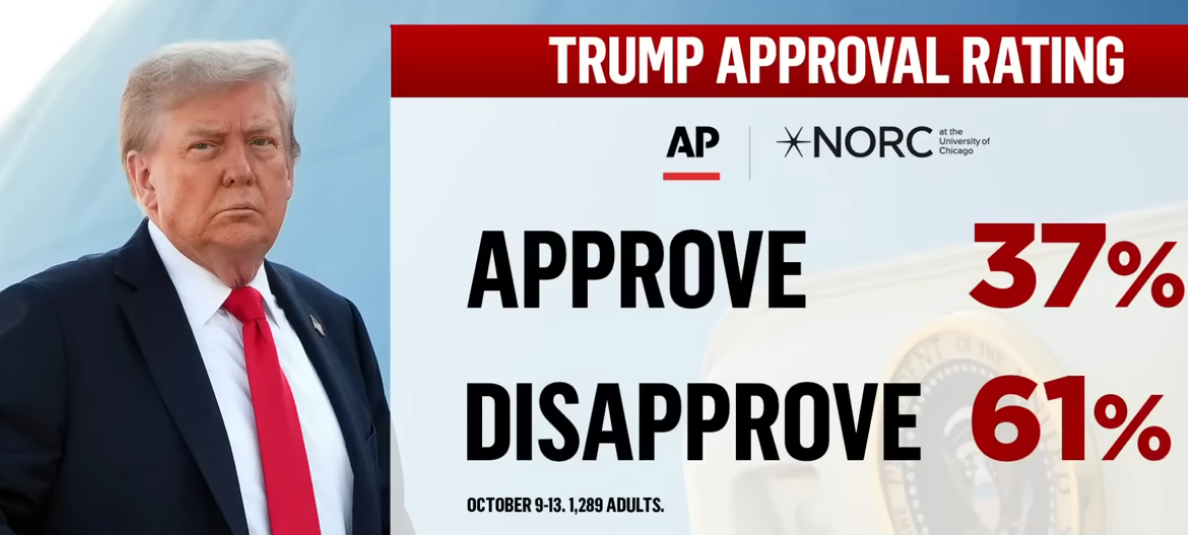
Santa Monica, CA — With less than a year until the 2026 midterm elections, a new report from the My Code, Intelligence Center, the largest ongoing survey of multicultural voters in the country, reveals a stark warning for Republican candidates heading into the 2026 midterms: President Trump’s approval has sunk to an all-time low of 33% among voters of color and key constituencies, driven by rising fears of political violence, anxiety over immigration raids and government overreach, and growing dissatisfaction with the nation’s economic direction.

The findings, based on a comprehensive survey of over 3,500 voters across AANHPI, Black, Hispanic, LGBTQIA+, and women voter segments, point to a growing sense of unease across a wide range of demographic groups. Respondents expressed heightened concerns about political instability, government overreach, affordability, and the erosion of equity-based policies — issues that are resonating deeply within multicultural communities, navigating a rapidly shifting political and economic landscape.
“We’re seeing early signs of shifting attitudes — a kind of political recalibration — among multicultural voters across age groups, demographic backgrounds, and income levels,” said Junelle Cavero, Head of Political at My Code. “Concerns over affordability, immigration enforcement, and political violence are driving a deeper sense of unease, and the dissonance between lived experience and political messaging is widening. In particular, the gains made by Trump and the GOP with multicultural voters in recent election cycles appear to be eroding. What we’re observing — both in this new data and in the outcomes of recent off-cycle elections — suggests a growing sense of buyer’s remorse and a demand for leaders who understand and respond to the realities these communities are facing. These evolving attitudes could have serious implications for engagement and turnout heading into 2026.”

Key Findings from the Wave 13 Survey:
- All-Time Low Approval for Trump: Just 34% of respondents across multicultural voter segments say they approve of President Trump’s performance — down from 36% in Wave 12 — with particularly low marks among Black women and AANHPI youth.
- Widespread Anxiety About Political Violence: Over 80% of respondents said they are concerned that political violence has become more widespread, especially among LGBTQIA+ and multicultural Americans. Over half of respondents said they believe their communities are at higher risk of being targeted by political violence.
- Concerns About ICE Raids and Immigration Enforcement: Nearly 60% of multicultural Americans disapprove of the way the U.S. government is handling or responding to immigration and 36% of multicultural Americans know someone personally who has been impacted by Trump’s immigration policies. Over 70% of multicultural Americans support reforming immigration policies to create a pathway to citizenship compared to only 14% that would rather focus solely on strengthening border enforcement
- Tariffs and the Cost of Living: Over 60% of voters said they expect recent tariffs on goods from other countries to increase prices. Economic concerns like the cost of everyday goods, financial stability, housing affordability and the cost of healthcare are the top issues impacting multicultural Americans.
- The Epstein Files & Government Transparency: 60% of multicultural Americans believe the government has not been transparent about the Epstein Files and nearly 40% believe there is a widespread cover-up and there are more documents that need to be released.

A Lens Into 2026
The findings from Wave 13 arrive at a moment of political flux. While the survey is nonpartisan, the political implications are unmistakable: the erosion of support for Trump and the GOP among key multicultural voter segments—combined with rising concerns about violence, economic insecurity, and government overreach—could significantly alter turnout patterns and reshape the electoral map in battleground states and down-ballot contests alike.
The data signals that narratives around economic anxiety, civil rights rollbacks, and public safety are likely to dominate political discourse heading into 2026. Multicultural voters, who have historically been a decisive force in close elections, are expressing disillusionment with both parties, but the sharpest declines in approval are concentrated among those who recently showed openness to Republican candidates. This suggests that the “realignment” narrative that dominated post-2024 analysis may be premature, and that voter sentiment remains fluid and responsive to policy implementation.
For campaigns, civic organizations, and advocacy groups, the message is clear: multicultural voters are paying close attention, and their concerns are both urgent and actionable. How political leaders respond to the anxieties documented in this survey will likely determine not just the outcome of the 2026 midterms, but the trajectory of American politics for years to come.
The full presentation can be viewed here.