Photos: YouTube Screenshots\Wikimedia Commons
New York City just got a huge step closer to electing its first Muslim mayor, its first South Asian mayor, and the first democratic socialist to lead a major American city since the Great Depression (the last was Milwaukee). But Zohran Mamdani’s victory in the Democratic primary isn’t just a series of firsts. It’s a break from the city’s entrenched political order. It’s a direct rebuke to the corporate-backed Democratic machine that propped up Andrew Cuomo’s comeback, despite his record of corruption and mismanagement, and a rejection of the kind of politics that prioritizes fear and donor appeasement over vision.
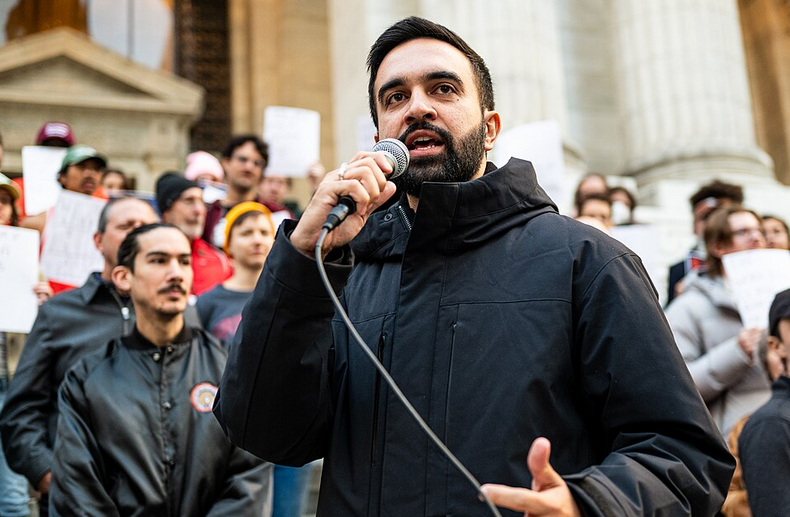
Reflecting on Mamdani’s win, I’m reminded of the powerful scenes following Donald Trump’s Muslim ban in 2017, when thousands of Yemeni bodega owners shuttered their stores and poured into Brooklyn’s streets. Their prayers and American flags carried a profound assertion of dignity, visibility, and belonging. A challenge to Donald Trump and a country too accustomed to their erasure. Those moments illustrate that democracy lives not in abstract ideals, but in tangible acts of courage and solidarity. Too often, Democratic Party leaders have eloquently invoked the vision of multiracial democracy, yet faltered precisely when solidarity demanded clarity – particularly around Palestinian suffering, anti-Arab bigotry, and anti-Muslim discrimination. This has been more than strategic cowardice; it has amounted to a moral failure. Mamdani’s candidacy directly confronted this silence, declaring that true democracy includes the people that power often renders invisible.
One of the biggest mistakes the Democratic Party establishment made was trying to smother their base’s outrage over US support for Israel’s assault on Gaza. An outrage that felt like basic moral common sense. Mamdani gave it a voice. Without that, there’s no campaign. As a Bangladeshi Uber driver told me on election night: “Our entire community voted for Zohran. He’s for ordinary people. He’s for peace, not war. We don’t want more wars killing innocent people. We need help here in New York.” This voter, and countless others, heard Mamdani speaking not in the language of focus groups, but in the language of shared humanity and lived struggle. At a moment when the establishment flinched from even acknowledging the mass death in Gaza, Mamdani said plainly: solidarity is not a slogan. It’s a commitment. It means seeing Palestinians, not erasing them. It means listening to voters who are tired of being told their grief is too controversial to name.
Mamdani’s victory redrew the map of what’s possible in New York City politics. He didn’t win on the backs of white gentrifiers alone; he built a multiracial, cross-class coalition that reached from the brownstones of Park Slope in Brooklyn to the apartment towers of Jackson Heights in Queens. He ran up margins in progressive enclaves like Park Slope, East Village, and Cobble Hill, but also won working-class, immigrant-heavy neighborhoods across Queens and Brooklyn – Bangladeshi, Chinese, Latino, Arab, Indo-Caribbean. He was the highest performer in Queens among Latino and South Asian precincts and carried South Asian strongholds like Richmond Hill and Jackson Heights, and East Asian precincts like Sunset Park, Chinatown, and Flushing. Most strikingly, he flipped Oakland Gardens, a swing district in Queens that went from supporting Joe Biden in 2020 to Republican Lee Zeldin in the 2022 New York gubernatorial race to Trump last year, is majority Asian, and long seen as part of Cuomo’s base. Mamdani didn’t just activate the left; he broke into communities that conventional wisdom says don’t vote socialist. And he did it with a disciplined message on public goods and affordability, backed by a massive, relentless volunteer field operation.

Part of Something Bigger
Mamdani’s victory is not an isolated event – it’s the product of nearly a decade of sustained organizing that reshaped the political terrain in New York City. It began with the 2016 Bernie Sanders campaign, which galvanized thousands, triggered explosive growth in the Democratic Socialists of America, and seeded a new generation of organizers who would go on to power campaigns across the city. Justice Democrats emerged from that wave, helping to elect Alexandria Ocasio-Cortez in 2018 and Jamaal Bowman in 2020. At the same time, the Working Families Party and grassroots allies took on the Independent Democratic Conference, a coalition of Cuomo-backed Democrats who had empowered Republicans in Albany. Their successful ouster showed the left could not only protest but also win.
By 2023, eight NYC-DSA–endorsed legislators held seats in the state legislature, forming the largest socialist caucus in New York in nearly a century. The group included Senators Julia Salazar, Jabari Brisport, and Kristen Gonzalez, and Assemblymembers Zohran Mamdani, Phara Souffrant Forrest, Marcela Mitaynes, Emily Gallagher, and Sarahana Shrestha. Alongside this rise in left electoral power, Bangladeshi and Muslim communities began building their own political infrastructure, culminating in Shahana Hanif’s groundbreaking win in 2021 as the first Muslim woman on the New York City Council. Mamdani’s mayoral campaign is the culmination of these efforts – a candidate forged in movement politics, buoyed by communities long pushed to the margins, and backed by an increasingly disciplined, electorally savvy grassroots left that has spent the past decade learning how to organize and win.
Solidarity across differences doesn’t happen by accident. It requires leadership, trust, and a willingness to step into uncomfortable terrain. The partnership between Mamdani and Brad Lander, the city’s progressive Jewish comptroller, was a conscious decision to reject the narratives that have long kept Muslim and Jewish communities politically estranged. In a climate where speaking out on Israel’s assault on Gaza is seen as a political risk, they stood side by side and said what too many others would not. Their alliance didn’t flatten their differences or ask either to compromise who they were. It demonstrated that a real coalition is not about agreement on everything – it’s about acting together with purpose, even when it’s hard. At a time when powerful interests insist that Muslims and Jews cannot share political space, Mamdani and Lander chose to prove otherwise. They showed that solidarity is not symbolic. It’s a practice, built through shared commitments, sustained by courage, and animated by a belief that politics can be more than fear management.
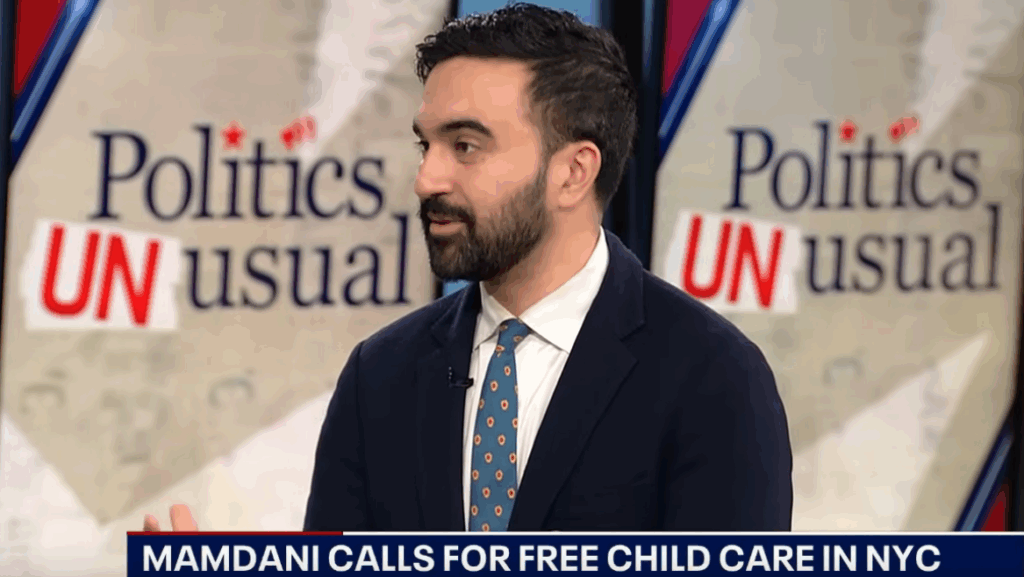
A Model for Progressive Democrats
The same clarity and courage that defined Mamdani’s alliance with Lander also defined his campaign. He didn’t just model a different kind of politics – he ran on one. And his victory offers several practical lessons for how progressives can move from protest to power.
1. Know why you’re running
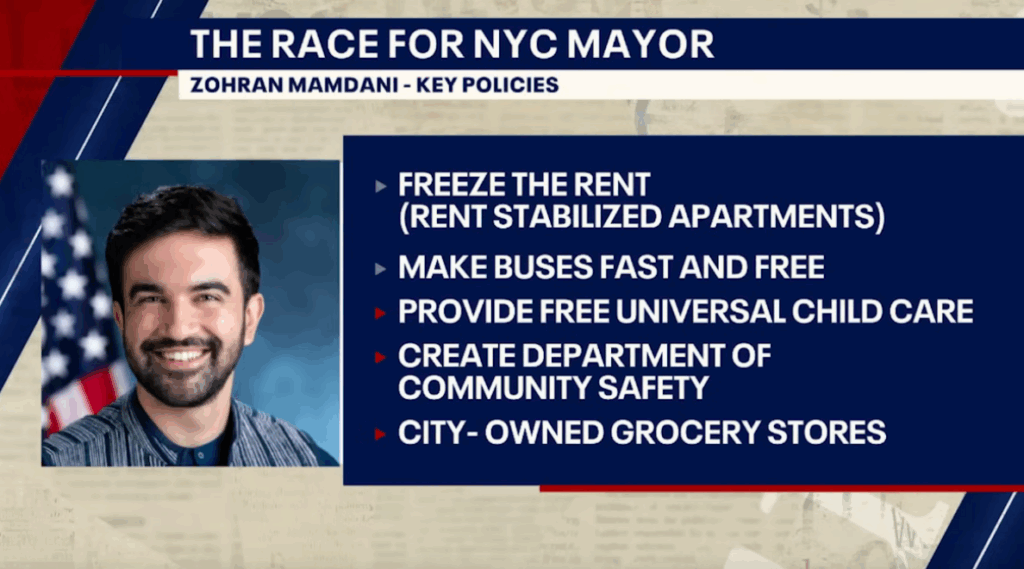
Cuomo never made a case for himself beyond name recognition and experience. Voters couldn’t tell you what he’d actually do in office because he didn’t really care to tell them. Mamdani, by contrast, had a clear, repeatable agenda: freeze rents, make buses free, build publicly owned grocery stores. No jargon, no guesswork. He named those who were in the way – Cuomo’s billionaire donors, real estate PACs, and Trump-aligned backers – and laid out who he was fighting for. It wasn’t complicated. But it was grounded in his democratic socialist politics and searing critique of inequality. That’s what made it work.
2. Be who you are
Mamdani’s campaign felt like an indie breakout film, combining authenticity, democratic-socialist conviction, and pop-cultural fluency. He didn’t pretend to be a typical politician; instead, he presented himself candidly and humorously through TikToks and influencer collaborations, as well as platforms such as Gaydar and Subway Takes. Unlike the heavily staged approach of Kamala Harris in 2024, Mamdani’s integration of ideology and substantive policy with everyday culture built trust and genuine influence.
3. Be available
Progressive campaigns often fall into the trap of rigidity, treating politics like a checklist rather than an invitation. Mamdani did the opposite, but mostly in tone and affect. He didn’t give up much of his core beliefs. He practiced availability, not just in showing up across neighborhoods, but in how he carried himself: open to disagreement, receptive to criticism, and genuinely curious about people who didn’t already agree with him. He didn’t demand ideological purity, even as he offered a clear political ask – support a rent freeze. It was, in effect, a litmus test, but it didn’t feel like one. Framed through a charm offensive rather than a purity contest, Mamdani made his politics feel like common sense, not a checklist. He invited people in, not to agree with everything, but to agree on enough, and made them feel good about saying yes. He liked to quote Ed Koch: “If you agree with me on 9 out of 12 issues, vote for me. If you agree on all 12, see a psychiatrist.” It wasn’t just a good line. It reflected his whole approach: build coalitions through dialogue, not dogma.
4. Stay disciplined
Mamdani’s campaign avoided the classic traps that sink insurgents – overreach, overexposure, and endless side arguments. Even under heavy fire, from attacks on his economic agenda to smears over his stance on Israel, he stayed focused on the message: affordability, dignity, solidarity. He didn’t take the bait. He modulated some of the maximalist rhetoric from the activist left on both economics and foreign policy. Instead of engaging in academic back-and-forths or defensive clarifications, he answered with clear, grounded language. His responses to attacks on policing and Israel were short, accessible, and rooted in common sense, not activist jargon. That discipline denied his opponents easy headlines and made him look less like an activist and more like a mayor.
Substance Won. Style Helped.
Reducing it to “vibe” politics, a Cuomo collapse, or simply generational change erases what actually happened. Zohran Mamdani didn’t win on style alone, he won on substance. Rent freezes, free buses, public groceries, and a clear stand against billionaire politics and U.S. support for Gaza’s destruction. Journalists and Democratic pundits are right to identify this as a generational change election and right to note that voters are rejecting a tired political class that has overstayed its welcome. Mamdani’s campaign wasn’t cool for cool’s sake; it was cool because it told the truth, named power, and offered people a stake in something real.
Unfortunately, the DNC may see Mamdani’s win and think, “Ah yes, the secret was TikTok.” So now they’re workshopping a crypto-friendly, AI-generated meme about the “Opportunity Economy” set to a Lizzo song—sponsored by JPMorgan. It’s like trying to bottle lightning, but first running it through a Reid Hoffman and Mark Cuban compliance check.
In 1935, at the end of NYC Mayor Fiorello La Guardia’s first year in office, the New York Times editorial board assessed him bluntly: “[He is] fond of toying with haphazard proposals that may be benevolent in intention but are dangerous or impossible in practice. He seems always to want to have in hand some socialistic plaything or other. Just now it is a municipal power plant.”
In a reflective moment in 1933, La Guardia lamented to the Times, “The worst part of the entire matter is that when anyone raises a question about the existing order, he is called either a reformer or a radical. It has been my lot to be called the latter. Why? Only because I have consistently objected to things which I believe unjust and dangerous.” Such candor is rare among politicians, but La Guardia leaned into it. He owned the label of radicalism, famously declaring, “If fighting against existing evils is radical, I am content with the name.”
Today, of course, La Guardia is remembered not as a dangerous radical but as perhaps the greatest mayor in American history, the archetype of bold and effective urban leadership. First, they call you radical. Then they name an airport after you.
The coalition that carried Mamdani to victory is the most politically significant aspect of his campaign. It brought together two forces that rarely align at scale: young Millennial and Gen Z voters, and working-class immigrant communities. Mamdani proved that a populist, common-sense agenda – rooted in material need and moral clarity – can win. In a city used to politics of fear and caution, voters chose boldness. But winning is just the beginning. The real test now is whether this coalition can be sustained, expanded, and translated into real governing power for the people who need it most.

Waleed Shahid, a progressive and Democratic strategist, is the director of The Bloc. He is also the former spokesperson for Justice Democrats. He’s worked with progressive candidates, including Bernie Sanders, Alexandria Ocasio-Cortez, Summer Lee, Jamaal Bowman, and Cori Bush. Subscribe to Waleed’s Substack to get more of his writing.