By Kevin Harris
For more than 150 years, the United States Senate has been one of the most powerful institutions in American democracy and one of the least representative of Black America.
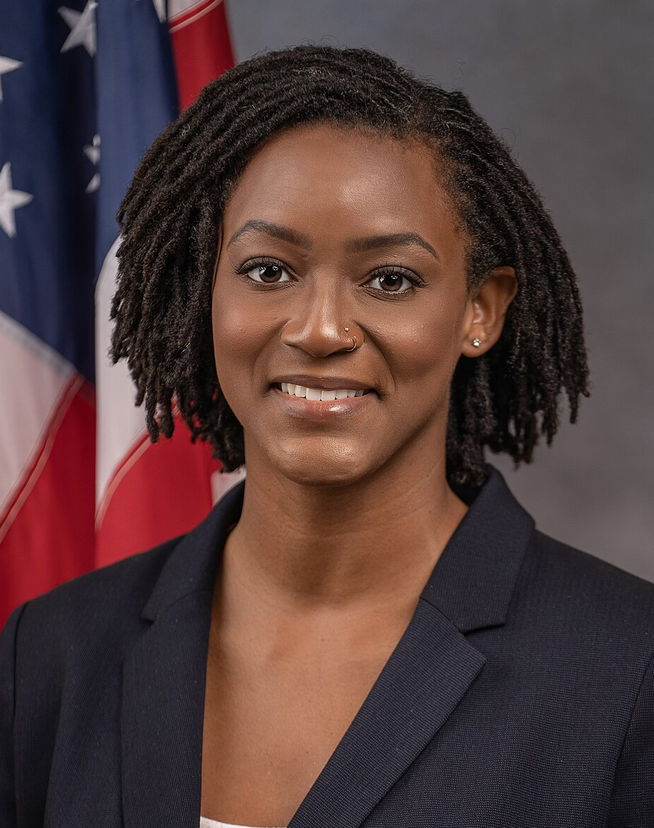
But the 2026 elections could bring a remarkable change. If Angie Nixon of Florida, Julianna Stratton of Illinois and Scott Colom of Mississippi win their competitive races for the United States Senate, they would join Cory Booker of New Jersey, Raphael Warnock of Georgia, Angela Alsobrooks of Maryland, Lisa Blunt Rochester of Delaware and Tim Scott of South Carolina for a historic total of eight African Americans simultaneously serving in the Senate.
The Senate that once included lawmakers who defended slavery and segregation could welcome the largest contingent of Black senators in American history. Eight voices in a chamber where, for much of American history, Black Americans had no voice at all.
What would it mean for American democracy if Black political representation in the Senate finally began to approach Black Americans’ share of the nation’s population?
Black Americans account for roughly 14% of the United States population. Yet only five of the nation’s current 100 senators are Black.
That means Black Americans, despite their enormous contributions to the nation’s economy, culture, military, civil rights movements and democratic institutions, remain substantially underrepresented in Congress.
If Nixon, Stratton and Colom prevail, Black senators would hold 8% of the Senate’s seats.
That would not achieve proportional representation. But it would narrow the gap to a degree unimaginable for much of the Senate’s history.
The potential elections of Nixon, Stratton and Colom would also carry distinct historical meanings.
Nixon would become Florida’s first Black senator and the first Black woman to win a Senate seat in the Deep South.
Stratton would build upon the political legacy of Carol Moseley Braun and Barack
Obama with Illinois again playing a prominent role in expanding Black representation in the Senate.
Both Nixon and Stratton would join Alsobrooks and Blunt Rochester, marking an historic number of Black women serving at the same time.
But perhaps no potential victory would be more symbolically resonant than Colom’s.
Mississippi was the state that sent the first two Black senators to Washington during Reconstruction. It was also a state where Jim Crow, racial violence and systematic voter suppression helped extinguish Black political power for generations.
For Mississippi to elect another Black senator in the age of MAGA would be another testament to the endurance of the Black experience in America.
Of course, eight Black senators would not speak with one voice.
They would not share identical political philosophies, legislative priorities or approaches to governing. Their views on taxation, economic policy, criminal justice, education, healthcare and the role of government would differ.
Scott is a Republican. The other seven senators in this hypothetical eight-member group would be Democrats. Nixon has aligned with the Democratic Socialist
Movement, adding additional diversity of thought. And that diversity of thought is itself important.
Black Americans are not a political monolith. They represent a broad range of ideological beliefs, economic experiences, religious traditions, geographic identities and political priorities.
The significance of increased Black representation is not that Black senators would automatically agree with one another. It is that Black Americans could see their experiences and perspectives reflected among the people making decisions that shape the country’s future.
A more representative Senate does not guarantee better legislation or agreement on difficult issues. But it can broaden the range of experiences informing those debates.
The 2026 elections have not yet decided whether this moment will arrive. Voters in Florida, Illinois and Mississippi will make their own judgments about the candidates, their records and their visions for their states.
But the possibility itself deserves recognition. Because for a nation founded on the promise of government by the people, the composition of Congress matters.
And if eight Black Americans take their seats in the United States Senate in January 2027, the moment will be about more than setting a record.
It will be another chapter in African American’s long, unfinished fight for a democracy that truly reflects all the people of America.

Kevin Harris is a Democratic strategist who has advised over 100 campaigns and ballot measures, including the past five presidential elections, served in the Obama Administration, as a cabinet member for two big city mayors and Executive Director of the Congressional Black Caucus.